0
0
 0
0
Why electric performance might become the most customizable platform yet
Editor’s Note
For decades, car modding has been built around one thing:
👉 internal combustion engines
- bigger turbos
- louder exhausts
- more boost
But with the rise of electric performance cars like the Hyundai Ioniq 5 N, the entire definition of “modding” is about to change.
And surprisingly…
It might become even more customizable than before.
⚡ The Big Question: Can You Even Mod an EV?
At first glance, EVs seem unmodifiable.
No engine. No turbo. No exhaust.
So what’s left?
Actually—a lot.
The difference is:
👉 Modding shifts from mechanical → digital + systems-based
🧠 What Makes the Ioniq 5 N Special
The Hyundai Ioniq 5 N isn’t just another EV.
It was designed with enthusiasts in mind.
Features like:
- simulated gear shifts
- configurable driving modes
- track-focused cooling systems
…show that Hyundai understands something most brands don’t:
👉 EVs still need personality
And that opens the door for modding.
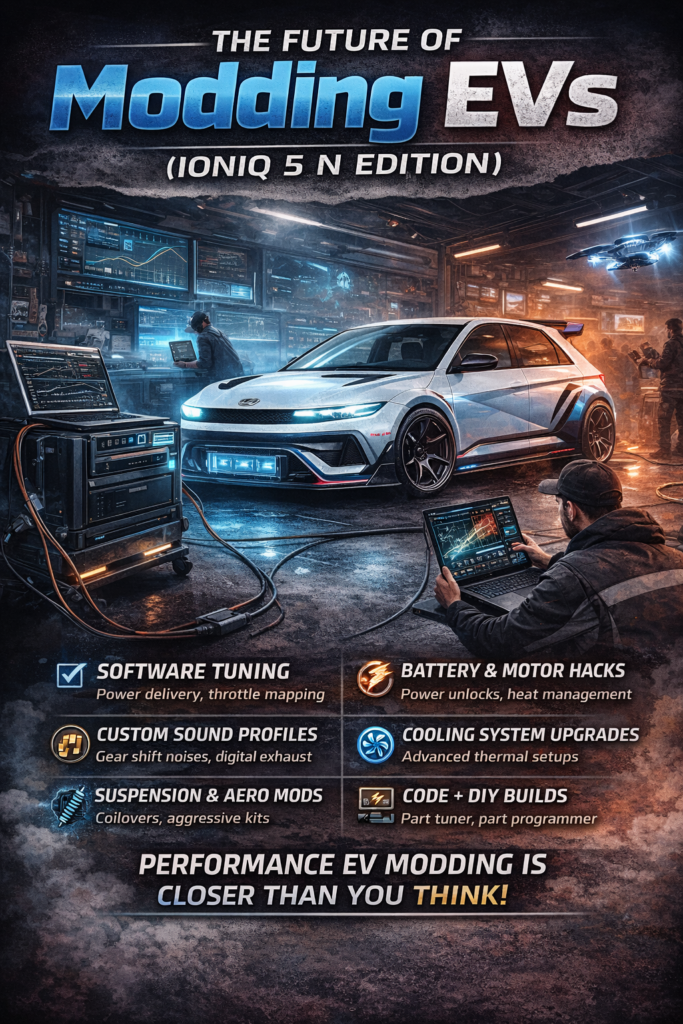
🔧 1. Software Tuning (The New ECU Game)
In traditional cars:
👉 ECU tuning = power
In EVs:
👉 software = everything
Future mods will likely include:
- power delivery mapping
- throttle response tuning
- torque curve shaping
- launch behavior
Think of it as:
👉 rewriting how the car feels, not just how fast it is
⚡ 2. Power Unlocking & Battery Management
Right now, EV power is often limited by software and battery constraints.
Future tuning could involve:
- unlocking hidden power buffers
- improving thermal limits
- optimizing battery discharge rates
The challenge?
👉 managing heat and battery health
The opportunity?
👉 massive performance gains without mechanical changes
🌬 3. Cooling Systems (The New “Performance Mod”)
In ICE cars:
👉 airflow and fuel make power
In EVs:
👉 cooling determines performance
The longer you can keep temperatures down:
- the longer you can sustain power
- the faster you can go repeatedly
Future mods:
- upgraded cooling loops
- better heat exchangers
- advanced thermal management systems
🏁 4. Suspension & Handling Still Matter
Some things don’t change.
EVs are heavy.
Which means:
👉 suspension becomes even more important
Upgrades will focus on:
- coilovers
- bushings
- chassis stiffness
- weight distribution tuning
This is where EVs can become track monsters.
🔊 5. Sound Engineering (Yes, Really)
One of the biggest changes with EVs:
👉 no engine sound
But instead of removing sound…
Manufacturers are now creating it artificially
The Ioniq 5 N already features:
- simulated engine sounds
- gear shift feedback
Future modding could include:
- custom sound profiles
- personalized driving “feel”
- even downloadable sound packs
It sounds strange now.
But so did turbocharging once.
🎨 6. Aesthetic Mods Will Explode
Without engine constraints, EVs offer:
- more design freedom
- more space
- new layouts
Expect:
- aggressive aero builds
- unique lighting setups
- futuristic interiors
EV builds might become the most visually creative cars on the road.
🧪 7. The DIY + Software Era
This is where things get interesting.
EV modding may merge with:
- coding
- software engineering
- hardware hacking
Builders won’t just be mechanics.
They’ll be:
👉 part tuner, part engineer, part programmer
⚠️ The Challenges (Let’s Be Real)
EV modding isn’t easy—yet.
Current limitations:
- locked software ecosystems
- manufacturer restrictions
- safety concerns
- high-voltage systems
But every platform starts here.
And over time?
These barriers always break.
🚀 Why Korean EVs Might Lead This Movement
Hyundai and Kia are in a unique position.
Unlike legacy brands, they’re:
- more experimental
- more willing to innovate
- more focused on new markets
The Hyundai Ioniq 5 N shows that they’re not just building EVs…
👉 they’re building enthusiast EVs
🏁 Final Thoughts
EV modding won’t replace traditional tuning overnight.
But it will evolve it.
And platforms like the Ioniq 5 N are giving us a preview of what’s coming:
- software-driven performance
- new types of customization
- a completely different kind of driving experience
🔥 Closing Line
The future of modding isn’t louder.
It’s smarter.