
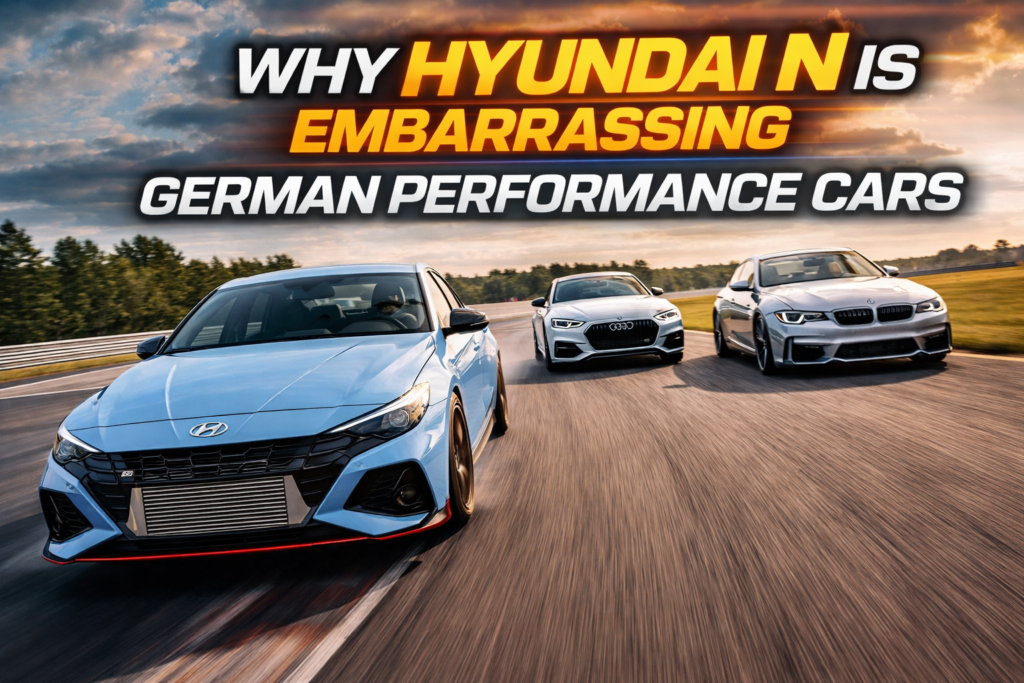
How a newcomer brand is outperforming legacy giants where it actually matters
Editor’s Note
For decades, if you wanted serious performance, the answer was simple:
Buy German.
Brands like BMW, Mercedes-Benz, and Audi defined what it meant to build a proper driver’s car.
But something unexpected has happened over the past few years.
A brand once known for economy cars—Hyundai Motor Company—has entered the performance space…
…and started beating them at their own game.
🧠 The Shift No One Saw Coming
When Hyundai launched its N division, most enthusiasts didn’t take it seriously.
But behind the scenes, something important was happening.
Hyundai brought in Albert Biermann—the man responsible for shaping some of BMW’s greatest modern M cars.
And he didn’t come to copy the Germans.
He came to fix what they had become.
🏁 1. Driver Engagement > Status
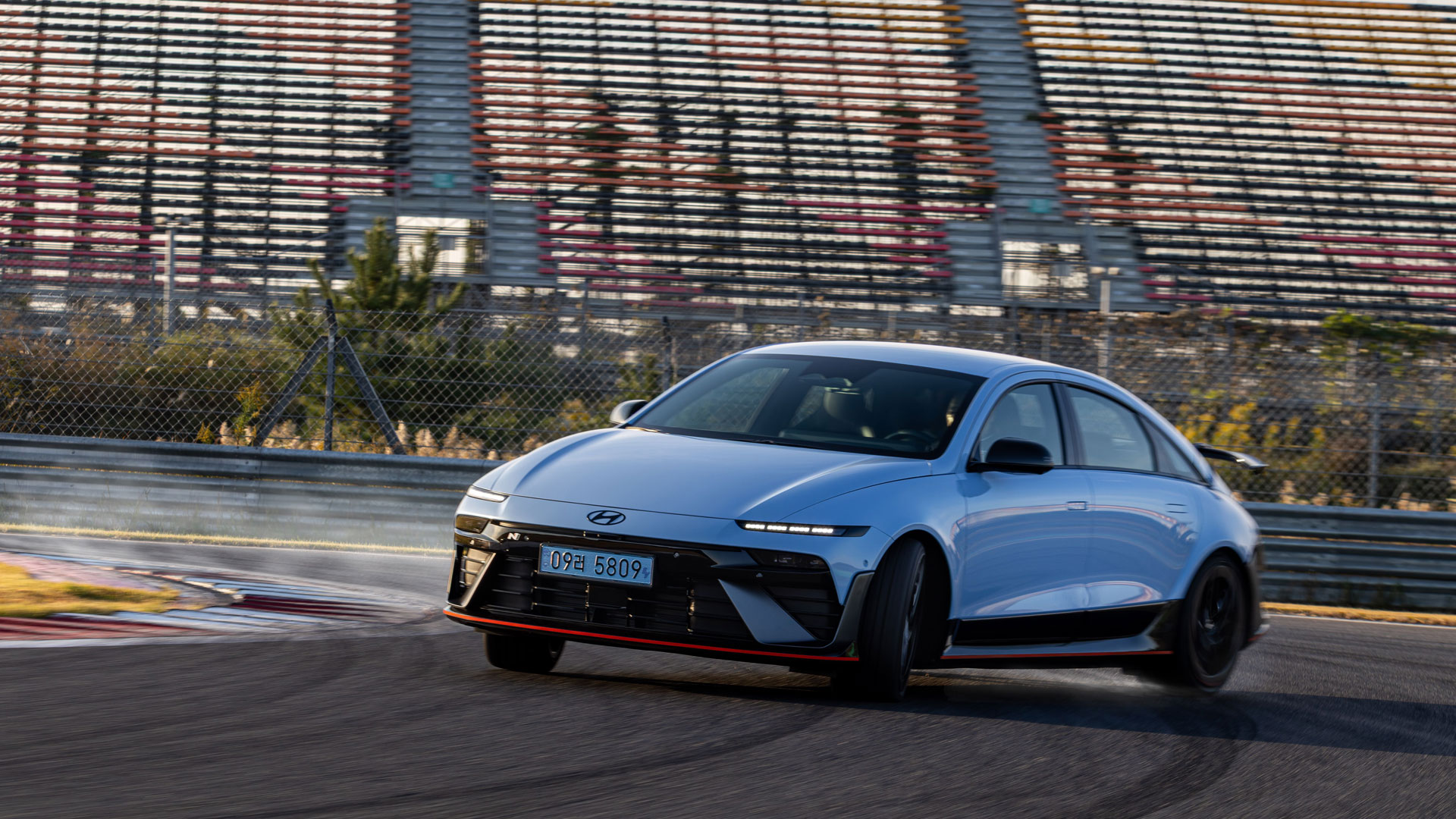
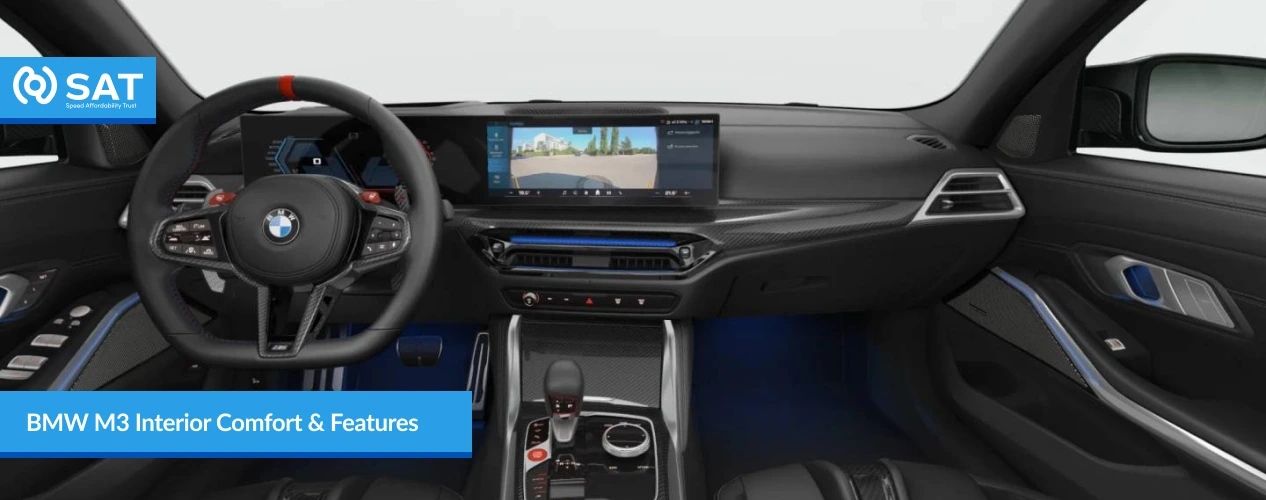
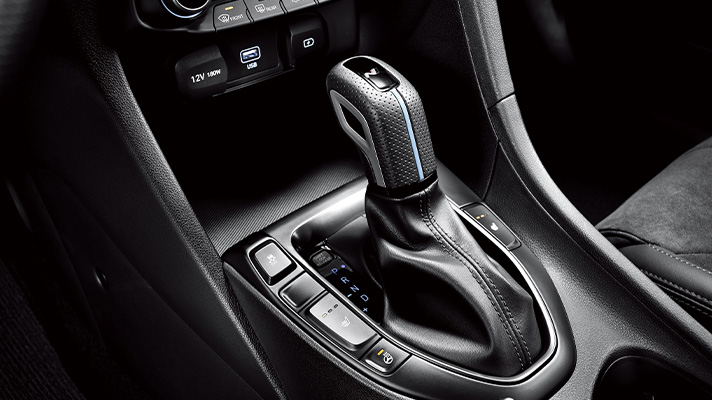
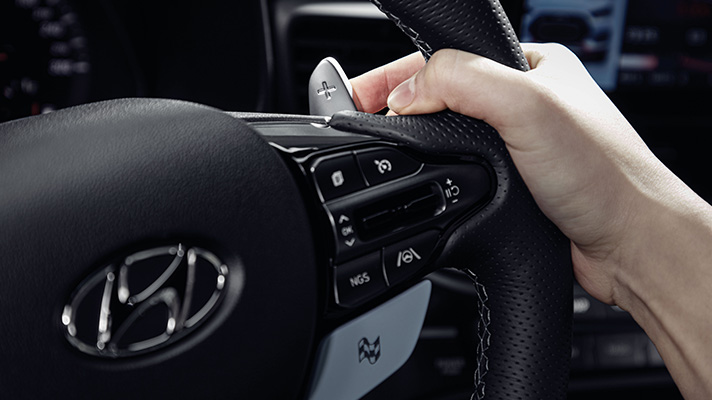
Modern German performance cars have become:
- heavier
- more isolated
- more luxury-focused
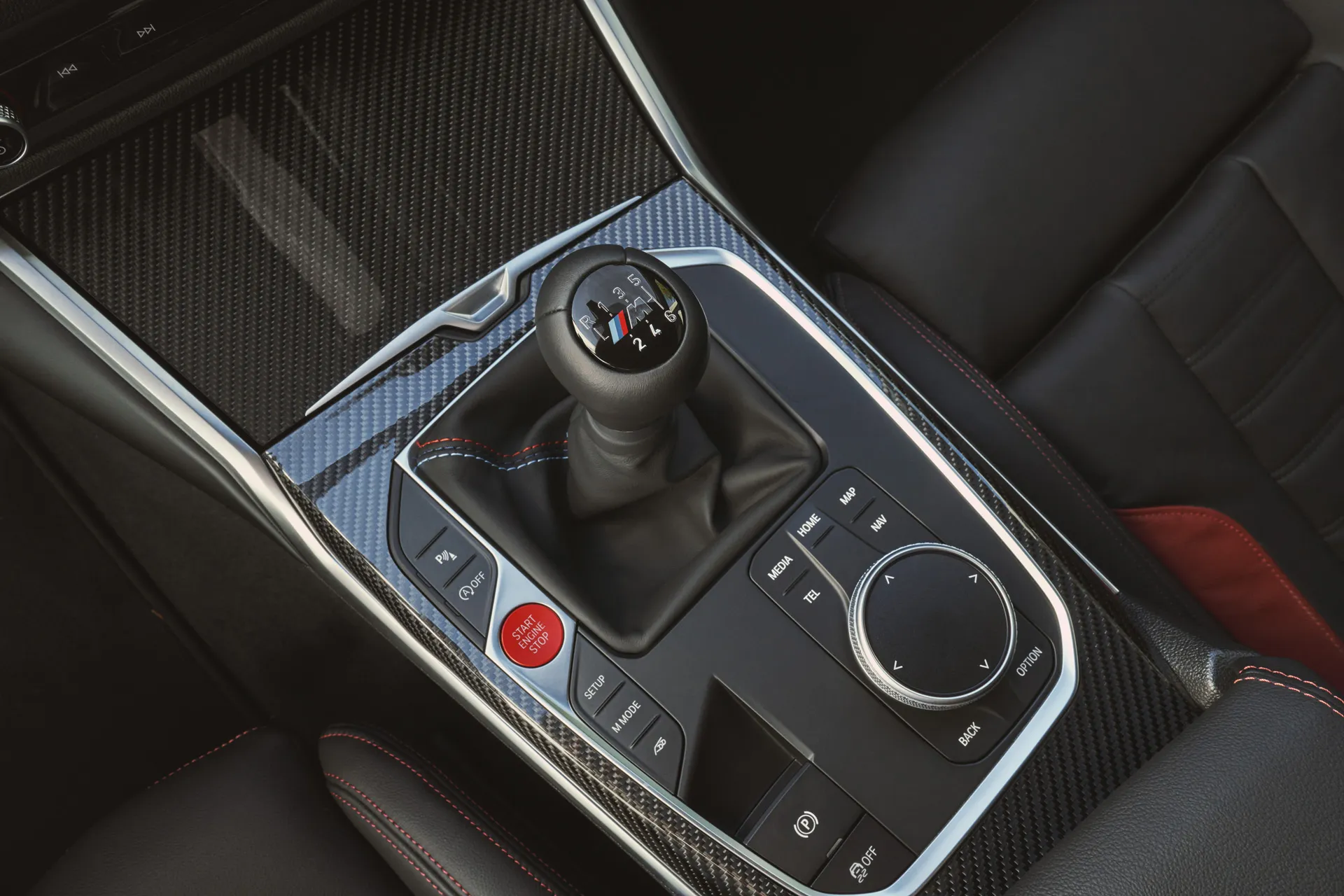
Cars like the BMW M3 or Audi S4 are incredibly fast—but often feel filtered.
In contrast, cars like the Hyundai Elantra N and Hyundai Veloster N prioritize:
- raw feedback
- playful handling
- driver connection
They feel alive in a way many modern German cars don’t anymore.
⚖️ 2. Weight and Simplicity
German performance cars have evolved into technological showcases.
But with that comes weight.
Lots of it.
Hyundai N took a different approach:
- lighter chassis
- simpler systems
- focused engineering
The result?
Cars that feel nimble, responsive, and predictable—especially on track.
💰 3. Value That Makes No Sense (In a Good Way)
Let’s be honest.
German performance cars are expensive.
| Car | Price |
|---|---|
| BMW M3 | $70K+ |
| Audi RS5 | $75K+ |
| Mercedes-AMG C63 | $80K+ |
Now compare that to:
| Car | Price |
|---|---|
| Hyundai Elantra N | ~$35K |
| Hyundai Veloster N | ~$33K |
You’re getting:
- track-ready capability
- serious performance
- daily drivability
…for half the price.
That alone changes the conversation.
🔧 4. Built for Enthusiasts—Not Marketing
Many German performance cars today are designed to:
- impress on paper
- dominate spec sheets
- sell luxury + performance together
Hyundai N feels different.
It’s engineered for people who:
- care about lap times
- enjoy manual transmissions
- actually drive their cars hard
Details like:
- rev-matching
- customizable drive modes
- track-focused cooling systems
…show that Hyundai understands enthusiasts on a deeper level.
🔊 5. Personality Matters
Modern German cars are often described as:
“perfect… but boring.”
Hyundai N cars?
They’re the opposite.
They have:
- aggressive exhaust notes
- playful handling characteristics
- a sense of humor (yes, even simulated pops and bangs)
They’re not trying to be perfect.
They’re trying to be fun.
And that matters more than most people admit.
🧪 6. The Germans Lost Their Edge
This is the uncomfortable truth.
German performance cars used to be:
- cutting-edge
- driver-focused
- uncompromising
Now, many are:
- over-digitized
- overly refined
- designed for broader appeal
Hyundai N stepped into that gap and said:
“We’ll take it from here.”
🚀 7. The Future: EV Performance

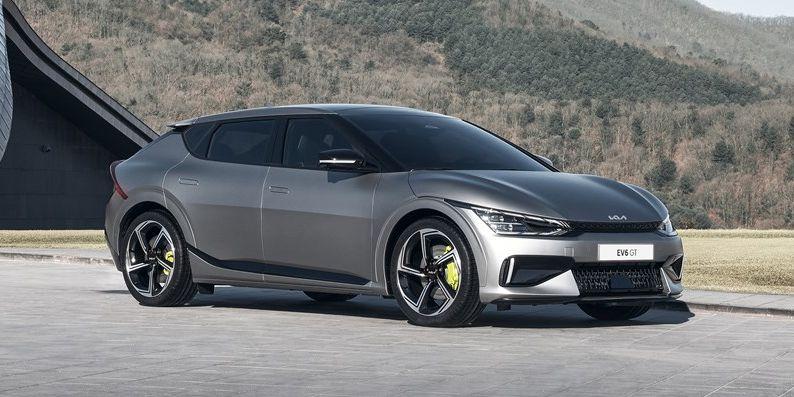
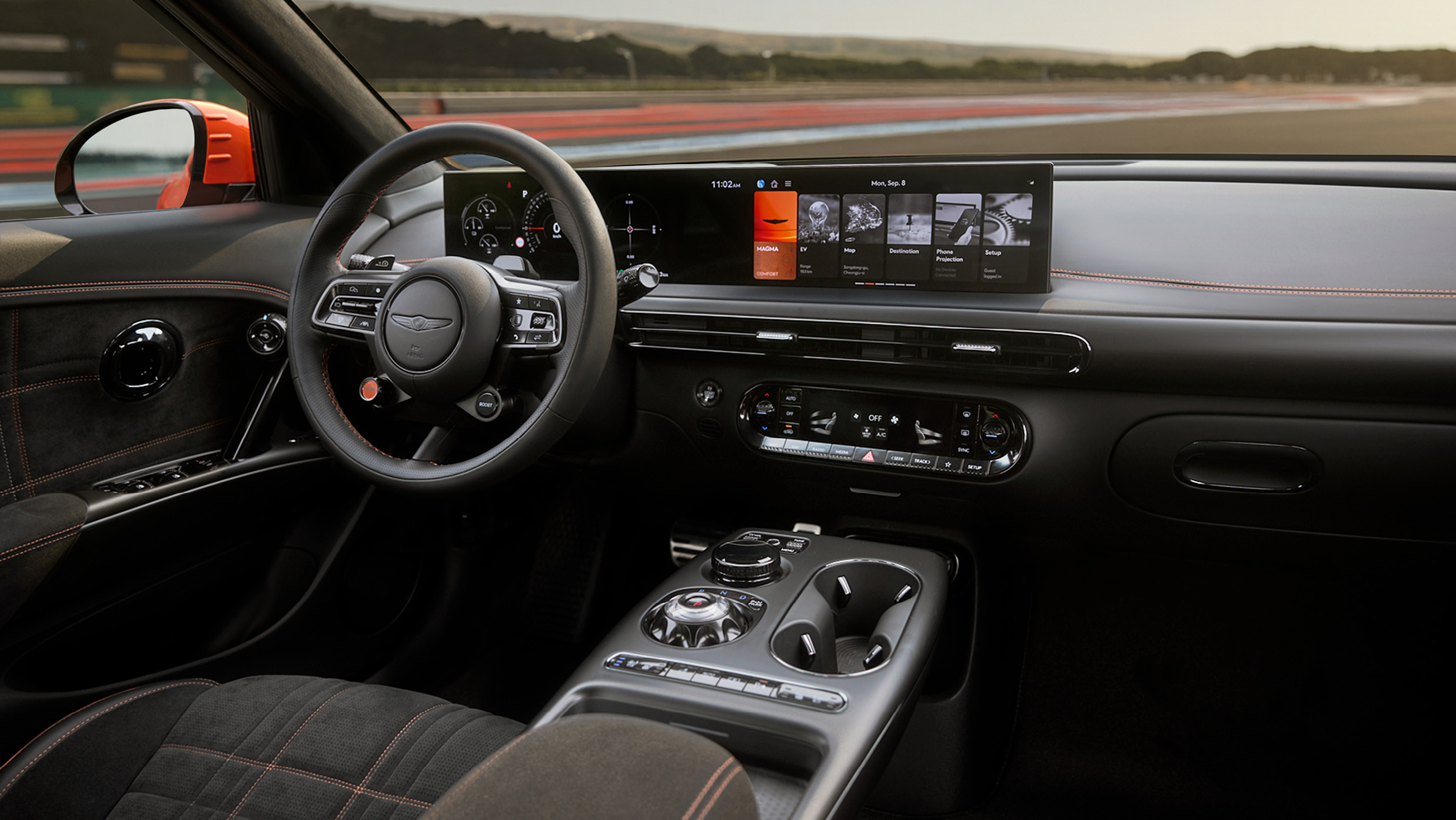
Hyundai isn’t just competing in the present.
It’s shaping the future.
Cars like the Hyundai Ioniq 5 N are introducing:
- simulated gear shifts
- driver-focused EV tuning
- track-ready electric performance
While many German brands are still figuring out how to make EVs feel engaging…
Hyundai is already doing it.
🏁 Final Verdict
Let’s be clear.
German performance cars are still incredible machines.
But they’re no longer untouchable.
Hyundai N has exposed something important:
Performance isn’t just about power.
It’s about how a car makes you feel.
And right now, Hyundai is delivering that feeling better than many brands twice the price.
🔥 Closing Line
Hyundai didn’t just enter the performance game.
It reminded everyone what the game was supposed to be.