0
0
 0
0
Getting into ECU tuning is one of the biggest jumps you can make as a car enthusiast.
It’s where:
- Mechanical meets software
- Power meets precision
But it’s also where people make expensive mistakes fast.
👉 The goal as a beginner is NOT to chase power.
👉 It’s to build understanding safely.
Let’s break down the smartest way to start.
🧠 First: What ECU Work Actually Means


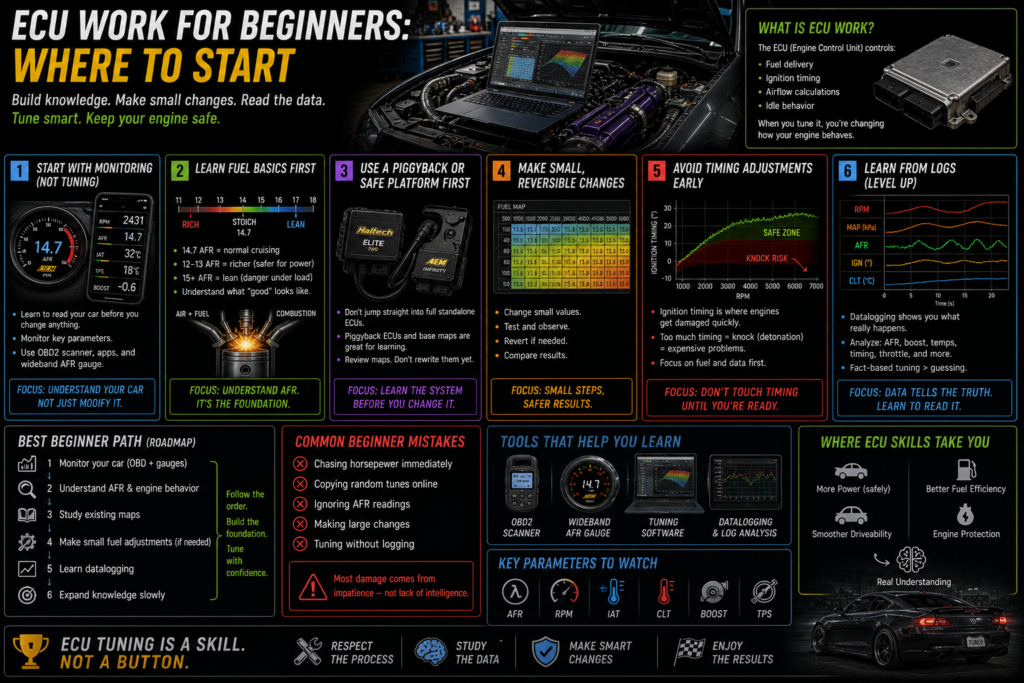
Your ECU (Engine Control Unit) controls:
- Fuel delivery
- Ignition timing
- Airflow calculations
- Idle behavior
When you tune it, you’re changing how your engine behaves.
👉 Done right = smoother, faster, more efficient
👉 Done wrong = engine damage
🔰 1. Start with Monitoring (Not Tuning)


This is the most overlooked step.
Before touching anything:
👉 Learn to read your car
Monitor:
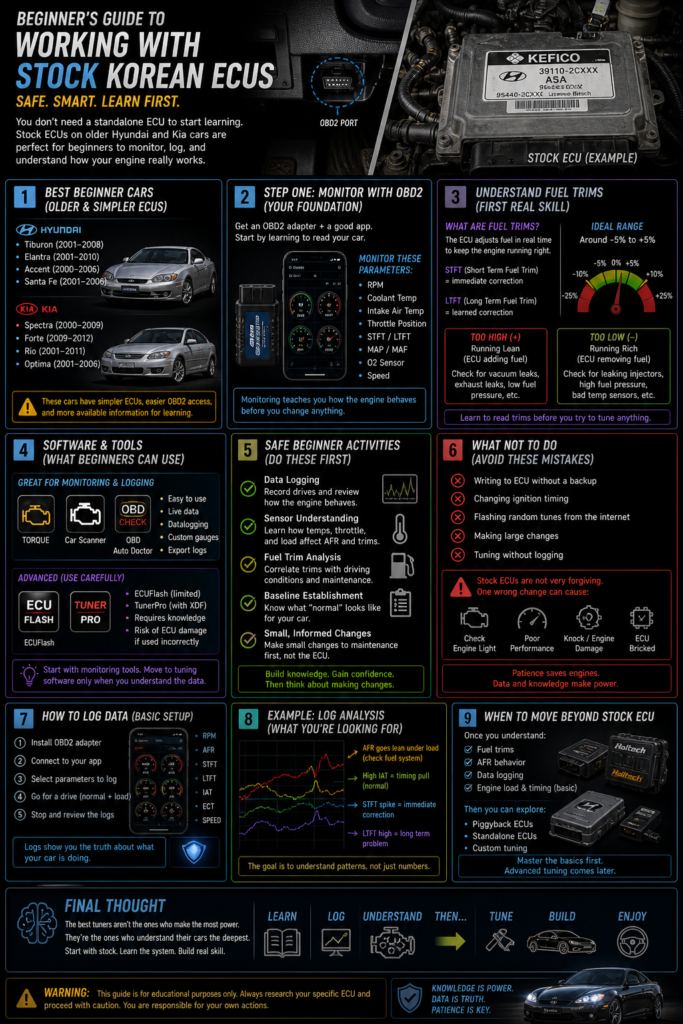
- AFR (air-fuel ratio)
- RPM
- Coolant temp
- Intake air temp
- Throttle position
Tools:
- OBD2 scanner
- Apps (Torque, Car Scanner, etc.)
- Wideband AFR gauge (huge upgrade)
👉 If you can’t read data, you shouldn’t change data.
⚙️ 2. Learn Fuel Basics First


Fuel is the safest place to start conceptually.
Key idea:
- ~14.7 AFR = normal cruising
- Lower (12–13) = richer (safer for power)
- Higher (15+) = lean (danger zone under load)
👉 Understanding AFR is foundational
You don’t need to change it yet—just understand what “good” looks like.
🔧 3. Use a Piggyback or Safe Platform First


Jumping straight into full standalone ECUs is risky.
Better beginner options:
- Piggyback ECUs
- Pre-configured tunes
- Conservative base maps
If you’re on something like a Haltech Elite 750:
👉 Start by reviewing maps—not rewriting them
🧩 4. Make Small, Reversible Changes


Golden rule:
👉 Never make big jumps
Instead:
- Adjust small values
- Test
- Observe results
Then:
- Revert if needed
- Compare changes
👉 Think like a scientist, not a gambler.
🚫 5. Avoid Timing Adjustments Early


Ignition timing is where engines get damaged quickly.
Too aggressive timing =
👉 Knock (detonation) → serious engine damage
As a beginner:
❌ Don’t touch timing maps yet
✔ Focus on understanding fuel and data first
🔁 6. Learn from Logs (This Is Where You Level Up)


Datalogging = recording what your car does during a drive.
This is where real learning happens.
You can see:
- AFR behavior under load
- Temperature changes
- Throttle response
👉 Tuning is less about guessing and more about interpreting logs
🔥 7. Best Beginner Path (Simple Roadmap)
If you want a clean progression:
- Monitor data (OBD + gauges)
- Understand AFR and engine behavior
- Study existing maps
- Make small fuel adjustments (if needed)
- Learn datalogging
- Slowly expand knowledge
👉 Skip steps, and you risk your engine.
⚠️ Common Beginner Mistakes
- ❌ Chasing horsepower immediately
- ❌ Copying random tunes online
- ❌ Ignoring AFR readings
- ❌ Making large changes
- ❌ Tuning without logging
👉 Most damage comes from impatience—not lack of intelligence.
🔮 Final Thought
ECU work isn’t just a mod.
It’s a skillset.
The best tuners aren’t the ones who:
- Make the most power
They’re the ones who:
- Understand systems
- Read data properly
- Make controlled decisions
👉 Start slow, stay disciplined, and you’ll build something far more valuable than horsepower:
Confidence in what your car is actually doing.