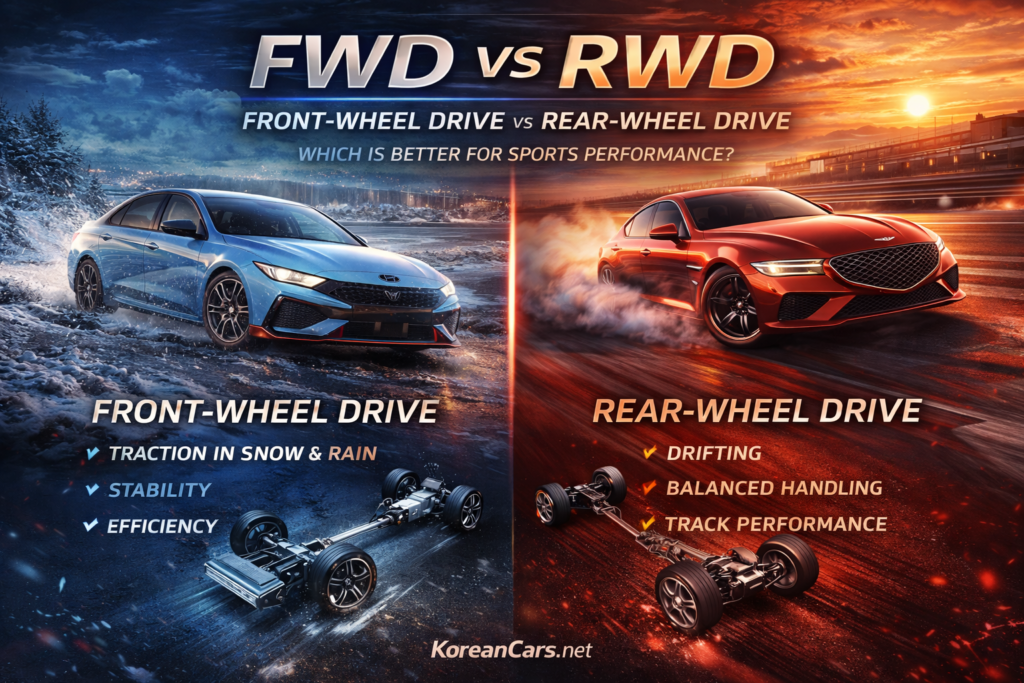
The debate between front-wheel drive (FWD) and rear-wheel drive (RWD) has long been a cornerstone of automotive enthusiasm. From racetracks to winding mountain roads, each drivetrain offers distinct advantages that influence performance, handling, and driving enjoyment. While RWD is traditionally associated with sports cars, modern engineering has allowed FWD vehicles to rival—and occasionally surpass—their rear-driven counterparts under certain conditions.
This guide explores the strengths and weaknesses of both drivetrains across real-world scenarios, including track racing, drifting, daily driving, and adverse weather conditions.
Understanding the Basics
Front-Wheel Drive (FWD)
In a front-wheel-drive vehicle, the engine powers the front wheels. This configuration is common in compact cars and hot hatches due to its efficiency and practicality.
Examples:
- Hyundai Elantra N
- Honda Civic Type R
- Volkswagen Golf GTI
Rear-Wheel Drive (RWD)
In a rear-wheel-drive vehicle, the engine sends power to the rear wheels. This setup is traditionally favored for sports cars and luxury performance vehicles.
Examples:
- Hyundai Genesis Coupe
- Genesis G70
- BMW M3
- Ford Mustang
- Lamborghini Huracán
Performance on Regular Roads
Front-Wheel Drive Advantages
- Predictable handling and stability
- Easier for beginner drivers to control
- Better fuel efficiency due to lighter drivetrain components
- Lower manufacturing and maintenance costs
- Superior traction during acceleration on everyday roads
Because the engine’s weight sits over the driven wheels, FWD cars provide consistent grip, making them ideal for daily commuting and spirited driving on public roads.
Rear-Wheel Drive Advantages
- Better weight distribution
- Improved steering precision
- Enhanced driving dynamics
- Greater balance during cornering
While RWD offers a more engaging driving experience, it typically requires more skill to handle at the limits.
Winner on Regular Roads: Front-Wheel Drive for practicality; Rear-Wheel Drive for driving enjoyment.
Track Performance
Front-Wheel Drive on the Track
FWD cars excel on tight circuits due to their stability and efficient power delivery. However, they face limitations under extreme performance conditions.
Advantages:
- Strong front-end grip
- Confidence-inspiring handling
- Competitive lap times on technical tracks
Disadvantages:
- Understeer at high speeds
- Tire wear concentrated on the front axle
- Reduced acceleration out of corners
Modern performance models like the Hyundai Elantra N and Honda Civic Type R have demonstrated that FWD can be highly competitive on the track.
Rear-Wheel Drive on the Track
RWD remains the preferred configuration for professional motorsports due to its superior balance and power distribution.
Advantages:
- Ideal weight distribution
- Better acceleration and corner exit speeds
- Reduced steering interference
- Enhanced throttle control
Winner on the Track: Rear-Wheel Drive
Drifting Capability
Drifting is one area where rear-wheel drive dominates without question.
Rear-Wheel Drive
- Allows controlled oversteer
- Enables power slides and drift techniques
- Preferred in professional drifting competitions
Front-Wheel Drive
- Cannot sustain traditional drifts
- Relies on lift-off oversteer or handbrake techniques
- Less controllable and less dynamic
Winner for Drifting: Rear-Wheel Drive
Performance in Snow and Slippery Conditions
Front-Wheel Drive Advantages
In winter conditions, FWD vehicles often outperform RWD due to the weight of the engine resting over the driven wheels.
Benefits:
- Improved traction on snow and ice
- Greater stability during acceleration
- Reduced likelihood of spinning out
- More predictable handling
A high-performance FWD car equipped with winter tires can outperform powerful RWD vehicles in slippery conditions.
Rear-Wheel Drive Challenges
- Reduced traction in snow
- Greater risk of oversteer
- Requires skilled handling and winter tires
- Often benefits from electronic stability systems
Winner in Winter Conditions: Front-Wheel Drive
Note: In extreme weather, all-wheel drive (AWD) is typically the superior option.
Acceleration and Power Delivery
Front-Wheel Drive
- Susceptible to torque steer, where the steering wheel pulls under heavy acceleration
- Prone to wheel hop, especially in high-horsepower applications
- Limited by traction constraints
Rear-Wheel Drive
- Provides smoother power delivery
- Allows better weight transfer during acceleration
- Handles higher horsepower more effectively
Winner for Acceleration: Rear-Wheel Drive
Handling Characteristics
| Characteristic | Front-Wheel Drive | Rear-Wheel Drive |
|---|---|---|
| Handling Balance | Understeer | Oversteer |
| Steering Feel | Less precise under load | More responsive |
| Cornering Performance | Stable and predictable | Dynamic and engaging |
| Driver Involvement | Moderate | High |
Cost and Maintenance
Front-Wheel Drive
- Lower production costs
- Better fuel efficiency
- More compact and efficient design
- Reduced maintenance expenses
Rear-Wheel Drive
- Higher manufacturing complexity
- Increased drivetrain components
- Often found in premium or performance vehicles
Winner for Affordability: Front-Wheel Drive
Real-World Scenario Comparison
| Driving Scenario | Best Drivetrain |
|---|---|
| Daily Commuting | Front-Wheel Drive |
| Tight Technical Tracks | Rear-Wheel Drive |
| High-Speed Circuits | Rear-Wheel Drive |
| Drifting | Rear-Wheel Drive |
| Snow and Ice | Front-Wheel Drive |
| Wet Roads | Front-Wheel Drive |
| Drag Racing | Rear-Wheel Drive |
| Fuel Efficiency | Front-Wheel Drive |
| Driver Engagement | Rear-Wheel Drive |
| Beginner Drivers | Front-Wheel Drive |
| Enthusiast Driving | Rear-Wheel Drive |
Can a Front-Wheel Drive Car Beat a Supercar in Winter?
In extreme winter conditions, traction outweighs horsepower. A well-prepared FWD performance car with proper winter tires can outperform a powerful RWD supercar.
For example, a tuned front-wheel-drive vehicle on snow may accelerate and handle more effectively than a rear-wheel-drive Lamborghini struggling for traction. However, all-wheel drive typically remains the ultimate solution in such conditions.
Notable Examples
Front-Wheel Drive Performance Cars
- Hyundai Elantra N
- Honda Civic Type R
- Volkswagen Golf GTI
- MINI Cooper JCW
Rear-Wheel Drive Performance Cars
- Hyundai Genesis Coupe
- Genesis G70
- BMW M4
- Toyota GR Supra
- Ford Mustang
- Porsche 911 (rear-engine, rear-drive configuration)
The Rise of Advanced Engineering
Modern technology has narrowed the performance gap between FWD and RWD. Innovations such as electronic limited-slip differentials, torque vectoring, and advanced suspension systems allow FWD vehicles to deliver remarkable performance once thought exclusive to RWD platforms.
Similarly, traction control systems and stability management have improved the usability of RWD vehicles in everyday conditions.
Final Verdict
There is no universal winner between front-wheel drive and rear-wheel drive—it all depends on the driving environment and intended use.
Choose Front-Wheel Drive If You Want:
- Superior traction in snow and rain
- Lower costs and greater efficiency
- Predictable handling for daily driving
- Competitive performance in hot hatch form
Choose Rear-Wheel Drive If You Want:
- Maximum performance and balance
- Superior track capabilities
- Drifting potential
- A more engaging and dynamic driving experience
Conclusion
Front-wheel drive and rear-wheel drive each offer unique strengths that cater to different driving styles and conditions. While FWD excels in practicality and adverse weather, RWD remains the gold standard for sports performance and driver engagement.
In the end, the choice comes down to your priorities—whether you value everyday usability or the thrill of pure performance.
Both drivetrains have earned their place in automotive history, and each continues to shape the future of high-performance engineering.