0
0
 0
0
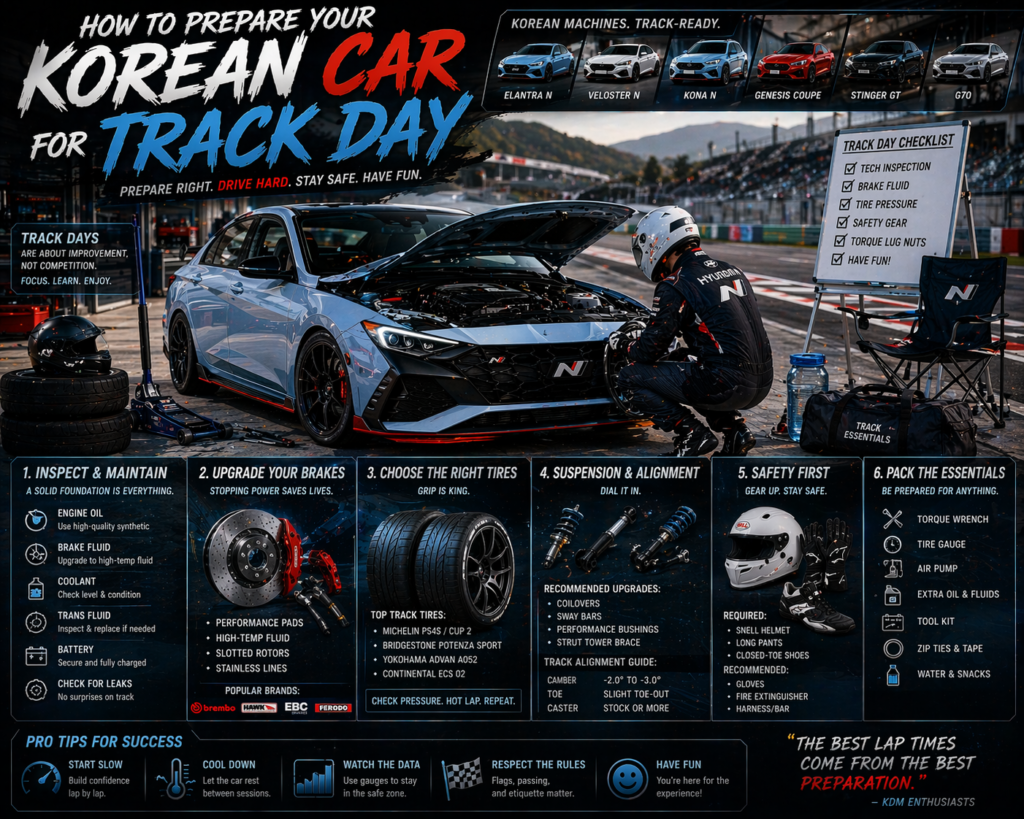
Track days offer enthusiasts the perfect opportunity to push their vehicles to the limit in a safe and controlled environment. For owners of Korean performance cars—such as the Hyundai Elantra N, Veloster N, Kona N, Genesis Coupe, Kia Stinger GT, and Genesis G70—a day at the circuit is both thrilling and rewarding.
However, proper preparation is essential to ensure safety, reliability, and optimal performance. This comprehensive guide will walk you through everything you need to know to prepare your Korean car for a successful track day.
Why Take Your Korean Car to the Track?
Korean performance vehicles have gained global recognition for their engineering, affordability, and track-ready capabilities. Hyundai’s N division, in particular, was developed and tested at the Nürburgring, making these cars ideal for spirited driving.
Benefits of Track Driving
- Improves driving skills and confidence
- Tests your car’s true capabilities
- Provides a safe alternative to street racing
- Enhances understanding of vehicle dynamics
- Connects you with fellow enthusiasts
Whether you’re a beginner or an experienced driver, track days offer invaluable experience.
1. Perform a Comprehensive Vehicle Inspection
Before heading to the track, ensure your car is in excellent mechanical condition.
Essential Pre-Track Checklist
- Engine Oil: Change if nearing service interval; use high-quality synthetic oil.
- Brake Fluid: Upgrade to high-temperature brake fluid.
- Coolant: Verify levels and condition to prevent overheating.
- Transmission Fluid: Check for optimal performance and longevity.
- Battery: Ensure it is securely mounted and fully charged.
- Belts and Hoses: Inspect for cracks or wear.
- Leaks: Check underneath the vehicle for any fluid leaks.
- Wheel Torque: Confirm lug nuts are properly tightened.
A well-maintained car is the foundation of a successful track day.
2. Upgrade Your Brake System
Brakes are the most critical component for track performance. High speeds and repeated hard braking generate significant heat.
Recommended Upgrades
- Performance Brake Pads: Improve stopping power and reduce fade.
- High-Temperature Brake Fluid: Essential for sustained performance.
- Slotted or Drilled Rotors: Enhance heat dissipation.
- Stainless Steel Brake Lines: Provide improved pedal feel.
Recommended Brands
- Brembo
- Hawk Performance
- EBC Brakes
- Ferodo
Pro Tip: Flush your brake fluid before your track event for maximum reliability.
3. Choose the Right Tires
Tires are the single most important performance upgrade for the track. They directly impact grip, handling, and braking.
Recommended Tire Options
- Michelin Pilot Sport 4S
- Michelin Pilot Sport Cup 2
- Bridgestone Potenza Sport
- Yokohama Advan A052
- Continental ExtremeContact Sport 02
Track Tire Tips
- Adjust tire pressure according to track conditions.
- Check pressures after each session.
- Inspect for uneven wear or damage.
Proper tires can dramatically improve lap times and safety.
4. Optimize Suspension and Alignment
A well-tuned suspension enhances stability, responsiveness, and cornering performance.
Recommended Upgrades
- Coilovers or performance lowering springs
- Upgraded sway bars
- Performance bushings
- Strut tower braces
Suggested Alignment Settings for Track Use
| Setting | Recommended Range |
|---|---|
| Camber | -2.0° to -3.0° |
| Toe | Slight toe-out in front |
| Caster | Factory or slightly increased |
These adjustments maximize tire contact and improve cornering grip.
5. Reduce Unnecessary Weight
Reducing weight improves acceleration, braking, and handling.
Items to Remove
- Spare tire and jack
- Floor mats
- Trunk cargo
- Child seats
- Unnecessary interior items
Every kilogram removed enhances performance and efficiency on the track.
6. Monitor Engine Performance
Tracking your vehicle places increased stress on the engine. Monitoring critical parameters ensures safe operation.
Essential Gauges to Monitor
- Oil temperature
- Coolant temperature
- Boost pressure
- Air-fuel ratio (AFR)
Vehicles equipped with performance displays—such as Hyundai N models—offer valuable real-time data for track driving.
7. Ensure Proper Safety Equipment
Safety should always be your top priority.
Required Safety Gear
- Snell-rated helmet
- Long pants and closed-toe shoes
- Valid driver’s license
Recommended Safety Enhancements
- Racing gloves
- Fire extinguisher
- Performance driving gloves
- Roll bar or harness (for advanced drivers)
Always review the specific safety requirements of your chosen track.
8. Pack a Track Day Essentials Kit
Preparation extends beyond your vehicle. Bringing the right tools and supplies ensures a smooth experience.
Track Day Checklist
- Torque wrench
- Tire pressure gauge
- Portable air pump
- Extra engine oil
- Brake fluid
- Coolant
- Basic tool kit
- Zip ties and duct tape
- Folding chair and sunscreen
- Water and snacks
Being well-prepared allows you to focus on driving.
9. Recommended Korean Cars for Track Days
These Korean performance models excel on the circuit:
| Vehicle | Track Strength |
|---|---|
| Hyundai Elantra N | Exceptional handling and balance |
| Hyundai Veloster N | Agile hot hatch performance |
| Hyundai Kona N | Unique and capable track-ready SUV |
| Genesis Coupe | Rear-wheel-drive dynamics |
| Kia Stinger GT | High-speed stability and power |
| Genesis G70 | Luxury performance with precision |
| Hyundai IONIQ 5 N | Cutting-edge electric performance |
Each of these vehicles demonstrates the growing influence of Korean engineering in motorsports.
10. Track Day Etiquette and Tips
To ensure a safe and enjoyable experience, follow proper track etiquette.
Best Practices
- Attend the driver’s briefing.
- Start slowly and build confidence.
- Allow faster drivers to pass.
- Respect track flags and rules.
- Avoid aggressive driving.
- Focus on smooth, controlled inputs.
- Learn the racing line.
Track days are about improvement—not competition.
Estimated Budget for Track Preparation
| Upgrade | Estimated Cost |
|---|---|
| Performance Brake Pads | $150–$400 |
| High-Temp Brake Fluid | $50–$100 |
| Performance Tires | $800–$1,500 |
| Alignment | $100–$300 |
| Helmet | $200–$500 |
| Coilovers (Optional) | $800–$2,500 |
Common Mistakes to Avoid
- Skipping a pre-track inspection
- Neglecting brake upgrades
- Ignoring tire pressure management
- Overdriving beyond skill level
- Failing to cool down the car between sessions
- Forgetting to torque lug nuts
- Disabling safety systems prematurely
Avoiding these mistakes will ensure a safe and rewarding experience.
Conclusion
Preparing your Korean car for a track day is both an exciting and rewarding process. With proper maintenance, strategic upgrades, and the right safety measures, vehicles from Hyundai, Kia, and Genesis can deliver exceptional performance on the circuit.
From the precision of the Elantra N to the rear-wheel-drive thrill of the Genesis Coupe, Korean cars have firmly established themselves as formidable contenders in the world of high-performance driving.
A well-prepared car not only enhances lap times but also elevates your confidence and enjoyment behind the wheel. With the right preparation, your first—or next—track day will be an unforgettable experience.