0
0
 0
0
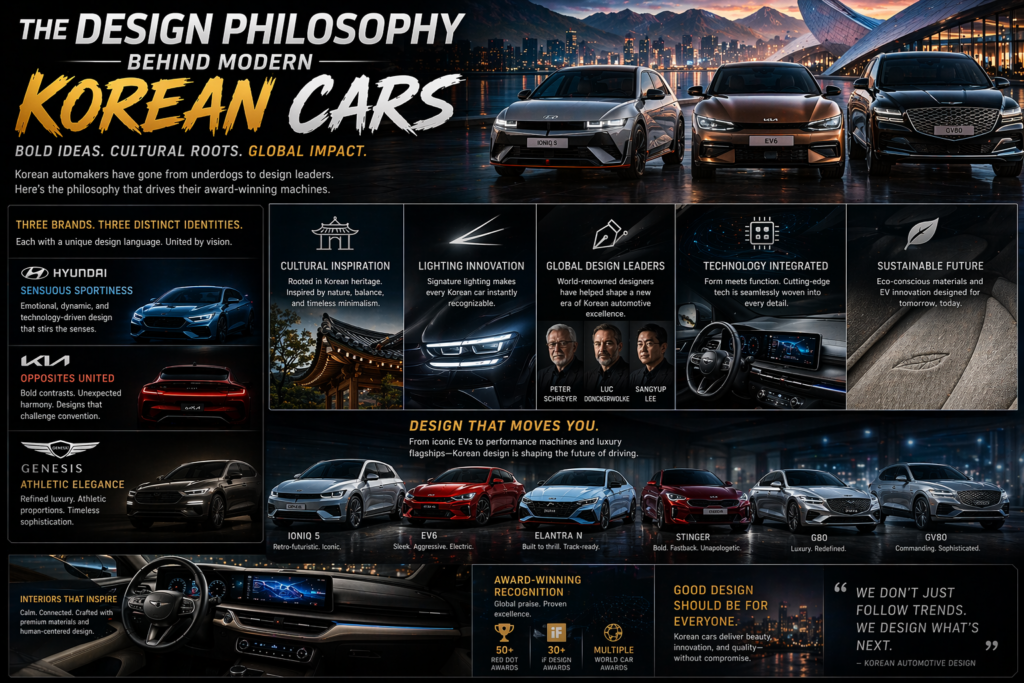
Over the past two decades, South Korea has transformed from an emerging automotive manufacturer into a global leader in innovation, luxury, and design. Once known primarily for affordability, Korean automakers now set industry standards with vehicles that combine cutting-edge technology, bold aesthetics, and exceptional value. Brands such as Hyundai, Kia, and Genesis have redefined global perceptions, earning accolades from critics and consumers alike.
At the heart of this transformation lies a powerful and deliberate approach: a design philosophy rooted in culture, innovation, and forward-thinking vision. This article explores the principles shaping modern Korean automotive design and explains why Korean cars have become some of the most visually compelling vehicles on the road today.
A New Era of Automotive Identity
Modern Korean cars are instantly recognizable. Gone are the days of derivative styling; today’s designs are bold, distinctive, and purposeful. Each Korean automaker has developed a unique visual language that reflects its brand identity and long-term vision.
Brand Design Languages
- Hyundai – “Sensuous Sportiness”
Emphasizes emotional appeal through dynamic proportions, sculpted surfaces, and innovative lighting. - Kia – “Opposites United”
Blends contrasting elements—sharp and soft, futuristic and natural—to create striking and unconventional designs. - Genesis – “Athletic Elegance”
Combines performance-inspired proportions with refined luxury and timeless sophistication.
These philosophies have enabled Korean brands to stand out in a competitive global market.
The Influence of Korean Culture
Korean automotive design draws deeply from the nation’s cultural heritage. Traditional Korean art, architecture, and philosophy influence modern aesthetics, resulting in vehicles that balance simplicity, harmony, and sophistication.
Cultural Inspirations
- Minimalism: Inspired by traditional Korean design principles, emphasizing clean lines and uncluttered spaces.
- Harmony and Balance: Reflecting Confucian ideals of symmetry and proportion.
- Natural Inspiration: Drawing from landscapes, light, and organic forms.
- Craftsmanship: Echoing Korea’s legacy of fine artistry and attention to detail.
This fusion of tradition and modernity creates vehicles that feel both futuristic and culturally grounded.
The Power of Lighting Innovation
One of the most defining characteristics of modern Korean cars is their pioneering use of lighting. LED technology has become a signature element, enhancing both aesthetics and functionality.
Signature Lighting Elements
- Hyundai’s Parametric Pixel Lights seen in the IONIQ lineup.
- Kia’s Star Map Lighting featured on models like the EV9.
- Genesis’ Two-Line Headlight Design, symbolizing the brand’s identity.
These distinctive lighting signatures ensure instant recognition, day or night, while reinforcing each brand’s visual identity.
Global Talent and Design Leadership
A key factor behind Korea’s design revolution has been the recruitment of world-renowned automotive designers. By attracting talent from prestigious European brands, Korean automakers have accelerated their global competitiveness.
Notable Industry Leaders
- Peter Schreyer – Former Audi designer who reshaped Kia’s identity with the iconic “Tiger Nose” grille.
- Luc Donckerwolke – Former Bentley and Lamborghini designer who now leads Genesis design.
- SangYup Lee – Head of Hyundai Global Design, known for his work on iconic vehicles such as the Chevrolet Camaro.
Their expertise has helped elevate Korean cars to the forefront of global automotive design.
Innovation Through Technology
Modern Korean vehicles seamlessly integrate advanced technology into their design. Unlike traditional luxury brands that often prioritize heritage, Korean automakers embrace the future.
Technological Design Innovations
- Ultra-wide digital instrument clusters
- Augmented reality head-up displays
- Minimalist touch interfaces
- Biometric fingerprint authentication
- Sustainable and eco-friendly materials
- Over-the-air software updates
This approach ensures that form and function coexist harmoniously.
Electrification and the Future of Design
The transition to electric vehicles has given Korean designers unprecedented creative freedom. Without the constraints of traditional combustion engines, they have reimagined proportions, interiors, and aerodynamics.
Standout Electric Models
- Hyundai IONIQ 5: Retro-futuristic styling inspired by the Hyundai Pony.
- Kia EV6: Sleek and aerodynamic with a sporty presence.
- Genesis GV60: A bold expression of futuristic luxury.
These vehicles demonstrate how Korean automakers are leading the charge into the next era of mobility.
Interior Design: Luxury Meets Minimalism
Korean manufacturers have also redefined automotive interiors, focusing on comfort, elegance, and user-centric design.
Key Interior Elements
- Panoramic digital displays
- Ambient mood lighting
- Sustainable materials and eco-conscious fabrics
- Open, uncluttered layouts
- Premium finishes such as Nappa leather and real wood trim
Genesis, in particular, has been praised for creating interiors that rival—and often surpass—those of established German luxury brands.
Design Rooted in Value and Accessibility
One of the defining characteristics of modern Korean cars is their ability to deliver world-class design at competitive prices. This democratization of luxury has disrupted traditional automotive hierarchies.
Core Principles
- Premium aesthetics without premium pricing
- Innovation accessible to a broader audience
- High-quality materials and craftsmanship
- Attention to detail across all segments
This philosophy ensures that exceptional design is not limited to ultra-luxury markets.
Award-Winning Global Recognition
The success of Korean automotive design is reflected in numerous international awards and accolades.
Notable Achievements
- Red Dot Design Awards
- iF Design Awards
- World Car of the Year honors
- IIHS Top Safety Picks
- J.D. Power Design Recognition
These achievements validate Korea’s position as a leader in modern automotive design.
Iconic Models That Define Modern Korean Design
| Brand | Model | Design Significance |
|---|---|---|
| Hyundai | IONIQ 5 | Retro-futuristic innovation |
| Hyundai | Elantra N | Bold performance styling |
| Kia | EV6 | Aerodynamic and futuristic |
| Kia | Stinger | Sporty grand tourer elegance |
| Genesis | G80 | Refined luxury sedan |
| Genesis | GV80 | Sophisticated flagship SUV |
| Genesis | GV60 | Futuristic electric luxury |
Why Modern Korean Car Design Stands Out
Key Strengths
- Distinctive and recognizable styling
- Cultural inspiration blended with modern innovation
- Industry-leading lighting technology
- Exceptional value for money
- World-class interior craftsmanship
- Forward-thinking electric vehicle designs
- Strong global design leadership
Together, these elements form the foundation of Korea’s automotive design revolution.
Conclusion
The design philosophy behind modern Korean cars represents a harmonious fusion of tradition, innovation, and global influence. By embracing bold aesthetics, cutting-edge technology, and cultural authenticity, Hyundai, Kia, and Genesis have redefined what consumers expect from contemporary automobiles.
No longer followers, Korean automakers are now leaders—setting trends that shape the future of the automotive industry. As electrification and technological advancement continue to accelerate, Korean design will remain at the forefront, redefining mobility for generations to come.
Modern Korean cars are more than transportation—they are moving works of art.