0
0
 0
0
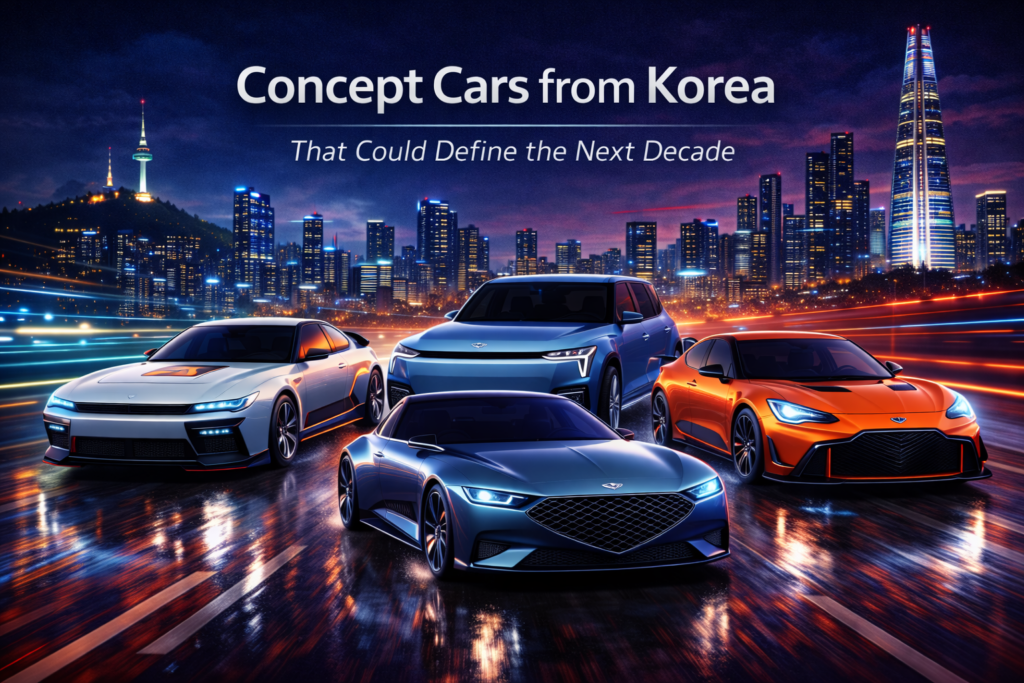
In the rapidly evolving world of automotive innovation, concept cars serve as a glimpse into the future. For Korean automakers like Hyundai, Kia, and Genesis, these futuristic machines are not just design exercises—they are bold statements of intent. They reveal where technology, performance, and design are heading, often years before production models catch up.
Over the past decade, Korean concept cars have grown increasingly ambitious, blending cutting-edge electrification, autonomous capabilities, and striking aesthetics. Many of these concepts are already influencing production vehicles, signaling that Korea is not just keeping up with global trends—it’s helping define them.
Hyundai N Vision 74: Retro Meets Hydrogen Future


One of the most talked-about concept cars in recent years, the Hyundai N Vision 74 blends retro styling with futuristic hydrogen technology.
Key Highlights:
- Hydrogen fuel cell hybrid performance system
- Over 600 horsepower potential
- Inspired by the original Hyundai Pony Coupe concept
- Rear-wheel-drive, performance-focused layout
The N Vision 74 represents a bold direction where heritage meets innovation. It also signals Hyundai’s willingness to explore alternative performance technologies beyond traditional EVs.
Genesis X Concept Series: The Future of Luxury


Genesis has been pushing the boundaries of luxury design through its X Concept series, including the X Coupe, Speedium Coupe, and Convertible.
Key Highlights:
- Fully electric grand touring platforms
- Minimalist yet ultra-premium interiors
- Distinctive two-line lighting signature
- Emphasis on sustainability and craftsmanship
These concepts preview the future of Genesis design and hint at upcoming production EVs that will challenge the likes of Bentley and Mercedes-Benz.
Kia EV9 Concept: Electric SUVs Reimagined


The Kia EV9 Concept redefined what an electric SUV could be, with a focus on space, sustainability, and technology.
Key Highlights:
- Ultra-modern, boxy design with strong presence
- Lounge-style interior with rotating seats
- Sustainable materials throughout the cabin
- Advanced autonomous driving features
Much of the EV9 concept has already made its way into production, proving Kia’s ability to turn bold ideas into reality.
Hyundai Prophecy Concept: The EV Design Revolution


The Hyundai Prophecy Concept introduced a radical approach to EV design, prioritizing aerodynamics and minimalism.
Key Highlights:
- Ultra-sleek, aerodynamic silhouette
- Joystick steering controls instead of a traditional wheel
- Focus on interior space and comfort
- Direct inspiration for the Hyundai Ioniq 6
The Prophecy demonstrates how EV platforms allow designers to rethink traditional automotive layouts entirely.
Genesis GV60 Magma Concept: Performance Meets Luxury EV


Genesis is also entering the high-performance EV space with its Magma concept line.
Key Highlights:
- High-performance electric drivetrain
- Aggressive aerodynamic enhancements
- Track-focused tuning
- Premium materials combined with racing DNA
This concept signals Genesis’ intention to compete in the luxury performance EV segment.
Why Korean Concept Cars Matter
1. Faster Transition to Production
Unlike many Western automakers, Korean brands often bring concept features to production quickly. Vehicles like the Ioniq 5, Ioniq 6, and Kia EV9 closely resemble their concept counterparts.
2. Bold Design Philosophy
Korean automakers are not afraid to take risks. Their concepts often push boundaries in ways that influence the entire industry.
3. Leadership in Electrification
With dedicated EV platforms and advanced battery technologies, Korea is at the forefront of the electric revolution.
4. Integration of Technology
From autonomous driving to AI-powered interiors, Korean concept cars showcase the future of mobility as a seamless blend of hardware and software.
The Next Decade: What to Expect
Based on current concept trends, the next decade of Korean cars will likely feature:
- Fully electric lineups across all segments
- Hydrogen-powered performance vehicles
- Autonomous driving becoming mainstream
- Ultra-minimalist, lounge-like interiors
- Continued blending of luxury and performance
- Faster innovation cycles compared to global competitors
Conclusion
Korean concept cars are no longer just experimental—they are blueprints for the future. From the retro-futuristic Hyundai N Vision 74 to the luxurious Genesis X series, these vehicles demonstrate a clear vision: innovation without compromise.
As Hyundai, Kia, and Genesis continue to push boundaries, it’s becoming increasingly clear that the next decade of automotive evolution will be heavily influenced by Korea.
For enthusiasts and industry watchers alike, this is more than exciting—it’s transformative.