0
0
 0
0
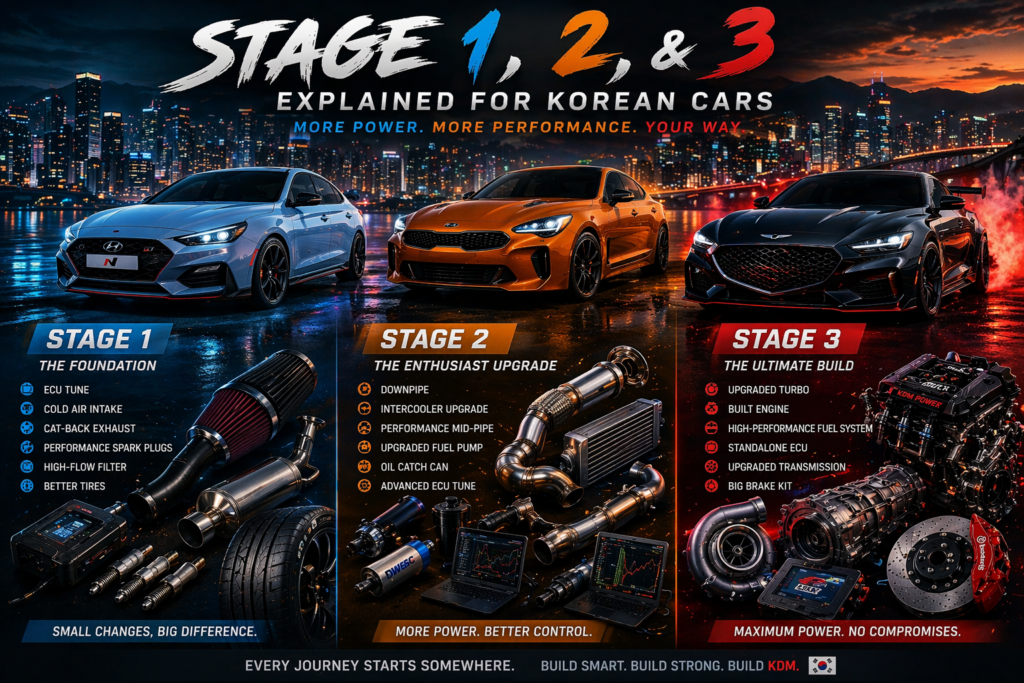
As Korean performance vehicles continue to rise in popularity, enthusiasts are increasingly exploring modifications to unlock their full potential. From turbocharged Hyundai N models to rear-wheel-drive Genesis platforms and high-performance Kia vehicles, the concept of staged tuning has become a cornerstone of modern car culture.
But what exactly do Stage 1, Stage 2, and Stage 3 modifications mean? While definitions may vary slightly among tuners, the general framework remains consistent across the automotive world. This guide explains each stage in detail, specifically tailored to Korean cars.
What Do “Stages” Mean in Car Tuning?
“Stages” refer to progressive levels of performance upgrades. Each stage builds upon the previous one, increasing power, improving handling, and enhancing overall driving dynamics. These classifications help enthusiasts understand the complexity, cost, and expected performance gains of modifications.
General Overview
| Stage | Complexity | Cost | Performance Gain | Daily Drivability |
|---|---|---|---|---|
| Stage 1 | Low | $ | Moderate | Excellent |
| Stage 2 | Medium | $$ | Significant | Very Good |
| Stage 3 | High | $$$$ | Extreme | Variable |
While there is no universal standard, these definitions are widely accepted within the tuning community.
Stage 1: The Foundation of Performance
Stage 1 modifications are the most accessible and cost-effective upgrades. They focus on optimizing factory components without requiring extensive mechanical changes. These upgrades enhance performance while maintaining reliability and daily drivability.
Typical Stage 1 Upgrades
- ECU remap or piggyback tuner
- High-performance air intake
- Performance spark plugs
- High-flow air filters
- Cat-back exhaust systems
- Upgraded tires
- Blow-off valve upgrades (for turbocharged models)
Expected Gains
- Turbocharged Engines: +15–40 horsepower
- Naturally Aspirated Engines: +5–15 horsepower
Key Benefits
- Affordable entry into tuning
- Improved throttle response and acceleration
- Maintains factory reliability
- Ideal for daily drivers
Korean Car Examples
- Hyundai Elantra N / Veloster N: ECU tune and intake upgrades
- Kia Stinger GT: Stage 1 ECU remap
- Genesis G70 3.3T: Performance tuning and upgraded filters
- Hyundai Genesis Coupe 2.0T: Intake and ECU optimization
Best For: Enthusiasts seeking noticeable performance gains without sacrificing comfort or reliability.
Stage 2: The Enthusiast’s Upgrade
Stage 2 builds upon Stage 1 modifications by improving airflow and supporting higher power levels. These upgrades typically require hardware changes and professional tuning.
Typical Stage 2 Upgrades
- High-flow downpipe or sport catalytic converter
- Front-mount intercooler upgrades
- Performance mid-pipe systems
- Upgraded fuel pumps
- Larger throttle bodies
- Oil catch cans
- Advanced ECU tuning
Expected Gains
- Turbocharged Engines: +40–80 horsepower
- Enhanced torque and improved turbo response
Key Benefits
- Significant performance improvements
- Better thermal efficiency and cooling
- Increased turbo reliability under load
- Enhanced exhaust sound and responsiveness
Korean Car Examples
- Hyundai Elantra N: Downpipe, intercooler, and ECU tune
- Kia Stinger GT: Intercooler and intake upgrades
- Genesis Coupe 2.0T: Turbo-back exhaust and fueling upgrades
- Genesis G70 3.3T: Stage 2 tuning with upgraded intakes and downpipes
Best For: Enthusiasts who want substantial power gains while retaining street usability.
Stage 3: The Ultimate Performance Build
Stage 3 modifications represent the pinnacle of automotive tuning. These builds involve major mechanical upgrades designed for maximum power and performance. While still streetable in some cases, they often push vehicles toward track or competition use.
Typical Stage 3 Upgrades
- Upgraded turbochargers or twin-turbo systems
- Forged pistons and connecting rods
- Built engines and strengthened internals
- High-performance fuel injectors and fuel systems
- Standalone engine management systems
- Performance clutches and upgraded transmissions
- Limited-slip differentials
- Big brake kits
- Custom dyno tuning
Expected Gains
- Turbocharged Engines: +100–300+ horsepower, depending on the platform
Key Benefits
- Maximum performance potential
- Track-ready capability
- Highly customizable builds
- Elite-level tuning achievements
Korean Car Examples
- Hyundai Genesis Coupe 2.0T: Built engine with a large turbo setup
- Kia Stinger GT: Hybrid turbo upgrades exceeding 500 horsepower
- Genesis G70 3.3T: Fully built twin-turbo performance builds
- Hyundai Elantra N: Big-turbo conversions for track-focused performance
Best For: Dedicated enthusiasts seeking extreme power and motorsport-level performance.
Supporting Modifications Across All Stages
Regardless of tuning level, supporting upgrades are essential for safety, reliability, and optimal performance.
Recommended Enhancements
- Performance tires
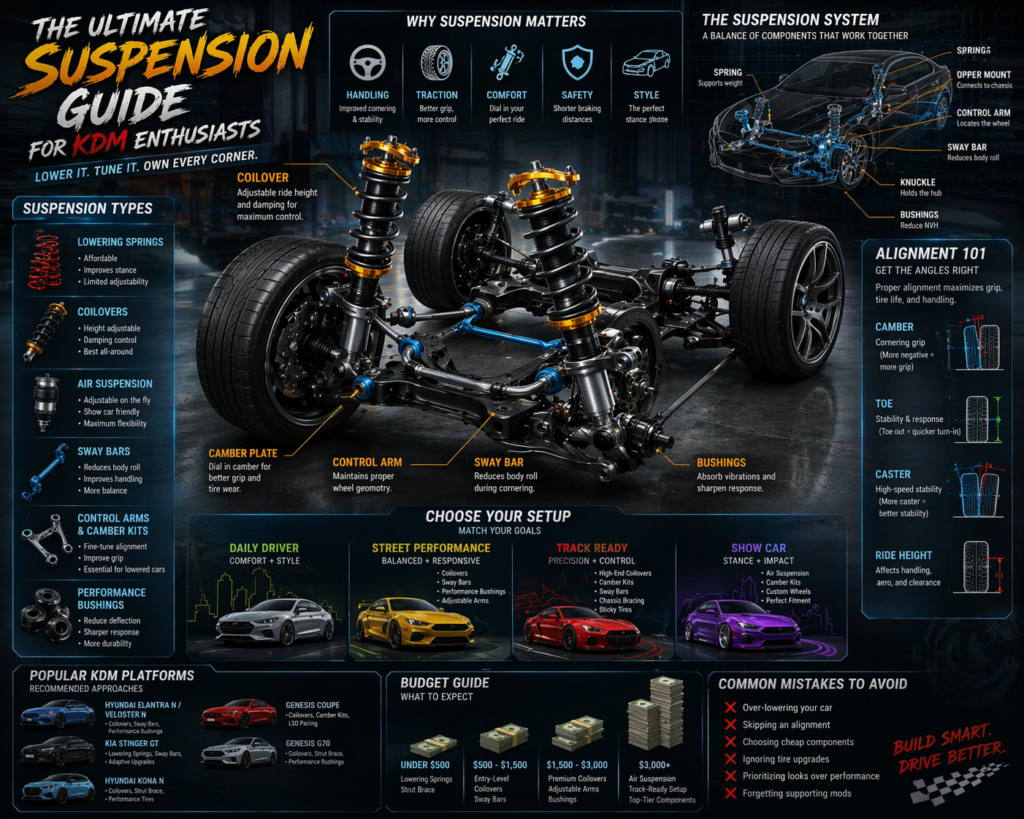
- Upgraded suspension systems
- Coilovers or lowering springs
- Strut braces
- Big brake kits
- Oil coolers and radiators
- Differential upgrades
These components ensure that increased power is effectively transferred to the road.
Stage Comparison Summary
| Feature | Stage 1 | Stage 2 | Stage 3 |
|---|---|---|---|
| ECU Tune | ✔ | ✔ | ✔ |
| Intake & Exhaust | ✔ | ✔ | ✔ |
| Downpipe | ✖ | ✔ | ✔ |
| Intercooler Upgrade | ✖ | ✔ | ✔ |
| Turbo Upgrade | ✖ | ✖ | ✔ |
| Engine Build | ✖ | ✖ | ✔ |
| Fuel System Upgrade | ✖ | Optional | ✔ |
| Daily Drivable | Excellent | Very Good | Depends on Setup |
| Track Ready | Limited | Moderate | Excellent |
Estimated Costs
| Stage | Estimated Cost Range |
|---|---|
| Stage 1 | $500 – $2,000 |
| Stage 2 | $2,000 – $6,000 |
| Stage 3 | $7,000 – $20,000+ |
Costs vary depending on the vehicle, parts, and labor involved.
Why Korean Cars Excel in Staged Tuning
Korean performance vehicles have become increasingly popular due to their affordability, reliability, and tunability. Turbocharged engines and modern engineering make them ideal platforms for staged upgrades.
Advantages of Tuning Korean Cars
- Strong value-for-performance ratio
- Turbocharged engines suited for modification
- Growing aftermarket support
- Advanced technology and engineering
- Rising global recognition of KDM culture
From Hyundai’s N division to Genesis’ luxury performance lineup, Korean cars offer exceptional potential for enthusiasts at every stage.
Conclusion
Understanding Stage 1, Stage 2, and Stage 3 modifications provides a clear roadmap for enhancing the performance of Korean vehicles. Whether you’re seeking a modest power boost for daily driving or pursuing a fully built track machine, staged tuning allows you to upgrade your car strategically and efficiently.
Key Takeaways
- Stage 1: Ideal for beginners and daily drivers.
- Stage 2: Offers significant performance gains for serious enthusiasts.
- Stage 3: Delivers maximum power and track-ready capability.
As the global influence of KDM continues to grow, Korean cars are proving themselves as formidable contenders in the world of high-performance tuning.