0
0
 0
0
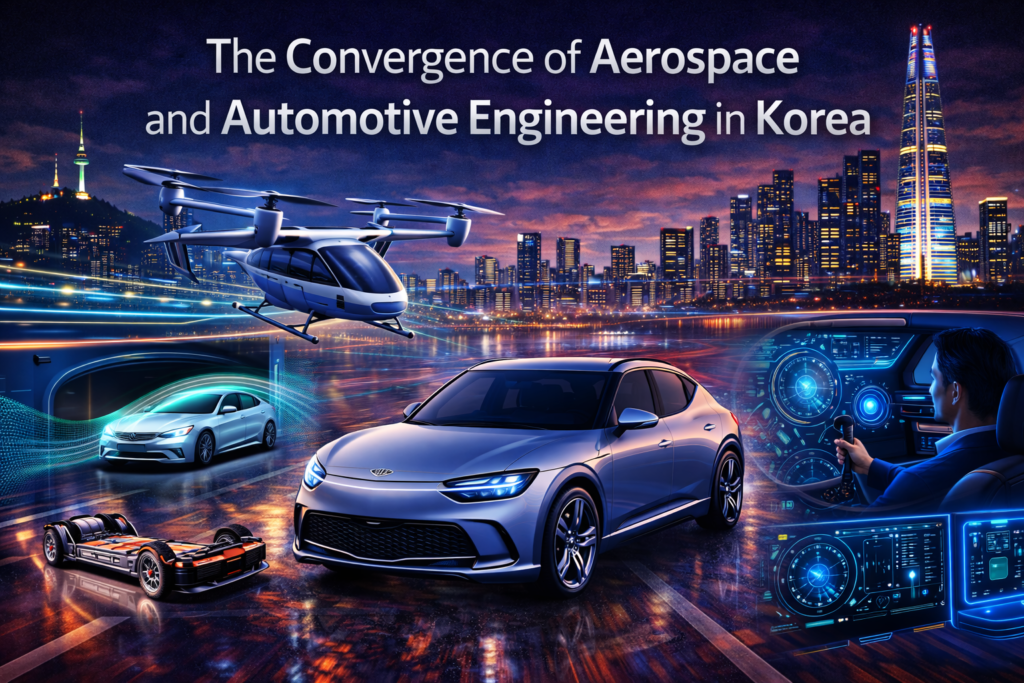
In recent years, a fascinating shift has been taking place within Korea’s engineering landscape: the lines between aerospace and automotive design are beginning to blur. What was once a clear distinction—cars on roads, aircraft in the skies—is now evolving into a shared ecosystem of technology, materials, and innovation.
Korean companies, led by Hyundai Motor Group and Korea Aerospace Industries, are at the forefront of this convergence. The result? Vehicles that are lighter, smarter, more aerodynamic—and increasingly capable of operating in both ground and air environments.
Aerodynamics: Borrowing from the Skies


Aerodynamics has always been crucial in aerospace engineering. Now, it’s becoming a defining factor in automotive design—especially in the EV era.
Take vehicles like the Hyundai Ioniq 6. Its streamlined shape, low drag coefficient, and smooth underbody reflect principles long used in aircraft design.
Key Shared Principles:
- Reduced drag for efficiency
- Smooth airflow management
- Underbody optimization
- Active aerodynamic components
In electric vehicles, where range is everything, aerospace-level aerodynamic thinking is no longer optional—it’s essential.
Advanced Materials: Strength Without Weight


Weight reduction is critical in both aviation and automotive engineering. Korea is leveraging aerospace-grade materials to build stronger, lighter vehicles.
Materials Crossing Industries:
- Carbon Fiber Reinforced Polymers (CFRP)
- High-strength aluminum alloys
- Advanced composites
- Lightweight structural adhesives
These materials improve:
- Fuel efficiency (or EV range)
- Performance and acceleration
- Structural safety
Luxury and performance vehicles from Genesis increasingly incorporate these materials to enhance both driving dynamics and efficiency.
Electric Propulsion and Energy Systems


Electric propulsion is a key area where aerospace and automotive industries intersect.
Korean automakers are not only developing EVs—they are exploring electric aviation.
Shared Technologies:
- Battery management systems
- Electric motors and inverters
- Thermal management systems
- Hydrogen fuel cell technology
Hyundai’s hydrogen initiatives and EV platforms are closely aligned with future aerospace applications, including urban air mobility (UAM).
Urban Air Mobility: The Next Frontier


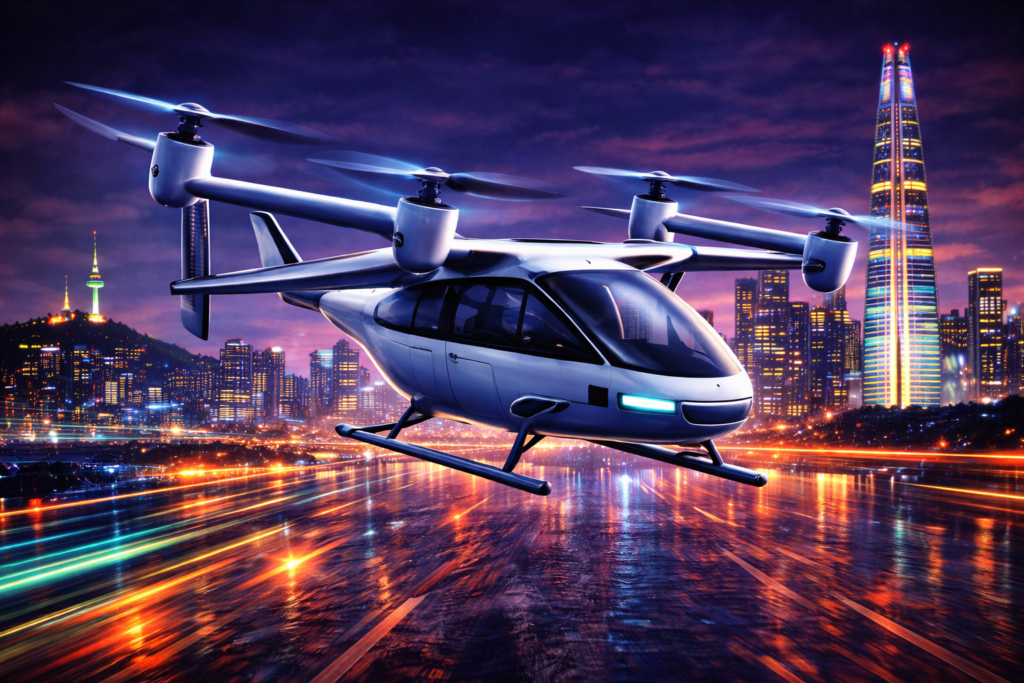
Perhaps the clearest example of convergence is urban air mobility (UAM).
Through its division Supernal, Hyundai is actively developing electric vertical takeoff and landing (eVTOL) aircraft—essentially flying cars designed for urban environments.
What This Means:
- Reduced urban congestion
- Faster point-to-point travel
- Integration of air and ground transport networks
This is no longer science fiction. Korea is positioning itself as a leader in the future of mobility—both on the ground and in the air.
Autonomous Systems and AI Integration


Autonomy is another major area of overlap.
Aircraft have relied on autopilot systems for decades. Now, similar technologies are being adapted for cars.
Shared Innovations:
- Sensor fusion (LiDAR, radar, cameras)
- AI-driven navigation systems
- Redundant safety systems
- Real-time data processing
Korean automakers are integrating these systems to create safer, smarter vehicles that require less human intervention.
Design Philosophy: Function Meets Emotion


Aerospace design is driven by function—but modern automotive design must balance function with emotion.
Korean brands are blending the two:
- Aircraft-inspired cockpit layouts
- Minimalist interfaces
- Ambient lighting for mood and usability
- Driver-focused ergonomics
Vehicles like the Genesis GV60 showcase interiors that feel more like advanced control centers than traditional car cabins.
Why Korea Is Leading This Convergence
1. Strong Industrial Ecosystem
Korea has world-class capabilities in electronics, manufacturing, and engineering.
2. Government Support
Significant investment in future mobility, including EVs and UAM.
3. Fast Innovation Cycles
Korean companies are known for rapid development and deployment.
4. Cross-Industry Collaboration
Automotive, aerospace, and tech sectors are increasingly interconnected.
The Road Ahead: Mobility Without Boundaries
The convergence of aerospace and automotive engineering signals a future where:
- Cars become more like aircraft in efficiency and intelligence
- Aircraft become more accessible and integrated into daily life
- Mobility becomes seamless across multiple dimensions
We may soon live in a world where your journey starts in a car and ends in the air—without ever feeling like you changed modes of transport.
Conclusion
The fusion of aerospace and automotive engineering in Korea is not just an evolution—it’s a revolution.
By combining cutting-edge aerodynamics, advanced materials, electric propulsion, and autonomous systems, Korean companies are redefining what mobility can be.
From the roads of Seoul to the skies above, Korea is building a future where transportation is smarter, faster, and more connected than ever before.
And if current trends continue, the next decade won’t just belong to cars—it will belong to mobility as a whole.