0
0
 0
0
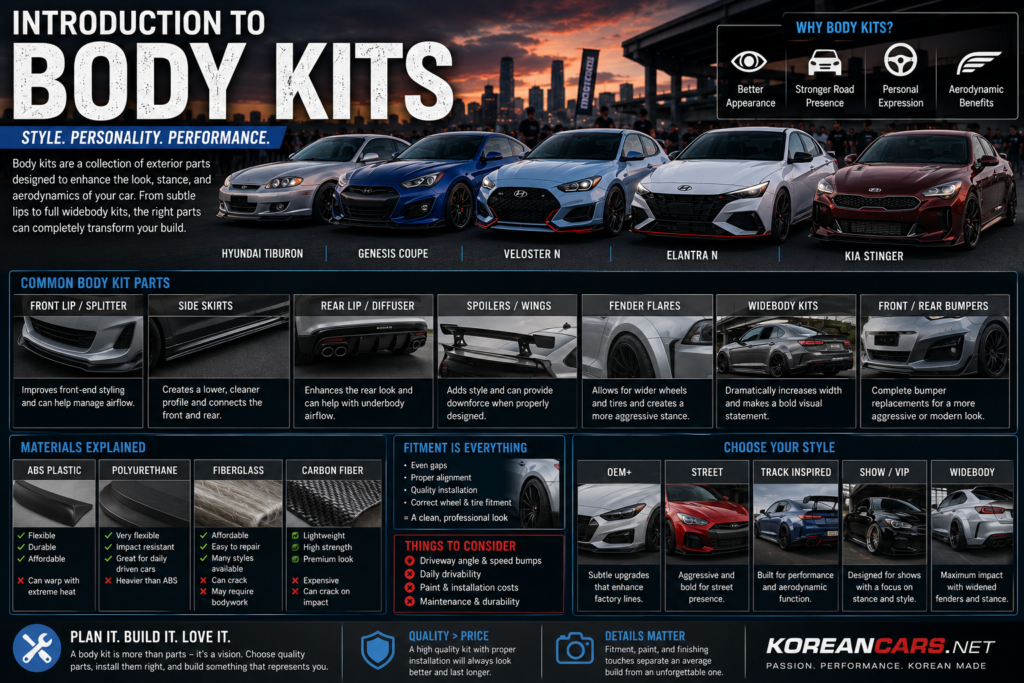
Few exterior modifications transform a car as quickly as a body kit. Whether it is a subtle front lip on a Hyundai Tiburon, a widebody kit on a Genesis Coupe, aggressive side skirts on an Elantra N, or a rear diffuser on a Kia Stinger, body kits give owners a way to completely change the personality of their vehicle.
For many enthusiasts, a body kit is not just about making a car look lower or more aggressive. It is about identity. The right kit can make a car look cleaner, wider, sportier, more modern, or more track-inspired. It can take a car that blends into traffic and turn it into something that feels personal.
But body kits are not all the same.
Some are designed mainly for appearance. Some are inspired by motorsport. Some improve airflow in specific ways. Others simply add visual drama. Fitment, material quality, installation, paintwork, and daily drivability all matter. A poorly chosen body kit can make a car look cheap, while the right one can completely elevate the build.
Before buying one, it is important to understand what body kits actually do, what parts are included, and what Korean car owners should consider before modifying their exterior.
What Is a Body Kit?
A body kit is a collection of exterior parts designed to change the shape, stance, or appearance of a vehicle.
A basic body kit may include:
- Front lip
- Side skirts
- Rear lip
- Rear diffuser
- Front bumper
- Rear bumper
- Fender flares
- Widebody panels
- Spoiler or wing
Some kits are subtle and keep the factory lines intact. Others completely transform the car’s appearance.
On Korean cars, body kits can be especially effective because many models already have strong design lines. Cars like the Tiburon, Genesis Coupe, Veloster N, Elantra N, and Stinger respond well to exterior styling when the parts match the natural shape of the vehicle.
Why Do People Install Body Kits?
1. Better Appearance
The most obvious reason is style.
A body kit can make a car look:
- Lower
- Wider
- More aggressive
- More premium
- More race-inspired
- More unique
For many owners, this is the main goal. The car may not necessarily be faster, but it looks more finished and more intentional.
2. Improved Road Presence
Some cars look good from the factory but still feel visually conservative.
A front lip, side skirts, and rear diffuser can make the car appear more planted. Even without changing suspension, the vehicle can look lower and more performance-oriented.
This is especially useful for cars like the Hyundai Tiburon or Genesis Coupe, where the right body lines can make the car look much more modern.
3. Personal Expression
Every car build says something about the owner.
Some people prefer an OEM-plus look. Others want a show car. Some want a street racer style. Others prefer clean, subtle modifications that only enthusiasts notice.
Body kits help communicate the theme of the build.
A Tiburon with a clean lip kit sends a different message than a widebody Genesis Coupe. A Stinger with carbon fiber accents feels different from a Veloster N with a track-style wing.
4. Aerodynamics
Some body parts can affect airflow.
Examples include:
- Front splitters
- Rear diffusers
- Canards
- Side skirt extensions
- Wings
- Vented hoods
However, it is important to be realistic. Not every aggressive-looking body kit improves performance. Many parts are cosmetic, especially at normal street speeds.
True aerodynamic benefits usually require proper design, testing, and installation. A random wing or oversized splitter may look dramatic but may not actually improve handling.
Common Types of Body Kit Parts
Front Lip
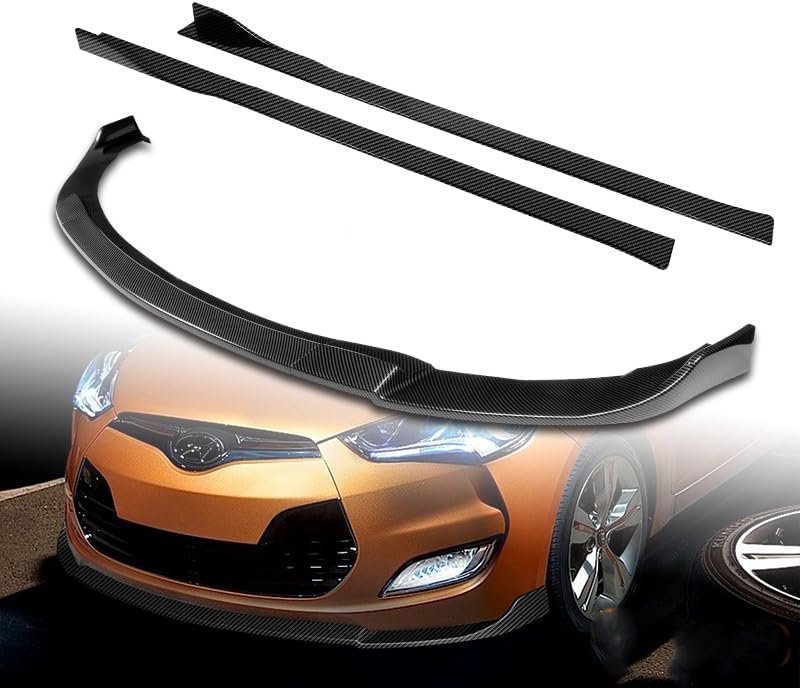
A front lip attaches to the lower edge of the factory front bumper.
This is one of the most popular first exterior modifications because it is usually more affordable than replacing the entire bumper.
Pros
- Improves the front-end appearance
- Makes the car look lower
- Usually easier to install than a full bumper
- Can be replaced if damaged
Cons
- Can scrape on steep driveways
- Cheap lips may fit poorly
- May crack if made from brittle material
A front lip is a great starting point for many Korean cars because it adds aggression without completely changing the factory design.
Side Skirts
Side skirts run along the lower sides of the car between the front and rear wheels.
They help visually connect the front and rear of the body kit, making the car look lower and more complete.
Pros
- Creates a cleaner side profile
- Makes the car look lower
- Completes the look when paired with a front lip and rear lip
Cons
- Can be damaged by curbs or jacks
- Poor fitment can look obvious
- Installation may require drilling
Side skirts are especially important if the front of the car has already been modified. Without them, the car may look visually unbalanced.
Rear Lip and Rear Diffuser
A rear lip adds styling to the lower rear bumper, while a diffuser is designed to manage airflow beneath the rear of the car.
On street cars, many diffusers are mainly cosmetic. Still, they can give the rear end a much more aggressive look.
Pros
- Makes the rear of the car look sportier
- Works well with aftermarket exhausts
- Helps balance a front lip visually
Cons
- Some designs look fake or oversized
- Exhaust clearance can be an issue
- Cheap parts may warp or crack
For cars like the Genesis Coupe, Elantra N, and Stinger, a rear diffuser can make the car look much more performance-focused.
Full Bumper Replacement
Some body kits replace the entire front or rear bumper.
This creates a more dramatic transformation than a lip kit.
Pros
- Major visual change
- Can modernize an older car
- Allows more aggressive styling
Cons
- More expensive
- More difficult to install
- Usually requires paint
- Fitment issues are more common
- May affect fog lights, sensors, or factory trim
Full bumper kits are popular on older cars like the Tiburon because they can completely refresh the car’s appearance. However, they require more planning and budget than simple add-on parts.
Fender Flares
Fender flares widen the wheel arches, allowing the car to run wider wheels and tires.
They can be subtle or very aggressive.
Pros
- Allows wider wheel fitment
- Gives the car a tougher stance
- Can help cover tire poke
Cons
- May require cutting factory fenders
- Poor installation can cause rust
- Not always reversible
- Needs careful wheel and suspension planning
Fender flares should not be installed casually. Once cutting is involved, the modification becomes much more serious.
Widebody Kits
A widebody kit dramatically increases the width of the car, usually through extended fenders, quarter panels, side skirts, and bumper extensions.
Widebody builds are often show-focused, but they can also support wider tires for performance applications.
Pros
- Huge visual impact
- Allows aggressive wheels and tires
- Makes the car stand out at meets
- Can completely transform the platform
Cons
- Expensive
- Usually requires cutting
- Requires bodywork and paint
- Wheel fitment must be carefully planned
- Not ideal for everyone’s daily driver
A widebody Genesis Coupe can look incredible, but it needs to be done properly. Cheap wheels, bad fitment, uneven gaps, or unfinished paintwork can ruin the entire effect.
Spoilers and Wings
Spoilers and wings are among the most noticeable exterior modifications.
A small spoiler can add subtle style, while a large wing can create a track-inspired appearance.
Pros
- Adds personality
- Can improve the rear profile
- May provide functional downforce if properly designed
Cons
- Oversized wings can look out of place
- May require drilling into the trunk
- Poor mounting can cause vibration or damage
- Can attract unwanted attention
The key is matching the wing to the car’s purpose. A daily-driven Tiburon may look better with a subtle spoiler, while a track-built Elantra N can pull off something more aggressive.
Common Body Kit Materials
ABS Plastic
ABS is commonly used for affordable lips, skirts, and bumper extensions.
Pros
- Flexible
- Affordable
- Good for street cars
- More forgiving than fiberglass
Cons
- Can warp with poor manufacturing
- May not look as premium as carbon fiber
ABS is often one of the best choices for daily drivers.
Polyurethane
Polyurethane is flexible and durable, making it popular for street cars that deal with real roads, speed bumps, and driveways.
Pros
- Very flexible
- Resistant to cracking
- Good for daily use
Cons
- Can be heavier
- May require more prep before paint
- Fitment can vary
For a car that sees rough roads, polyurethane can be a smart choice.
Fiberglass
Fiberglass is common in older aftermarket body kits.
Pros
- Affordable
- Easy to shape and repair
- Many older designs are available
Cons
- Can crack easily
- Often requires bodywork
- Fitment may be poor
- Not ideal for harsh daily use
Fiberglass can work well for show cars or carefully driven vehicles, but it is less forgiving than plastic or polyurethane.
Carbon Fiber
Carbon fiber is lightweight and visually striking.
It is often used for hoods, lips, splitters, diffusers, and wings.
Pros
- Lightweight
- Premium appearance
- Strong when properly made
- Popular for performance builds
Cons
- Expensive
- Can still crack on impact
- Cheap carbon parts may fade or yellow
- Requires proper care
Carbon fiber looks great, but fake carbon or low-quality carbon can cheapen the look of a build.
Fitment Matters More Than Aggression
One of the biggest mistakes enthusiasts make is choosing the most aggressive-looking kit without thinking about fitment.
Good fitment means:
- Even panel gaps
- Clean mounting
- No sagging
- No awkward bumper alignment
- No rubbing against tires
- No random gaps between parts
A subtle kit with excellent fitment will almost always look better than an extreme kit that does not line up properly.
This is especially true at car meets, where people notice details up close.
Paint and Finish
Body kits rarely look good if they are installed unfinished.
Most parts need:
- Sanding
- Priming
- Test fitting
- Painting
- Clear coating
- Final alignment
Paint matching is especially important. A slightly different shade can be very noticeable, especially on silver, white, red, and pearl colors.
Some owners choose gloss black or carbon fiber accents to avoid paint matching, but this only works if it matches the overall design of the car.
Daily Driving Considerations
A body kit may look amazing in photos, but you still have to drive the car.
Before installing one, think about:
- Speed bumps
- Steep driveways
- Winter driving
- Parking curbs
- Road construction
- Potholes
- Towing access
- Jack points
A car that looks incredible but scrapes everywhere can become frustrating quickly.
For daily drivers, a mild lip kit is often more practical than a very low front bumper or long splitter.
Body Kits and Lowered Suspension
Body kits and suspension work closely together visually.
A body kit can make a car look lower, but if the wheel gap is still large, the build may look unfinished.
At the same time, lowering the car too much after adding a kit can create drivability problems.
The best approach is balance.
A clean exterior setup usually includes:
- Proper ride height
- Good wheel fitment
- Correct tire size
- Body kit parts that match the car’s lines
- No excessive scraping
For some builds, coilovers or air suspension may be needed to achieve the right stance.
Are Body Kits Good for Performance?
Sometimes, but not always.
A true performance aero setup can improve stability, especially at higher speeds or on track. But most street body kits are designed primarily for appearance.
Functional aero usually requires:
- Proper mounting
- Strong materials
- Real airflow management
- Correct ride height
- Testing
- Balance between front and rear downforce
Adding one aggressive part without considering the whole car can actually make performance worse.
For example, a large rear wing without front aero balance may change how the car feels at speed. A low splitter that is not properly supported may flex or break. A fake diffuser may do little beyond appearance.
For most street cars, it is best to treat body kits as styling upgrades first unless the part is specifically engineered for performance.
How Much Does a Body Kit Cost?
Costs vary widely depending on the car, brand, material, and installation.
A general estimate:
- Front lip: low to moderate cost
- Side skirts: moderate cost
- Rear diffuser: moderate cost
- Full bumper kit: moderate to high cost
- Widebody kit: high cost
- Carbon fiber parts: high cost
- Paint and bodywork: often more expensive than expected
Many owners underestimate paint and installation costs. The part itself may seem affordable, but professional bodywork can quickly increase the total price.
A cheap kit can become expensive if it requires hours of sanding, trimming, repairing, and adjusting.
Should You Install a Body Kit Yourself?
Some simple parts can be installed at home.
DIY-friendly parts include:
- Front lips
- Splitter extensions
- Small spoilers
- Rear spats
- Some side skirts
More difficult parts include:
- Full bumpers
- Widebody kits
- Fender flares requiring cutting
- Carbon fiber hoods
- Complex diffuser systems
If cutting, drilling, painting, or structural mounting is involved, professional help may be worth it.
A body kit is highly visible. Mistakes are hard to hide.
Best Body Kit Style for Korean Cars
Hyundai Tiburon
The Tiburon works well with clean, flowing body kits that respect its rounded coupe shape.
Best styles:
- OEM-plus lip kit
- Tuscani-inspired styling
- Subtle side skirts
- Clean rear lip
- Moderate wing or spoiler
Avoid going too extreme unless the entire build supports it.
Genesis Coupe
The Genesis Coupe can handle more aggressive styling because of its rear-wheel-drive proportions.
Best styles:
- Widebody kit
- Track-style front bumper
- Carbon hood
- Rear diffuser
- Ducktail spoiler
- Larger wing for track builds
This is one of the best Korean platforms for a dramatic body kit.
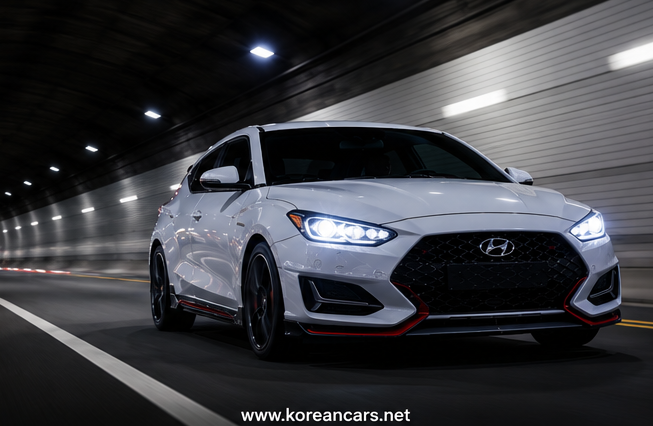
Veloster N
The Veloster N already has a bold design, so body kits should sharpen the factory look rather than fight it.
Best styles:
- Front splitter
- Side skirt extensions
- Rear diffuser
- Roof spoiler extension
- Subtle canards
Too much extra styling can make the car look busy.
Elantra N
The Elantra N has sharp factory lines, so angular aero works well.
Best styles:
- Front splitter
- Side skirt blades
- Rear diffuser
- Track-style wing
- Carbon mirror caps
- Subtle hood vents
The Elantra N looks best when the body kit feels integrated with its factory performance design.
Kia Stinger
The Stinger is more of a grand tourer, so it usually looks best with premium, subtle styling.
Best styles:
- Carbon front lip
- Carbon side skirts
- Rear diffuser
- Ducktail spoiler
- Subtle fender accents
The Stinger does not need to look like a race car to look aggressive. Clean and premium usually works better.
Common Mistakes to Avoid
Buying the Cheapest Kit Available
Cheap parts often lead to poor fitment, bad materials, and extra installation costs.
Ignoring Paint Costs
Paint and bodywork can cost as much as, or more than, the kit itself.
Choosing Parts That Do Not Match
A round body kit on a sharp car, or a sharp aggressive kit on a soft body shape, can look awkward.
Going Too Low
A car can look great parked but become annoying to drive if the kit constantly scrapes.
Not Planning Wheel Fitment
Body kits, especially widebody kits, require the right wheels. Without proper fitment, the car can look unfinished.
Mixing Too Many Styles
Track aero, VIP styling, street-racer parts, and luxury accents do not always work together. Pick a theme and stay consistent.
Are Body Kits Worth It?
Body kits are worth it if you care about the visual identity of your car and are willing to install the parts properly.
They are not always the best first modification for everyone. If the car needs maintenance, tires, brakes, or suspension work, those should come first.
But once the car is mechanically sorted, a body kit can completely change how it feels to own. It can make an older car feel fresh again. It can make a common car stand out. It can turn a basic build into something memorable.
For Korean car enthusiasts, body kits are especially important because they help create a stronger KDM visual culture. The more clean Tiburons, Genesis Coupes, Veloster Ns, Elantra Ns, and Stingers show up with thoughtful styling, the more people begin to recognize Korean cars as serious enthusiast platforms.
Final Thoughts
A body kit is more than a collection of exterior parts. It is one of the clearest ways to define the personality of a build.
The best body kits do not simply make a car louder visually. They make the car look more complete. They follow the natural lines of the vehicle, improve its stance, and support the overall theme of the build.
Whether you prefer a subtle OEM-plus Tiburon, an aggressive widebody Genesis Coupe, a track-inspired Elantra N, or a clean carbon-accented Kia Stinger, the same rule applies:
Choose quality.
Plan the full look.
Respect the car’s natural design.
Install it properly.
When done right, a body kit can turn a Korean car from something people overlook into something they stop and take pictures of.