0
0
 0
0
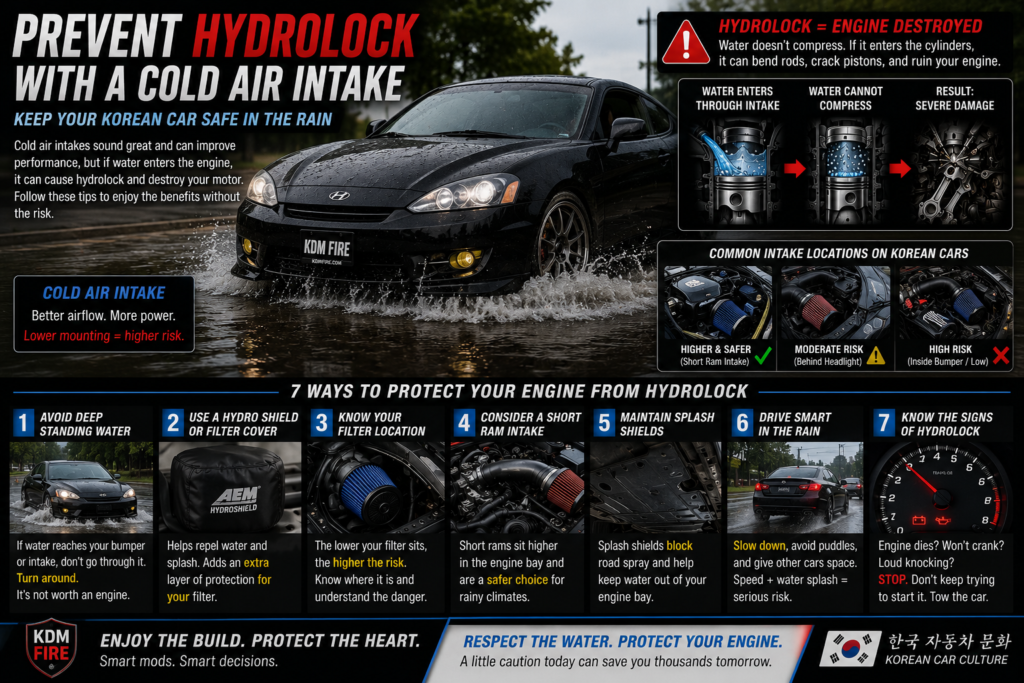
For many enthusiasts, installing a Cold Air Intake is one of the first modifications done to a car.
It is cheap, relatively easy to install, sounds great, and can slightly improve throttle response while helping the engine breathe better.
But there is one fear that has followed cold air intakes for decades:
Hydrolock.
Many enthusiasts — especially those driving lowered imports like the Hyundai Tiburon, Honda Civic Si, or Acura RSX — worry about what happens when heavy rain, flooding, or deep puddles meet an exposed intake filter.
So how serious is the risk, and how can you protect your engine?
First: What Is Hydrolock?
Hydrolock happens when water enters the engine combustion chamber through the intake system.
Unlike air and fuel, water cannot compress.
If enough water gets sucked into the cylinder while the piston is moving upward, one of several bad things happens:
- Bent connecting rods
- Cracked pistons
- Damaged crankshaft
- Destroyed valves
- In severe cases, complete engine failure
This can turn a simple intake modification into a multi-thousand dollar repair.
Why Cold Air Intakes Increase Risk
Most factory intake systems pull air from relatively protected locations.
A Cold Air Intake often relocates the filter much lower in the engine bay — sometimes near the wheel well or front bumper.
This gives cooler, denser air.
But it also places the filter much closer to:
- Standing water
- Heavy rain splash
- Flooded streets
- Large puddles
The lower the filter sits…
…the greater the risk.
1. Avoid Deep Standing Water (Most Important Rule)
This sounds obvious.
But many people underestimate how little water is needed to cause damage.
If water is deep enough that it reaches your lower bumper or splashes directly near the intake location:
Do not drive through it.
Remember:
Your car may clear the puddle…
But your intake may already be submerged.
A lowered car increases this risk significantly.
2. Install a Hydro Shield
One of the simplest protections is an intake filter cover often called a Hydro Shield.
These are water-resistant outer covers placed over the air filter.
They help:
- Repel direct water splash
- Reduce rain exposure
- Keep debris off the filter
They do not make your intake waterproof.
But they add another layer of protection.
Think of it as cheap insurance.
3. Know Where Your Filter Is Mounted
Not all cold air intakes are equal.
Ask yourself:
Where exactly is your filter sitting?
Common locations:
Safer Position
- Higher inside engine bay
- Behind splash shields
- Protected from direct road spray
Higher Risk Position
- Inside wheel well
- Very low front bumper cavity
- Open exposure underneath car
Some aftermarket systems prioritize airflow over safety.
Know what you installed.
4. Consider a Short Ram Intake Instead
A lot of enthusiasts switch to a Short Ram Intake after learning about hydrolock risk.
Difference:
Cold Air Intake
- Better access to cool outside air
- Slightly more power potential
- Lower mounting position
Short Ram Intake
- Mounted higher in engine bay
- Lower hydrolock risk
- Usually safer for rainy climates
If you live somewhere with constant rain or flooding…
A short ram may be the better compromise.
5. Maintain Splash Shields Under the Car
Many older modified cars are missing factory splash guards.
People remove them while working on the car and never reinstall them.
These shields help prevent:
- Direct water spray
- Road debris hitting intake filter
- Water being forced upward into engine bay
If your car has missing splash shields…
Replace them.
They matter more than many enthusiasts think.
6. Slow Down During Heavy Rain
Speed creates water force.
Driving fast through standing water creates a wave that can push water directly into the intake.
Even shallow puddles become dangerous when hit aggressively.
If rain conditions are severe:
- Reduce speed
- Avoid sudden puddles
- Give larger vehicles space (their tire spray can hit your intake)
Sometimes the danger is not the puddle itself.
It is the splash.
7. Know the Symptoms if Water Gets In
If your engine suddenly:
- Dies after hitting water
- Makes loud knocking noises
- Refuses to crank
- Feels like it abruptly stopped rotating
Do NOT keep trying to start it.
Repeatedly cranking a hydrolocked engine often causes more damage.
Instead:
- Turn ignition off
- Tow the car
- Remove spark plugs
- Have engine inspected immediately
The first few seconds matter.
Are Cold Air Intakes Actually Dangerous?
For most enthusiasts:
No.
Thousands of modified cars run cold air intakes for years without issue.
Hydrolock usually happens when drivers:
- Enter flooded streets
- Drive aggressively through deep water
- Ignore heavy rain conditions
- Install extremely low intake systems without understanding the risks
The modification itself is not dangerous.
Driving habits create the danger.
Final Thoughts
The Cold Air Intake remains one of the best first modifications for enthusiasts.
Better sound.
Better engine response.
Better aesthetics.
But with modification comes responsibility.
If you understand where your intake sits, avoid deep water, and respect bad weather…
You can enjoy the performance benefits without ever experiencing hydrolock.
Sometimes protecting your engine is not about buying more parts.
It is simply knowing when not to send it.