0
0
 0
0
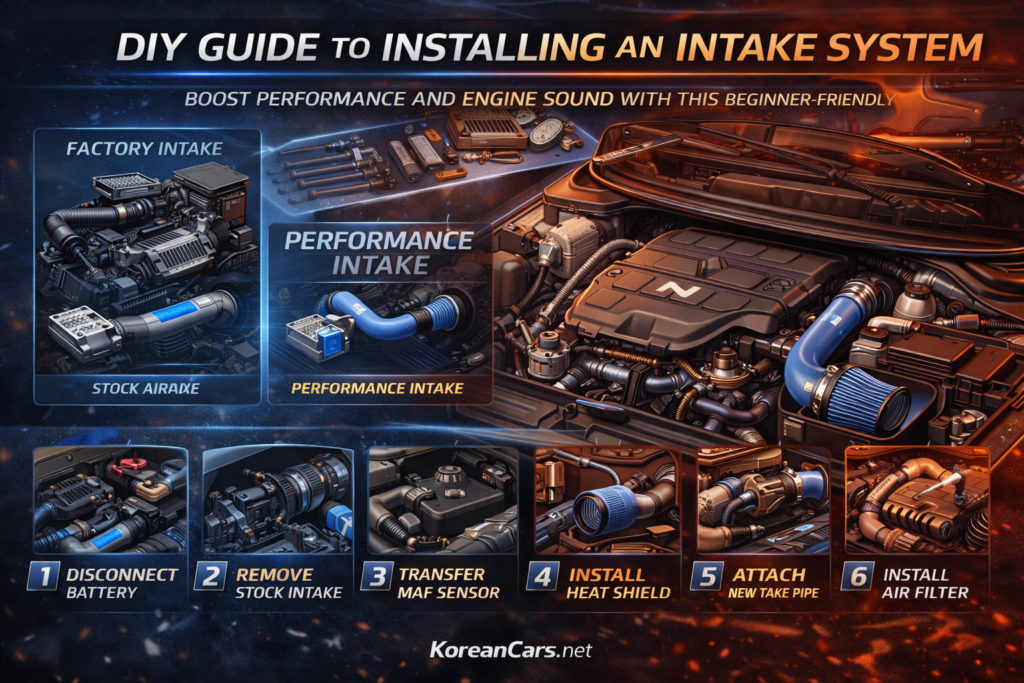
Upgrading your car’s intake system is one of the easiest and most rewarding modifications you can perform. Whether you’re driving a Hyundai Elantra N, Kia Stinger GT, Genesis Coupe, or Genesis G70, installing a performance intake enhances airflow, improves throttle response, and adds an aggressive engine sound.
Best of all, this modification is beginner-friendly and can typically be completed in under an hour. This step-by-step guide will walk you through everything you need to know to install an intake system safely and effectively.
What Is an Intake System?
An intake system delivers air to your engine for combustion. Performance intake systems—such as cold air intakes (CAIs) and short ram intakes (SRIs)—improve airflow efficiency, allowing the engine to breathe better.
Types of Intake Systems
| Type | Description | Benefits |
|---|---|---|
| Cold Air Intake (CAI) | Draws cooler air from outside the engine bay | Increased power and efficiency |
| Short Ram Intake (SRI) | Pulls air from within the engine bay | Improved throttle response and sound |
| Ram Air Intake | Uses airflow pressure at speed | Enhanced high-speed performance |
Benefits of Installing a Performance Intake
- Increased horsepower and torque
- Improved throttle response
- Enhanced turbo efficiency (for turbocharged engines)
- Aggressive induction sound
- Better fuel efficiency under optimal conditions
- Easy installation and affordability
Typical Gains: 5–15 horsepower, depending on the vehicle and setup.
Tools and Materials Required
Before beginning, gather the following tools:
Tools
- Socket wrench set
- Flathead screwdriver
- Phillips screwdriver
- Pliers
- Torque wrench (recommended)
- Trim removal tool (optional)
Materials
- Performance intake kit
- Silicone couplers
- Hose clamps
- Mounting brackets
- Heat shield (if included)
Estimated Installation Details
| Category | Details |
|---|---|
| Difficulty Level | Easy |
| Installation Time | 30–60 minutes |
| Cost of Intake | $200–$500 |
| Skill Level | Beginner |
Step-by-Step Installation Guide
Step 1: Turn Off the Engine and Disconnect the Battery
Safety comes first. Ensure the engine is cool before starting.
- Turn off the ignition.
- Disconnect the negative terminal of the battery to prevent electrical issues.
Step 2: Locate the Factory Air Intake System
Open the hood and identify the stock airbox and intake tubing. Typically, this includes:
- The air filter housing
- Intake piping
- Mass Air Flow (MAF) sensor
Refer to your vehicle’s manual if needed.
Step 3: Remove the Factory Intake System
Carefully remove the OEM components.
- Loosen the hose clamps connecting the intake tube.
- Disconnect the MAF sensor wiring harness.
- Unbolt the airbox using a socket wrench.
- Remove the stock intake and air filter.
Set aside the factory parts in case you need to revert to stock.
Step 4: Transfer the Mass Air Flow (MAF) Sensor
Most vehicles require reusing the original MAF sensor.
- Remove it carefully from the stock intake.
- Install it onto the new intake using the provided hardware.
- Ensure correct orientation to avoid engine issues.
⚠️ Tip: Do not touch the sensor element.
Step 5: Install the Heat Shield (If Included)
A heat shield protects the intake from engine bay heat.
- Position the heat shield in place.
- Secure it using the supplied bolts and brackets.
- Ensure proper alignment.
Step 6: Install the New Intake System
Now it’s time to install your performance intake.
- Attach the intake pipe to the throttle body using a silicone coupler.
- Tighten the hose clamps securely.
- Install the high-performance air filter.
- Secure all mounting brackets.
- Ensure the system is stable and properly aligned.
Step 7: Reconnect the MAF Sensor and Battery
- Plug the MAF sensor back into the wiring harness.
- Reconnect the negative battery terminal.
Step 8: Start the Engine and Test
Start your vehicle and inspect the installation.
✔ Listen for unusual noises
✔ Check for loose connections
✔ Ensure the check engine light does not appear
✔ Confirm smooth idling and throttle response
Take the car for a short test drive to ensure proper performance.
Recommended Intake Brands for Korean Cars
| Brand | Popular Applications |
|---|---|
| K&N | Hyundai, Kia, Genesis |
| Injen | Hyundai N and Kia performance models |
| AEM | Turbocharged applications |
| SXTH Element Engineering | Hyundai N lineup |
| Takeda | Genesis and Kia models |
| HPS Performance | Reliable and affordable upgrades |
Vehicle Compatibility
This guide applies to many popular Korean vehicles, including:
- Hyundai Elantra N
- Hyundai Veloster N
- Hyundai Kona N
- Hyundai Genesis Coupe
- Kia Stinger GT
- Kia K5 GT
- Genesis G70
- Genesis G80
Common Mistakes to Avoid
- Installing the MAF sensor backward
- Overtightening hose clamps
- Leaving loose connections
- Skipping the heat shield installation
- Forgetting to reconnect the battery
- Using low-quality aftermarket parts
- Ignoring the manufacturer’s instructions
Avoiding these mistakes ensures optimal performance and reliability.
Do You Need an ECU Tune?
Most intake systems do not require a tune. However, tuning may maximize performance gains.
| Setup | Tune Required? |
|---|---|
| Intake Only | No |
| Intake + Exhaust | Recommended |
| Intake + Downpipe + Turbo Upgrades | Yes |
Performance Expectations
| Upgrade | Estimated Gain |
|---|---|
| Intake Only | 5–15 HP |
| Intake + Tune | 10–25 HP |
| Turbocharged Vehicles | Noticeable torque and response improvements |
Conclusion
Installing a performance intake system is one of the most cost-effective and beginner-friendly upgrades you can perform. With minimal tools and time, you can enhance your vehicle’s power, efficiency, and sound while gaining valuable hands-on experience.
Whether you’re building a track-ready Hyundai Elantra N or refining your Genesis G70, this DIY modification is an excellent first step into the world of automotive tuning.
Breathe better, perform stronger, and enjoy every drive.