0
0
 0
0
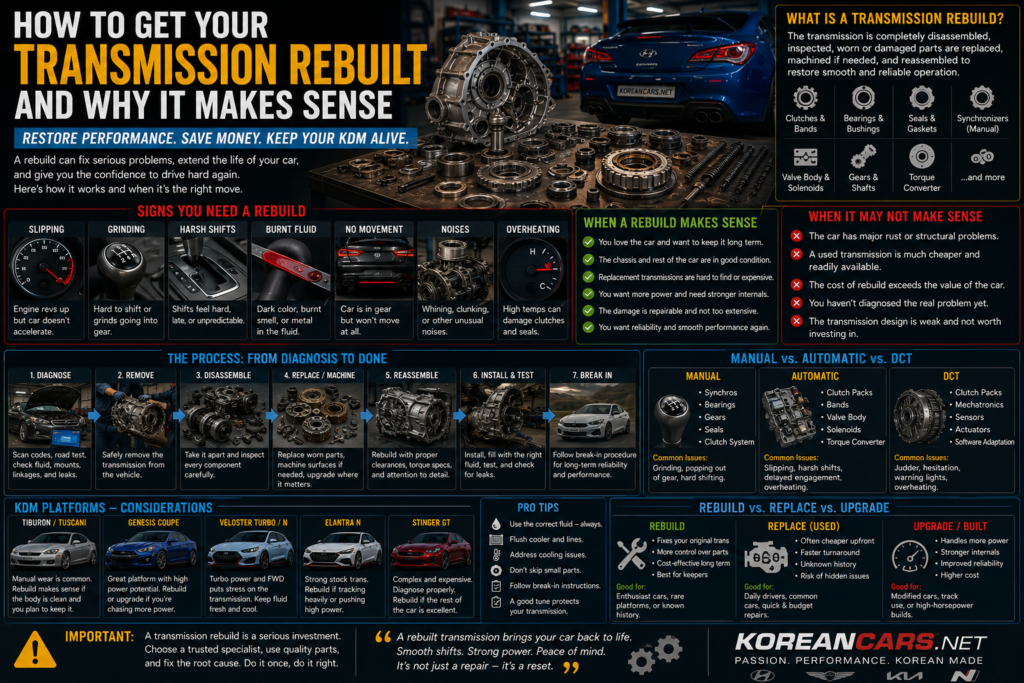
A transmission rebuild is one of the most serious repairs a car owner can face. Whether you drive a Hyundai Tiburon, Genesis Coupe, Veloster N, Elantra N, Kia Stinger, or a daily-driven Korean sedan, the transmission is one of the most important and expensive systems in the car.
When it works properly, you barely think about it. The car shifts, accelerates, cruises, and responds naturally. But when the transmission starts slipping, grinding, clunking, overheating, or refusing to go into gear, the entire driving experience changes quickly.
At that point, many owners face the same question:
Should I rebuild the transmission, replace it, repair one part, or move on from the car?
The answer depends on the type of transmission, the damage, the value of the car, and your long-term plans.
What Is a Transmission Rebuild?
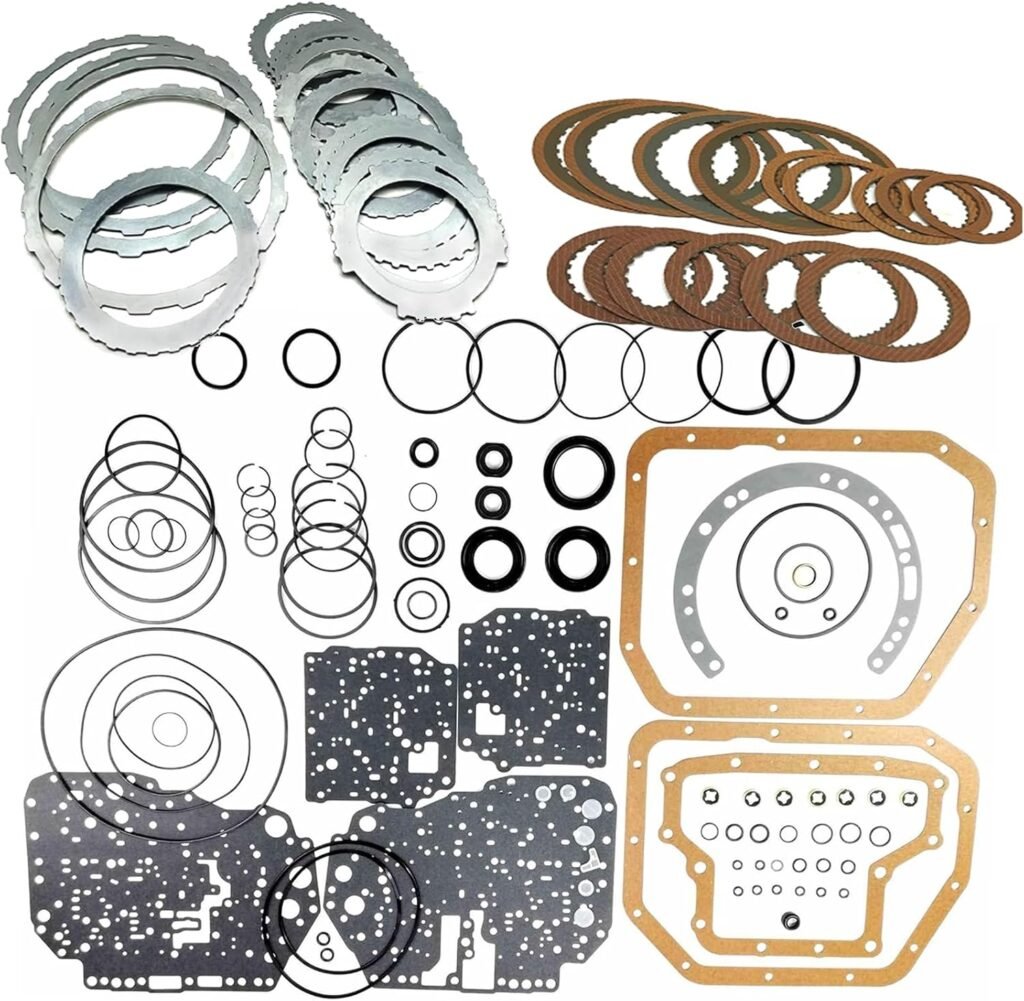
A transmission rebuild means removing the transmission, disassembling it, inspecting the internal parts, replacing worn or damaged components, and reassembling it so it can operate properly again.
Depending on the transmission, a rebuild may include replacing:
- Clutches
- Bands
- Bearings
- Synchronizers
- Seals
- Gaskets
- Bushings
- Valve body components
- Solenoids
- Torque converter
- Fluid pump
- Shift forks
- Gear sets
- Internal filters
- Worn hardware
The goal is not just to patch one symptom. The goal is to restore the transmission’s ability to shift reliably and handle power.
Manual vs. Automatic vs. DCT Rebuilds
Not all transmissions are the same.
Manual Transmission
A manual transmission rebuild may involve:
- Replacing worn synchros
- Replacing bearings
- Inspecting gears
- Replacing seals
- Checking shift forks
- Inspecting the clutch system
- Replacing the clutch if needed
Manual transmission problems often show up as grinding, difficulty getting into gear, whining noises, popping out of gear, or excessive shifter play.
Automatic Transmission
An automatic transmission rebuild is usually more complex.
It may involve:
- Clutch packs
- Bands
- Valve body
- Solenoids
- Pump
- Torque converter
- Planetary gears
- Seals and gaskets
- Internal hydraulic passages
Automatic transmission problems often show up as slipping, delayed engagement, harsh shifting, overheating, shuddering, or failure to move.
Dual-Clutch Transmission
A dual-clutch transmission, or DCT, is a more advanced design found in some modern performance cars.
DCT issues can involve:
- Clutch packs
- Mechatronics
- Sensors
- Actuators
- Software calibration
- Fluid condition
- Heat management
DCT work usually requires specialized knowledge and equipment. These transmissions can be excellent when healthy, but they are not always simple to repair at a general shop.
Signs Your Transmission May Need a Rebuild
1. Slipping Gears
If the engine revs rise but the car does not accelerate properly, the transmission may be slipping.
This can happen because of:
- Worn clutch packs
- Low fluid pressure
- Burnt fluid
- Internal wear
- Torque converter problems
- Clutch wear in manual cars
Slipping is a major warning sign and should not be ignored.
2. Grinding When Shifting
Grinding is common in manual transmission problems.
Possible causes include:
- Worn synchros
- Clutch not fully disengaging
- Damaged gears
- Incorrect fluid
- Worn shift linkage
- Driver abuse over time
If the grind happens in one gear only, the issue may be localized. If it happens in multiple gears, the transmission may need more serious work.
3. Harsh or Delayed Shifts
Automatic transmissions should shift smoothly and predictably.
If shifts become harsh, delayed, or inconsistent, possible causes include:
- Dirty fluid
- Low fluid
- Valve body issues
- Solenoid problems
- Internal clutch wear
- Software adaptation issues
- Failing transmission control module
A rebuild may be needed if internal wear is severe.
4. Transmission Fluid Looks Burnt
Healthy transmission fluid is usually clean and does not smell burnt.
Warning signs include:
- Dark fluid
- Burnt smell
- Metallic particles
- Thick or contaminated fluid
- Fluid that has never been changed
Burnt fluid often means excessive heat and internal clutch wear.
5. The Car Will Not Move
If the car goes into gear but does not move, the transmission may have a serious internal failure.
Possible causes include:
- Broken internal shaft
- Failed torque converter
- Failed clutch pack
- Pump failure
- Broken axle or differential issue
- Severe hydraulic pressure loss
Before assuming the transmission is dead, the drivetrain should be diagnosed properly.
6. Transmission Overheating
Heat is one of the biggest enemies of automatic transmissions and DCTs.
Overheating can damage:
- Fluid
- Seals
- Clutches
- Solenoids
- Valve body components
- Internal electronics
If the transmission repeatedly overheats, the cause must be fixed before or during the rebuild.
7. Whining, Clunking, or Bearing Noise
Unusual transmission noises can indicate internal wear.
A whining sound may point to bearings or gear wear. Clunks may come from mounts, drivetrain lash, or internal damage. A proper inspection is needed before deciding on a rebuild.
Why Transmissions Fail
Transmissions usually fail from a combination of wear, heat, abuse, poor maintenance, and sometimes design weaknesses.
Common causes include:
- Old fluid
- Low fluid
- Overheating
- Hard launches
- Poor shifting habits
- Aggressive tuning
- Too much torque
- Track use
- Towing beyond capacity
- Worn clutch
- Bad mounts
- Ignoring early symptoms
Modified cars can be especially hard on transmissions. Adding power without considering the transmission’s limits often leads to problems later.
When a Transmission Rebuild Makes Sense
1. The Car Is Worth Keeping
A rebuild makes more sense if the car is in good overall condition.
Consider the condition of:
- Engine
- Body
- Frame
- Suspension
- Interior
- Electronics
- Tires
- Brakes
- Rust level
If the rest of the car is solid, rebuilding the transmission may extend its life for many years.
2. You Are Attached to the Car
Car ownership is not always purely financial.
Sometimes the car matters because:
- It was your first project
- It is rare
- You have already invested in it
- It has sentimental value
- It fits your driving style
- You cannot easily replace it
For older Korean cars like the Hyundai Tiburon or Genesis Sports Coupe, a rebuild may make emotional sense even if the resale value does not fully justify it.
3. Replacement Transmissions Are Hard to Find
Sometimes a used transmission swap is cheaper than rebuilding.
But if used transmissions are rare, expensive, or questionable, rebuilding your existing transmission may be the safer choice.
A used transmission may have:
- Unknown mileage
- Hidden wear
- Old fluid
- Prior abuse
- Bad synchros
- Internal damage
- No warranty
A properly rebuilt transmission gives you more confidence than a mystery used unit.
4. You Want to Handle More Power
If you are modifying your car, rebuilding the transmission can be part of strengthening the drivetrain.
Performance rebuilds may include:
- Upgraded clutch packs
- Stronger synchros
- Reinforced gears
- Better bearings
- Improved cooling
- Limited-slip differential upgrades
- Stronger clutch for manual cars
- Transmission cooler for automatics
- Better fluid
- Stronger mounts
This matters for turbocharged builds, drift cars, track cars, and high-torque street cars.
5. The Damage Is Repairable
A rebuild makes sense when the transmission core is still usable.
If the case is cracked, gears are destroyed, or hard parts are severely damaged, replacement may become more practical.
A good shop can tell you whether your transmission is rebuildable after inspection.
When a Rebuild May Not Make Sense
1. The Car Has Bigger Problems
If the car has major rust, engine issues, electrical problems, or accident damage, rebuilding the transmission may not be the best use of money.
Fix the whole-car picture first.
2. A Used Transmission Is Much Cheaper
For some common vehicles, a low-mileage used transmission may be available at a reasonable cost.
In that case, replacement might be faster and cheaper than rebuilding.
The trade-off is risk. Used parts are not always as good as they look.
3. The Shop Cannot Diagnose the Real Issue
Do not approve a rebuild without diagnosis.
Some symptoms that feel like transmission failure may actually come from:
- Bad engine mounts
- Axle problems
- Clutch hydraulic issues
- Bad shifter cables
- Low fluid
- Faulty sensors
- Transmission control module issues
- ECU tune problems
- Differential failure
- Wheel bearing noise
A good shop should confirm the problem before recommending a rebuild.
4. The Transmission Design Is Not Worth Saving
Some transmissions have known weaknesses or limited upgrade support.
If a transmission is fragile, expensive, and not suited to your goals, it may be better to consider a swap or different platform.
The Process: How to Get Your Transmission Rebuilt
Step 1: Document the Symptoms
Before going to a shop, write down exactly what the car is doing.
Include:
- When the problem happens
- Which gears are affected
- Whether it happens hot or cold
- Any noises
- Any smells
- Any warning lights
- Recent repairs
- Recent fluid changes
- Any modifications
- Whether the car is tuned
The more information you provide, the better the diagnosis.
Step 2: Check the Basics First
Before assuming the transmission needs rebuilding, check:
- Fluid level
- Fluid condition
- Leaks
- Clutch fluid
- Shifter linkage
- Transmission mounts
- Axles
- Driveshaft
- Error codes
- Software updates
- Clutch wear in manual cars
Sometimes a simple issue can imitate a major failure.
Step 3: Find a Transmission Specialist
Not every mechanic is a transmission builder.
Look for a shop that has experience with your type of transmission.
Ask:
- Do you rebuild this transmission in-house?
- Do you outsource the work?
- Have you worked on this platform before?
- What parts do you replace by default?
- Do you offer a warranty?
- Can you show what failed?
- Do you upgrade weak points?
- Do you flush the cooler and lines?
- Do you handle programming or adaptation if needed?
For performance Korean cars, experience matters.
A shop that understands a Genesis Coupe, Veloster N, Elantra N, or Stinger may make better recommendations than a shop that only sees basic commuter cars.
Step 4: Get a Proper Diagnosis
A good diagnostic process may include:
- Road test
- Scan for codes
- Fluid inspection
- Pressure testing
- Clutch operation check
- Noise inspection
- Mount and axle inspection
- Leak inspection
- Transmission temperature review
The shop should explain why they believe a rebuild is necessary.
Step 5: Decide Between Rebuild, Replacement, or Upgrade
Once the issue is diagnosed, compare your options.
Rebuild
Best if you want to keep the original transmission and restore it properly.
Used Replacement
Best if you need the lowest-cost repair and good used units are available.
Remanufactured Transmission
A remanufactured unit can be a good middle ground if it comes from a reputable supplier.
Performance Build
Best if your car is modified or you plan to increase power.
Step 6: Ask What Is Included
Before approving the work, ask what the rebuild includes.
Important questions:
- Are all seals and gaskets replaced?
- Are bearings replaced?
- Are clutches or synchros replaced?
- Is the torque converter replaced or rebuilt?
- Is the valve body serviced?
- Are solenoids tested or replaced?
- Is the transmission cooler flushed?
- Is the fluid new and correct?
- Is the differential inspected?
- Are mounts inspected?
- Is there a break-in procedure?
- Is there a warranty?
A cheap rebuild that skips important parts can fail early.
Step 7: Confirm the Warranty
A transmission rebuild should come with a clear warranty.
Ask:
- How long is the warranty?
- What does it cover?
- Does it cover parts and labor?
- What voids the warranty?
- Are modified cars covered?
- Is track use excluded?
- Is tuning excluded?
Performance builds often have different warranty terms than stock rebuilds.
Step 8: Break It In Properly
After the rebuild, do not abuse the transmission immediately.
Follow the shop’s break-in instructions.
This may include:
- Gentle driving at first
- Avoiding hard launches
- Avoiding towing
- Avoiding track use
- Checking fluid level
- Rechecking for leaks
- Returning for inspection
- Retuning if the car is modified
A fresh rebuild needs time to settle and prove itself.
Manual Transmission Rebuild Tips
If you drive a manual car, do not ignore clutch-related parts.
During the rebuild, consider replacing or inspecting:
- Clutch disc
- Pressure plate
- Flywheel
- Release bearing
- Pilot bearing
- Clutch master cylinder
- Clutch slave cylinder
- Shifter bushings
- Transmission mounts
- Axles
If the transmission is already out, it often makes sense to refresh related parts at the same time.
Automatic Transmission Rebuild Tips
For automatic cars, heat management is critical.
Consider:
- Fresh fluid
- Correct fluid type
- Cooler inspection
- Cooler line flush
- Torque converter service
- Valve body inspection
- Software adaptation reset if needed
- Transmission cooler upgrade for performance use
A rebuilt automatic can fail again if contaminated fluid or debris remains in the system.
DCT Rebuild Tips
DCTs require special care.
If your car has a dual-clutch transmission, look for a shop that understands:
- Clutch adaptation
- Mechatronics
- Correct fluid
- Heat management
- Software calibration
- Driving behavior
- Launch control wear
- Track use
DCTs can shift quickly and feel amazing, but they are more complicated than traditional manuals.
Korean Car Platform Notes
Hyundai Tiburon / Tuscani
The Tiburon is now old enough that manual transmission wear is common.
Watch for:
- Grinding gears
- Clutch issues
- Worn synchros
- Shifter play
- Leaks
- Old fluid
A rebuild can make sense if the car is clean and you plan to keep it. For turbo Tiburon builds, the transmission and clutch should match the power goal.
Genesis Coupe
The Genesis Coupe is one of the most important Korean performance platforms.
Manual cars may face synchro wear, clutch issues, and abuse from drifting or hard launches. Automatic cars may need attention if modified or high-mileage.
A rebuild makes sense for serious builds, especially if you are increasing power or using the car for drifting or track days.
Veloster Turbo / Veloster N
Turbocharged front-wheel-drive cars can be hard on clutches, differentials, and gearboxes when driven aggressively.
For Veloster N owners, track use, heat, and tuning should be considered before deciding whether to rebuild or upgrade.
Elantra N
The Elantra N is still modern, but high-performance use can accelerate wear.
Manual owners should pay attention to clutch feel, synchros, and fluid condition. DCT owners should watch heat, shift behavior, and warning messages.
Kia Stinger GT
The Stinger GT uses a more premium, high-output drivetrain.
Transmission repairs can be expensive, so diagnosis matters. Harsh shifts, shuddering, delayed engagement, or overheating should be checked early before damage gets worse.
Because the Stinger is a higher-value car, a proper rebuild or replacement may be worth it if the rest of the vehicle is clean.
Rebuild vs. Transmission Swap
Sometimes rebuilding is not the only option.
A swap may make sense if:
- Your current transmission is badly damaged
- A stronger transmission is available
- You are building for high horsepower
- The factory transmission has known limits
- You want manual conversion
- You want better aftermarket support
However, swaps are rarely simple. They may require:
- Mounts
- Axles
- Driveshaft
- ECU changes
- Wiring
- Clutch hydraulics
- Pedals
- Shifter assembly
- Custom fabrication
- Tuning
A transmission swap can be exciting, but it should be planned carefully.
How to Avoid Needing Another Rebuild
Once the transmission is fixed, protect it.
Good habits include:
- Use the correct fluid
- Change fluid at proper intervals
- Avoid hard launches on cold fluid
- Fix leaks quickly
- Upgrade cooling if needed
- Do not overpower the transmission
- Use a proper tune
- Avoid riding the clutch
- Shift cleanly
- Let the car warm up
- Monitor unusual noises early
The best rebuild is the one you do not have to repeat.
Final Thoughts
A transmission rebuild makes sense when the car is worth keeping, the transmission is repairable, and the rebuild matches your long-term goals.
It may not make sense if the car has major issues, a used replacement is much cheaper, or the problem has not been properly diagnosed.
For Korean car enthusiasts, the decision can be especially personal. Cars like the Hyundai Tiburon, Genesis Coupe, Veloster N, Elantra N, and Kia Stinger are becoming important parts of KDM enthusiast culture. Keeping them alive sometimes means repairing or rebuilding major components rather than giving up on the platform.
A rebuilt transmission can make a car feel completely different. Shifts become cleaner. Power delivery becomes smoother. Confidence returns. The car feels ready to drive again.
But the key is doing it properly.
Diagnose first.
Choose the right shop.
Use quality parts.
Match the rebuild to your goals.
Break it in correctly.
When done right, a transmission rebuild is not just a repair. It is a second chance for the car.