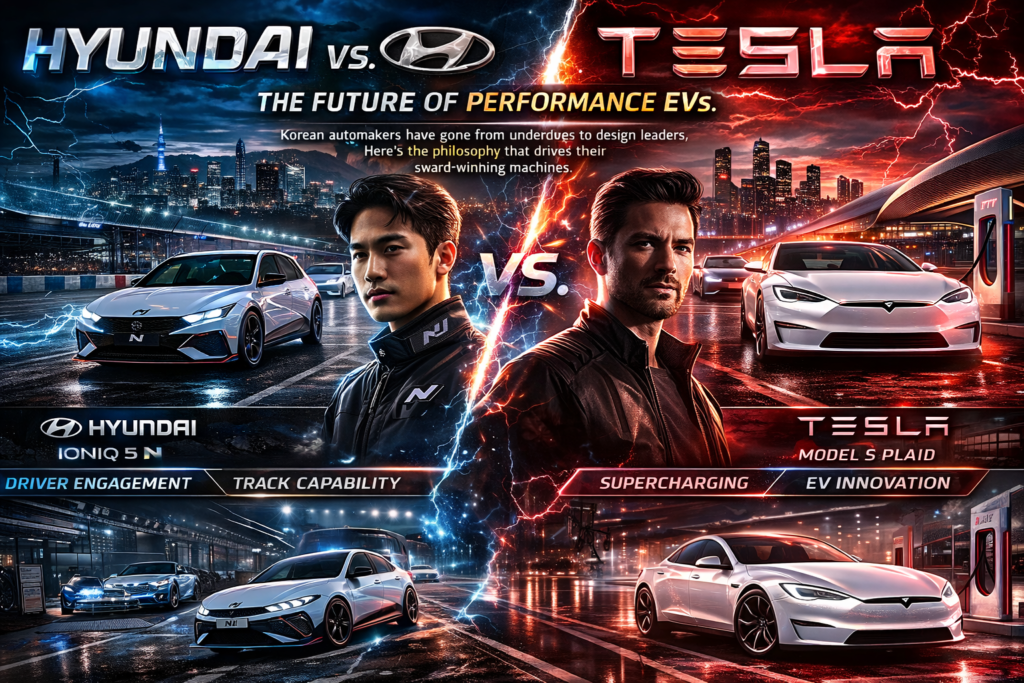
The automotive industry is undergoing its most significant transformation since the invention of the internal combustion engine. Electric vehicles (EVs) are no longer just eco-friendly alternatives—they are redefining performance, technology, and driving dynamics. At the forefront of this revolution are two automotive powerhouses: Tesla, the pioneer of modern electric mobility, and Hyundai, an ambitious innovator rapidly gaining global recognition.
As both companies push the boundaries of electric performance, a compelling question emerges: Who is shaping the future of performance EVs—Hyundai or Tesla?
This article explores how these industry leaders compare in performance, technology, design, and overall value.
The Rise of Performance Electric Vehicles
Electric vehicles have shattered traditional assumptions about speed and performance. Instant torque delivery, rapid acceleration, and advanced battery technology have made EVs formidable contenders against—and often superior to—internal combustion sports cars.
Tesla laid the groundwork for this evolution, while Hyundai has rapidly entered the scene with groundbreaking models from its IONIQ lineup and high-performance N division. Together, these brands are defining the next era of automotive excellence.
Performance Showdown
Tesla: The Benchmark of Electric Speed
Tesla has built its reputation on industry-leading acceleration and cutting-edge battery technology. Its performance models consistently dominate drag strips and performance metrics.
Notable Models:
- Tesla Model S Plaid
- 0–60 mph: ~1.99 seconds
- Over 1,000 horsepower
- Top speed: ~200 mph
- Tesla Model 3 Performance
- 0–60 mph: ~3.1 seconds
- Exceptional efficiency and handling
Tesla’s focus on straight-line speed has set new global standards for EV performance.
Hyundai: The Driver’s Performance EV
Hyundai’s performance philosophy emphasizes balance, engagement, and track-ready capability. The introduction of the IONIQ 5 N marked a turning point, proving that electric vehicles can deliver excitement beyond raw acceleration.
Notable Models:
- Hyundai IONIQ 5 N
- 641 horsepower (with N Grin Boost)
- 0–60 mph: ~3.25 seconds
- Simulated gear shifts and engine sounds for enhanced driver engagement
- Hyundai IONIQ 6
- Exceptional aerodynamics and efficiency
- Sleek, futuristic design
Unlike Tesla, Hyundai focuses on creating a more immersive and emotional driving experience.
Design Philosophy: Minimalism vs. Futurism
Tesla: Clean and Minimalist
Tesla interiors are known for their simplicity and reliance on large touchscreen interfaces. This minimalist approach appeals to tech enthusiasts and reflects Silicon Valley design principles.
Key Features:
- Ultra-clean dashboard layout
- Central touchscreen controls
- Panoramic glass roofs
- Software-centric user experience
Hyundai: Futuristic and Human-Centric
Hyundai blends innovation with comfort, offering interiors that feel both advanced and practical. Inspired by Korean design philosophy, Hyundai prioritizes usability and elegance.
Key Features:
- Dual panoramic digital displays
- Sustainable interior materials
- Intuitive controls
- Spacious, lounge-inspired cabins
Hyundai’s designs aim to balance cutting-edge technology with everyday practicality.
Technology and Innovation
Tesla’s Strengths
- Industry-leading software and user interface
- Extensive Supercharger network
- Over-the-air (OTA) updates
- Advanced Autopilot and Full Self-Driving capabilities
- Strong brand recognition in EV innovation
Hyundai’s Strengths
- Ultra-fast 800-volt charging architecture
- Vehicle-to-Load (V2L) technology
- Augmented reality head-up displays
- Advanced driver-assistance systems
- Exceptional reliability and build quality
Hyundai’s E-GMP platform enables some of the fastest charging times in the industry, providing up to 80% charge in approximately 18 minutes under optimal conditions.
Charging Infrastructure
| Feature | Tesla | Hyundai |
|---|---|---|
| Charging Network | Proprietary Supercharger Network | Expanding global partnerships |
| Charging Speed | Fast | Ultra-fast 800V architecture |
| Accessibility | Industry-leading convenience | Increasing rapidly worldwide |
| Compatibility | Tesla ecosystem | Compatible with multiple networks |
Tesla currently holds an advantage in charging infrastructure, though Hyundai is rapidly closing the gap through global collaborations.
Driving Experience
| Category | Tesla | Hyundai |
|---|---|---|
| Acceleration | Exceptional | Outstanding |
| Handling | Precise and stable | Dynamic and engaging |
| Driver Engagement | Technology-focused | Performance-focused |
| Track Capability | Limited track focus | Designed for track performance (IONIQ 5 N) |
| Ride Comfort | Firm and modern | Refined and balanced |
Tesla excels in speed and efficiency, while Hyundai prioritizes emotional engagement and driving dynamics.
Value and Affordability
Hyundai has built its reputation on delivering exceptional value, and its EV lineup continues that tradition.
| Category | Tesla | Hyundai |
|---|---|---|
| Pricing | Premium positioning | Competitive and value-driven |
| Standard Features | Strong but often optional | Generously equipped |
| Warranty | Standard coverage | Industry-leading warranty |
| Cost of Ownership | Efficient but premium-priced | Excellent overall value |
Hyundai’s affordability makes high-performance EVs more accessible to a broader audience.
Environmental Innovation and Sustainability
Both manufacturers are leaders in sustainable mobility.
Tesla
- Pioneered mass adoption of electric vehicles
- Focuses on renewable energy and battery advancements
- Integrates solar technology and energy storage solutions
Hyundai
- Invests heavily in EVs, hydrogen fuel cell technology, and sustainability
- Utilizes eco-friendly materials in vehicle production
- Pursues carbon neutrality and innovative energy solutions
Hyundai’s diversification into hydrogen technology provides a unique advantage in long-term sustainability.
Flagship Model Comparison
| Feature | Hyundai IONIQ 5 N | Tesla Model S Plaid |
|---|---|---|
| Power | 641 hp | Over 1,000 hp |
| 0–60 mph | ~3.25 seconds | ~1.99 seconds |
| Drivetrain | Dual Motor AWD | Tri-Motor AWD |
| Focus | Track performance and driver engagement | Ultimate straight-line speed |
| Interior Design | Futuristic and ergonomic | Minimalist and tech-driven |
| Charging Architecture | 800V ultra-fast charging | High-speed Supercharging |
Pros and Cons
Tesla
Pros:
- Unmatched acceleration
- Advanced software and AI integration
- Extensive charging infrastructure
- Strong brand recognition
Cons:
- Minimalist interiors may not appeal to everyone
- Premium pricing
- Build quality concerns reported in some markets
- Limited tactile controls
Hyundai
Pros:
- Exceptional value for money
- Engaging performance-focused EVs
- Ultra-fast charging technology
- High-quality interiors and build
- Industry-leading warranty
Cons:
- Charging network still expanding
- Lower brand recognition in the EV segment
- Smaller performance EV lineup compared to Tesla
Who Is Shaping the Future of Performance EVs?
The answer depends on what defines “performance” for the modern driver.
- Choose Tesla if you value:
- Record-breaking acceleration
- Advanced software and autonomy
- A mature EV ecosystem
- Choose Hyundai if you value:
- Driver engagement and track capability
- Exceptional value and design
- Cutting-edge charging technology
Tesla revolutionized the electric vehicle market, but Hyundai is redefining what electric performance can feel like.
Conclusion
The rivalry between Hyundai and Tesla represents more than competition—it symbolizes the evolution of the automotive industry. Tesla pioneered the electric revolution, setting the benchmark for speed and innovation. Hyundai, however, is emerging as a formidable challenger, combining performance, design, and accessibility with cutting-edge technology.
As performance EVs continue to evolve, the future promises thrilling advancements from both manufacturers. Whether driven by Silicon Valley innovation or Korean engineering excellence, one thing is certain:
The future of performance is electric—and Hyundai and Tesla are leading the charge.