Learning how to maintain your car is one of the most empowering skills a driver can develop. Not only does it save money, but it also builds confidence, improves safety, and lays the foundation for more advanced automotive projects. Whether you drive a Hyundai Elantra, Kia Forte, Genesis G70, or any other vehicle, understanding basic car maintenance is the first step toward becoming a true automotive enthusiast.
If you’re new to mechanics, think of this guide as dipping your toes into the water—simple, approachable, and designed to help you build knowledge step by step.
Why Learn Basic Car Maintenance?
Before diving into specific tasks, it’s important to understand the benefits of mastering essential maintenance skills.
Key Advantages
- Saves Money: Reduce costly trips to the mechanic.
- Improves Safety: Detect potential issues before they become dangerous.
- Extends Vehicle Lifespan: Proper care ensures longevity.
- Builds Confidence: Gain independence and mechanical understanding.
- Prepares You for Advanced Modifications: Establish a foundation for tuning and upgrades.
- Enhances Resale Value: A well-maintained vehicle retains its worth.
1. Learn to Check Your Engine Oil
Engine oil is the lifeblood of your vehicle. Checking it regularly helps prevent engine damage and ensures optimal performance.
How to Check Engine Oil
- Park on a level surface and turn off the engine.
- Allow the engine to cool for 5–10 minutes.
- Pull out the dipstick and wipe it clean.
- Reinsert the dipstick fully.
- Remove it again and check the oil level.
- Ensure the oil falls between the “MIN” and “MAX” marks.
Beginner Tip
- If the oil appears dark or gritty, it may be time for an oil change.
Recommended Interval: Every 5,000–8,000 km (3,000–5,000 miles).
2. Check and Maintain Tire Pressure
Proper tire pressure improves fuel efficiency, safety, and tire longevity.
Steps to Check Tire Pressure
- Use a digital tire pressure gauge.
- Compare readings to the recommended PSI listed on the driver’s door sticker.
- Inflate tires as needed.
Benefits
- Better handling and braking
- Improved fuel economy
- Reduced tire wear
Pro Tip: Check tire pressure once a month and before long trips.
3. Replace Windshield Wipers
Clear visibility is essential for safe driving, and worn wiper blades can hinder it.
Signs They Need Replacement
- Streaking or skipping across the windshield
- Squeaking noises
- Reduced effectiveness during rain
Recommended Interval: Every 6–12 months.
This simple upgrade takes less than five minutes and requires no tools.
4. Check and Refill Essential Fluids
Your car relies on several fluids to function properly. Regular checks ensure smooth operation.
Key Fluids to Monitor
| Fluid | Purpose |
|---|---|
| Engine Oil | Lubricates engine components |
| Coolant | Prevents overheating |
| Brake Fluid | Enables braking performance |
| Transmission Fluid | Ensures smooth gear shifts |
| Power Steering Fluid | Assists steering control |
| Windshield Washer Fluid | Improves visibility |
Always refer to your owner’s manual for correct specifications.
5. Replace the Engine Air Filter
The engine air filter prevents debris from entering the engine. A clean filter improves performance and fuel efficiency.
Why It Matters
- Enhances engine efficiency
- Improves throttle response
- Increases fuel economy
Recommended Interval: Every 15,000–20,000 km.
Most air filters can be replaced in under ten minutes.
6. Understand Dashboard Warning Lights
Modern vehicles use dashboard indicators to alert drivers of potential issues. Understanding them helps you respond promptly.
Common Warning Lights
| Symbol | Meaning |
|---|---|
| Check Engine Light | Engine or emissions issue |
| Oil Pressure Light | Low oil pressure |
| Battery Light | Charging system problem |
| ABS Light | Anti-lock braking system issue |
| Tire Pressure Light | Low tire pressure |
| Temperature Warning | Engine overheating |
Ignoring warning lights can lead to costly repairs.
7. Inspect Your Battery
A healthy battery ensures reliable starts and smooth electrical operation.
What to Look For
- Corrosion on terminals
- Loose connections
- Slow engine cranking
Maintenance Tips
- Clean terminals with a baking soda solution.
- Replace the battery every 3–5 years.
8. Learn How to Jump-Start a Car
Knowing how to jump-start a vehicle is an essential skill for every driver.
Basic Steps
- Connect the red clamp to the dead battery’s positive terminal.
- Connect the other red clamp to the donor battery’s positive terminal.
- Attach the black clamp to the donor battery’s negative terminal.
- Connect the final black clamp to an unpainted metal surface on the dead car.
- Start the donor car, then the dead vehicle.
Always follow safety precautions and consult your owner’s manual.
9. Wash and Protect Your Car
Regular cleaning protects your vehicle’s paint and prevents rust.
Best Practices
- Wash your car every two weeks.
- Use microfiber towels to avoid scratches.
- Apply wax every 3–6 months.
- Clean wheels and undercarriage.
Maintaining your car’s appearance also preserves its value.
10. Read Your Owner’s Manual
The owner’s manual is your vehicle’s ultimate guide. It provides:
- Maintenance schedules
- Fluid specifications
- Tire pressure recommendations
- Warning light explanations
Understanding this document is a cornerstone of mechanical literacy.
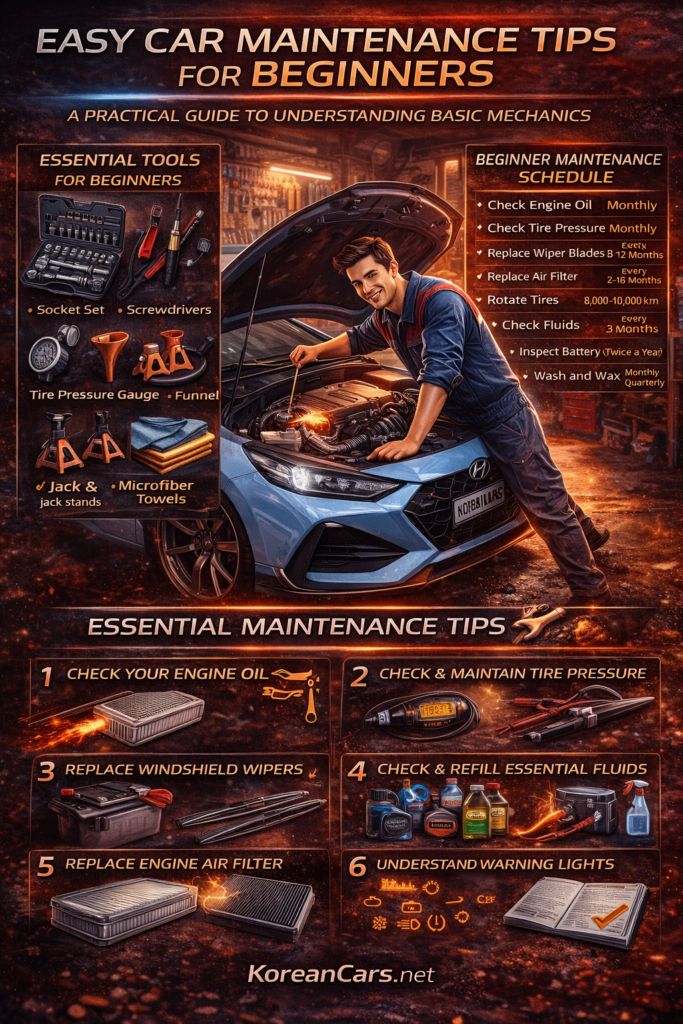
Essential Tools for Beginners
Starting with a basic toolkit makes maintenance easier and more accessible.
| Tool | Purpose |
|---|---|
| Socket Set | General repairs |
| Screwdrivers | Removing fasteners |
| Tire Pressure Gauge | Monitoring tire pressure |
| Funnel | Refilling fluids |
| Jack and Jack Stands | Lifting the vehicle safely |
| Microfiber Towels | Cleaning and detailing |
| OBD-II Scanner | Diagnosing engine issues |
| Work Gloves | Protection and safety |
| Flashlight | Improved visibility |
Beginner Maintenance Schedule
| Task | Frequency |
|---|---|
| Check Engine Oil | Monthly |
| Check Tire Pressure | Monthly |
| Replace Wiper Blades | Every 6–12 Months |
| Replace Air Filter | Every 12–18 Months |
| Rotate Tires | Every 8,000–10,000 km |
| Check Fluids | Every 3 Months |
| Inspect Battery | Twice a Year |
| Wash and Wax | Monthly or Quarterly |
Best Cars for Beginner Mechanics
These reliable Korean models are ideal for learning basic maintenance:
- Hyundai Elantra
- Hyundai Sonata
- Kia Forte
- Kia Sportage
- Hyundai Tucson
- Genesis G70
They offer dependable engineering, accessible components, and excellent service documentation.
Tips for Building Mechanical Confidence
- Start with simple tasks and progress gradually.
- Watch instructional videos and read guides.
- Join automotive communities and forums.
- Keep a maintenance log.
- Invest in quality tools.
- Don’t rush—patience is key.
- Learn from mistakes and stay curious.
Every expert mechanic started as a beginner.
Conclusion
Understanding basic car maintenance is the first step toward automotive independence. From checking fluids and replacing filters to interpreting warning lights, these simple tasks build confidence and provide invaluable insight into how vehicles work.
By mastering these foundational skills, you’ll not only save money and improve your car’s reliability but also prepare yourself for more advanced projects such as performance upgrades and modifications.
Every great mechanic begins with the basics—start small, learn consistently, and enjoy the journey.