0
0
 0
0
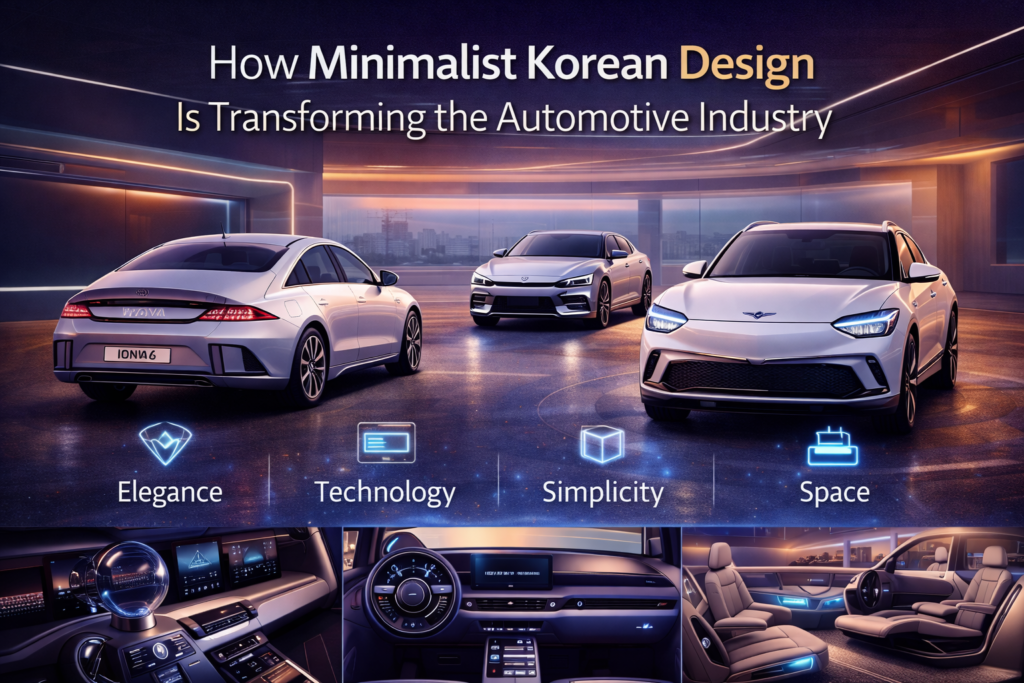
In an industry once defined by excess—chrome accents, aggressive lines, and cluttered interiors—a new philosophy is taking hold: minimalism. And at the forefront of this shift are Korean automakers like Hyundai Motor Group, Kia, and Genesis.
Rather than competing through complexity, Korean design is redefining automotive luxury and performance through simplicity, clarity, and intention. The result is a new aesthetic language that is influencing not just Korean vehicles—but the global automotive industry.
The Philosophy Behind Korean Minimalism


Korean minimalist design is rooted in cultural principles:
- Balance and harmony
- Respect for space
- Functional beauty
- Emotional calm
Unlike Western minimalism, which often feels stark, Korean minimalism emphasizes warmth and flow—creating environments that feel both refined and inviting.
Exterior Design: Clean Yet Striking


Modern Korean vehicles are instantly recognizable—not because they are loud, but because they are precisely composed.
Key Exterior Traits:
- Smooth, uninterrupted surfaces
- Subtle yet distinctive lighting signatures
- Balanced proportions
- Reduction of unnecessary visual elements
Cars like the Hyundai Ioniq 6 and Kia EV6 demonstrate how minimalism can still feel bold and futuristic.
Interior Design: The True Revolution


The most dramatic transformation is happening inside the cabin.
What Defines Korean Minimalist Interiors:
- Wide, uncluttered dashboards
- Integrated digital displays
- Hidden or simplified controls
- Ambient lighting for mood rather than distraction
Vehicles like the Genesis GV60 and Hyundai Ioniq 5 feel more like living spaces than traditional car interiors.
Technology Integration: Less Visible, More Powerful


Minimalism doesn’t mean less technology—it means better integration.
Korean automakers are leading in:
- Seamless infotainment systems
- Over-the-air (OTA) updates
- Hidden touch-sensitive controls
- Augmented reality displays
Technology fades into the background, allowing the user experience to take center stage.
The Influence of Global Design Leaders
This transformation didn’t happen by accident.
Key figures like Luc Donckerwolke and Peter Schreyer helped shape a design language that blends European precision with Korean philosophy.
The result:
- Globally competitive aesthetics
- Distinct brand identities
- A fresh alternative to traditional luxury design
Why Minimalism Works in the EV Era


Electric vehicles have accelerated the shift toward minimalism.
Key Reasons:
- Flat floors allow more open interiors
- Fewer mechanical components reduce design constraints
- Digital systems replace physical controls
- Focus shifts from driving to experience
Minimalism is not just aesthetic—it’s functional for the EV age.
Redefining Luxury
Traditional luxury emphasized:
- Heavy materials
- Ornate detailing
- Visual complexity
Korean minimalism flips this:
New Luxury Defined By:
- Space and openness
- Clean design
- Intelligent technology
- Emotional comfort
Brands like Genesis are proving that less can feel like more.
Global Impact on the Automotive Industry
Korean minimalist design is influencing competitors worldwide.
We’re now seeing:
- Simplified interiors across luxury brands
- Reduced physical buttons
- Greater emphasis on digital interfaces
- Cleaner exterior styling trends
What started in Korea is becoming a global design movement.
Challenges of Minimalism
Of course, minimalism comes with trade-offs:
Potential Downsides:
- Over-reliance on touch controls
- Learning curve for new interfaces
- Risk of losing tactile feedback
- Uniformity if overdone
Korean automakers are actively balancing simplicity with usability to avoid these pitfalls.
The Future of Automotive Design
Looking ahead, minimalist design will likely evolve into:
- Fully adaptive digital environments
- AI-driven personalization of interiors
- Even greater integration of technology
- Cabin experiences closer to living spaces than vehicles
The car is becoming less of a machine—and more of an experience platform.
Conclusion
Minimalist Korean design is not just a trend—it’s a transformation.
By combining cultural philosophy, advanced technology, and bold innovation, Korean automakers are redefining what modern vehicles should look and feel like.
In doing so, they are influencing the entire industry—proving that true sophistication doesn’t come from adding more, but from perfecting less.