0
0
 0
0
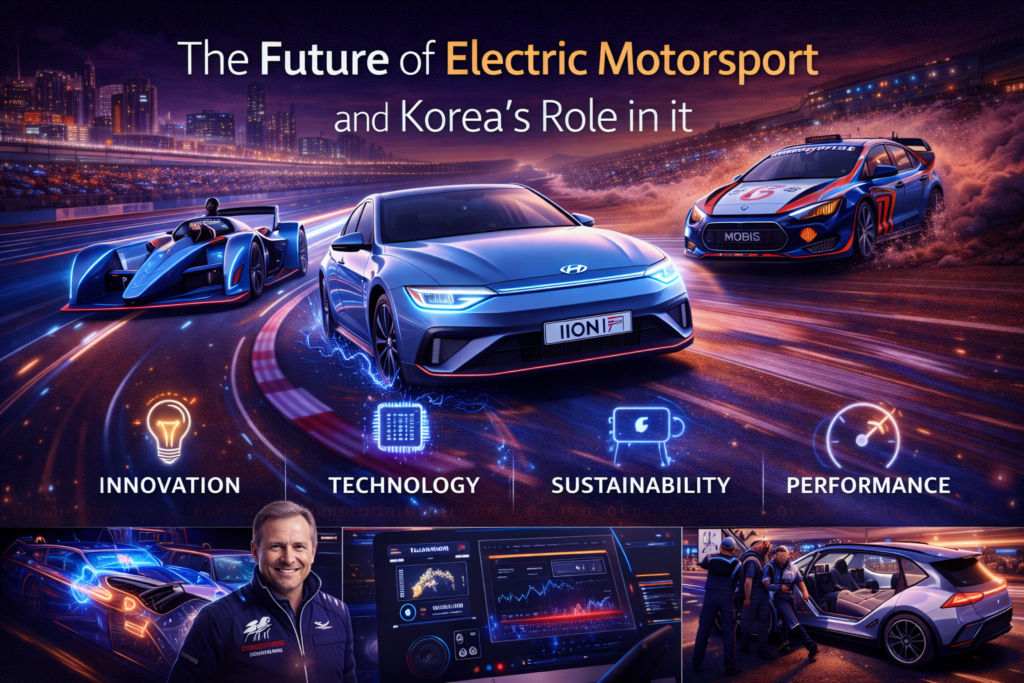
Motorsport has always been a proving ground for innovation. From turbocharging to hybrid systems, technologies developed on the track have consistently shaped the cars we drive every day. Now, a new era is emerging—electric motorsport—and Korea is positioning itself as a key player in this transformation.
With companies like Hyundai Motor Group leading the charge, electric racing is no longer a niche concept. It’s becoming the next frontier of performance—and Korea intends to be at the forefront.
The Shift Toward Electric Racing


Traditional motorsport has long been dominated by internal combustion engines. But global trends are forcing a shift:
- Environmental regulations
- Sustainability goals
- Rapid advancements in EV technology
- Changing consumer expectations
Electric racing series like Formula E have already proven that EVs can deliver excitement, competition, and innovation.
Why Electric Motorsport Matters
Electric motorsport isn’t just about replacing engines—it’s about redefining performance.
Key Advantages:
- Instant torque for explosive acceleration
- New engineering challenges (battery management, cooling, software)
- Opportunities for innovation in energy efficiency
- Direct relevance to consumer EV development
In many ways, electric racing is more aligned with the future of road cars than traditional motorsport.
Hyundai N and the Electric Performance Evolution


Hyundai Motor Group is already bridging the gap between motorsport and electrification through its N division.
The Hyundai Ioniq 5 N is a major milestone:
- Designed with track performance in mind
- Advanced thermal management systems
- Simulated gear shifts and sound for driver engagement
- Capable of sustained high-performance driving
This isn’t just an EV—it’s a statement that electric cars can be fun on track.
Korea’s Technological Advantage
Korea’s strength in electric motorsport comes from its broader technological ecosystem.
Key Areas of Leadership:
- Battery technology (energy density, charging speed)
- Electronics and semiconductors
- Software and AI integration
- Manufacturing efficiency
These capabilities give Korean automakers a competitive edge in developing next-generation racing technologies.
New Challenges in Electric Motorsport


Electric racing introduces entirely new engineering challenges:
Key Issues:
- Battery heat management
- Energy consumption strategy
- Weight distribution
- Charging or battery swapping logistics
Winning in electric motorsport isn’t just about speed—it’s about efficiency, precision, and software optimization.
Beyond Formula E: Expanding the Landscape
While Formula E is the most visible electric racing series, the ecosystem is expanding:
- Electric rally competitions
- Electric touring car championships
- Manufacturer-led performance events
- Experimental EV track platforms
Korean automakers are actively exploring these areas, using them as testing grounds for future technologies.
From Track to Road: Direct Impact


Electric motorsport has a direct influence on consumer vehicles:
Technology Transfer:
- Improved battery durability
- Enhanced cooling systems
- Advanced regenerative braking
- Performance-oriented software tuning
The lessons learned on the track are quickly making their way into production EVs.
The Experience Factor: Can EV Racing Compete?
One of the biggest criticisms of electric motorsport is the lack of engine sound.
Korean automakers are addressing this creatively:
- Artificial sound generation
- Simulated gear shifts
- Enhanced driver feedback systems
The goal is to create an experience that is different—but equally engaging.
The Future of Electric Motorsport
Looking ahead, electric motorsport is expected to evolve rapidly:
Key Trends:
- Longer race durations as battery tech improves
- Faster charging and pit stop innovation
- Increased manufacturer participation
- Integration of AI-driven race strategies
- Hybrid formats combining physical and virtual racing
Electric racing may not replace traditional motorsport entirely—but it will become a dominant force.
Korea’s Strategic Position
Korea’s approach is clear:
- Invest in EV technology
- Leverage motorsport for development
- Build a performance-oriented brand identity
- Compete globally
With vehicles like the Hyundai Ioniq 5 N and ongoing innovation, Korea is not just participating—it’s helping shape the future.
Conclusion
The future of motorsport is electric—and Korea is ready.
By combining advanced technology, performance engineering, and a willingness to innovate, Korean automakers are redefining what racing can be.
Electric motorsport isn’t just a new chapter—it’s a new book entirely.
And if current trends continue, Korea will be one of its most influential authors.