1
1
 0
0
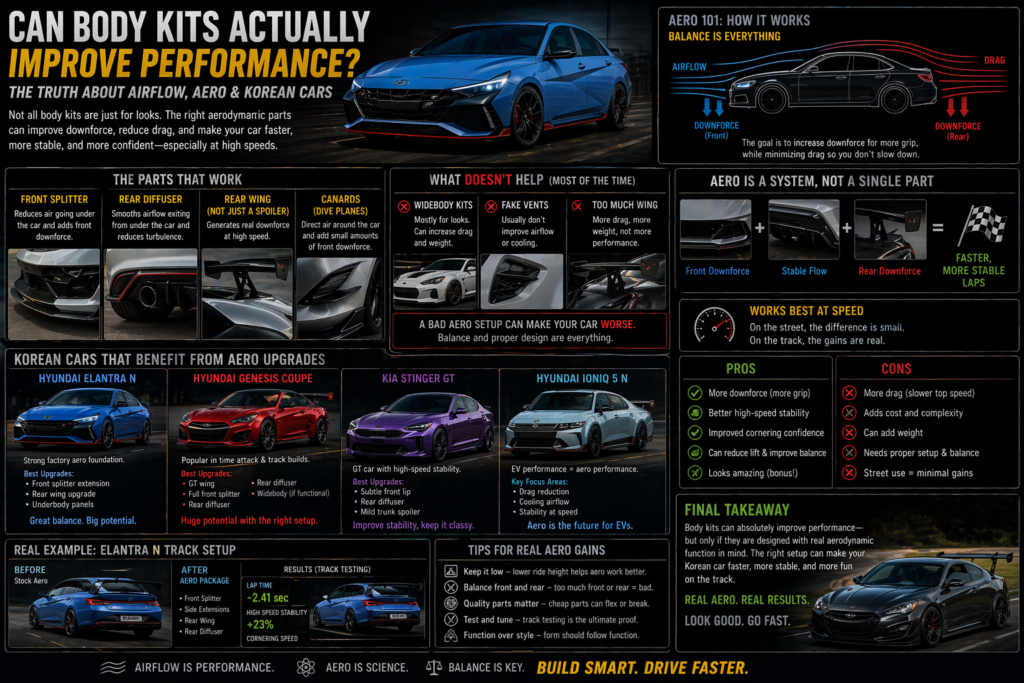
Body kits are often seen as purely cosmetic—something you install for style, presence, and that aggressive stance at a meet.
But here’s the truth:
👉 Some body kits do improve performance—if they’re designed with aerodynamics in mind.
The problem is… most aren’t.
So let’s break down:
- What actually works
- What’s just for looks
- And which Korean car setups are starting to get it right
🌬️ The Basics: How Aero Actually Works


Aerodynamics comes down to two main forces:
1. Downforce
- Pushes the car into the road
- Improves grip at speed
2. Drag
- Air resistance slowing the car down
👉 The goal is balance:
More grip without too much drag
⚠️ Most Body Kits Don’t Improve Performance
Let’s be real.
Typical “Show Kits”:
- Widebody kits
- Aggressive bumpers
- Random vents (non-functional)
These often:
- Disrupt airflow
- Increase drag
- Add weight
👉 They look fast—but don’t make you faster.
✅ What Actually Improves Performance
1. Front Splitters


What it does:
- Reduces air going under the car
- Creates downforce at the front
Real effect:
- Better front-end grip at speed
👉 One of the most effective and simple aero mods.
2. Rear Diffusers


What it does:
- Smooths airflow exiting under the car
- Reduces turbulence
Real effect:
- Improved stability
- Slight downforce gain
👉 Works best when paired with a splitter.
3. Rear Wings (Not Spoilers)


Difference:
- Spoiler = reduces lift slightly
- Wing = generates real downforce
Real effect:
- Massive rear grip at high speed
⚠️ But:
- Adds drag
- Only effective at speed
4. Canards (Dive Planes)


What they do:
- Direct airflow around the car
- Add small amounts of front downforce
👉 Minor gains—but noticeable in track setups.
🇰🇷 Korean Cars That Actually Benefit from Aero Mods
Now let’s talk KDM specifically.
🔵 Hyundai Elantra N


Already comes with:
- Functional front aero
- Rear spoiler tuned for stability
Effective Upgrades:
- Front splitter extension
- Track-focused rear wing
- Underbody panels
👉 One of the best Korean platforms for real aero gains.
🔥 Hyundai Genesis Coupe


Popular in:
- Time attack builds
- Drift setups
Works Well With:
- Large GT wings
- Full splitter + diffuser combo
- Widebody (if functional, not just cosmetic)
👉 Needs proper setup—can go wrong easily.
🟣 Kia Stinger GT


More of a GT car—but:
Benefits From:
- Subtle front lip
- Rear diffuser
- Mild spoiler
👉 Not a track monster—but can gain stability at speed.
⚡ Hyundai Ioniq 5 N


EVs rely heavily on aero.
Key Areas:
- Cooling airflow
- Drag reduction
- Stability
👉 Expect more functional aero kits for EVs in the future.
🧠 The Key Rule: Aero Only Works as a System
This is where most people get it wrong.
You can’t just:
- Add a wing
- And expect magic
Real Aero Requires:
- Front + rear balance
- Proper mounting angles
- Speed to activate effects
👉 A bad setup can make the car worse.
⚖️ Street vs Track Reality
On the Street:
- Minimal difference
- Mostly visual
On the Track:
- Noticeable grip improvement
- Better cornering stability
- Higher confidence at speed
👉 Aero is speed-dependent performance
🏁 So… Are Body Kits Worth It?
✅ Yes (If):
- Designed with real aerodynamic function
- Installed as a balanced system
- Used at higher speeds (track, spirited driving)
❌ No (If):
- Purely cosmetic
- Random parts with no airflow design
- Installed without understanding
Conclusion
Body kits can improve performance—but only when they’re built with purpose.
In the growing KDM scene, we’re starting to see a shift:
- From style-only builds
- To function + form combined
And as Korean performance cars continue to evolve…
👉 Expect aero to become a bigger part of the conversation.
Because real performance isn’t just about power.
It’s about how the car moves through the air.