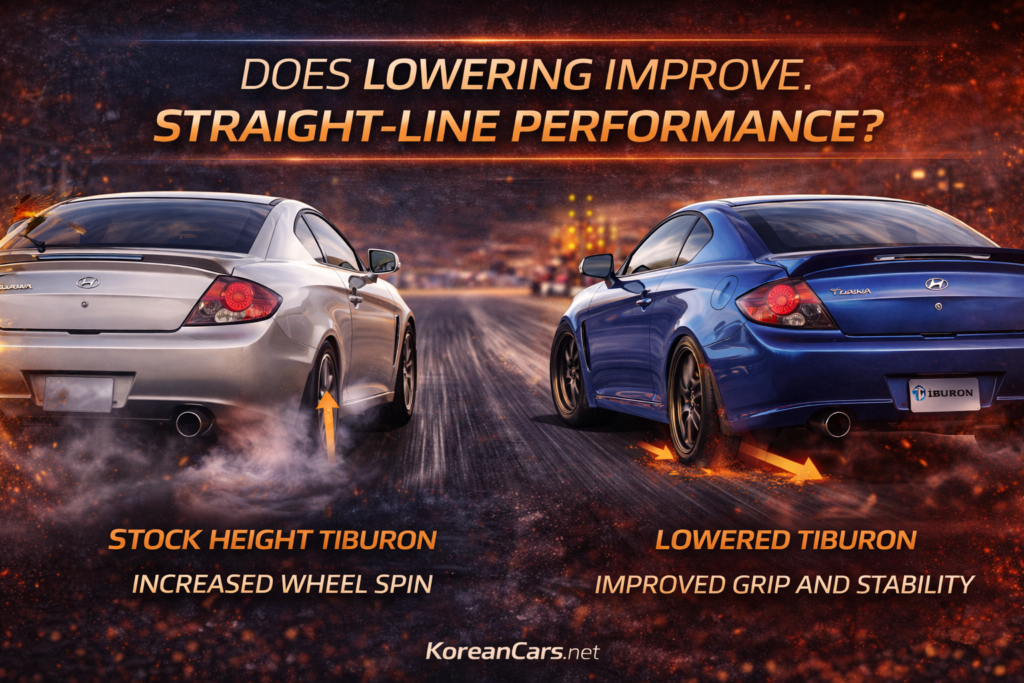
Lowering a car is one of the most popular modifications among automotive enthusiasts. While it is typically associated with improved handling, aesthetics, and aerodynamics, a controversial question persists within the tuning community:
Does lowering your car actually improve straight-line performance by increasing grip?
Some argue that it makes no measurable difference, while others swear by noticeable improvements in acceleration and traction. Many enthusiasts—including those modifying Korean performance cars like the Hyundai Tiburon, Genesis Coupe, and Hyundai N models—report enhanced straight-line stability and reduced wheel spin after lowering their vehicles.
Let’s explore the science, the myths, and the real-world experiences behind this debate.
Understanding What Happens When You Lower Your Car
Lowering a car involves reducing the distance between the chassis and the ground, typically through lowering springs or coilovers. This modification affects several aspects of vehicle dynamics.
Key Changes from Lowering
- Reduced center of gravity
- Improved weight distribution
- Decreased body roll
- Enhanced stability
- Altered suspension geometry
- Reduced aerodynamic drag
These factors are often associated with better cornering, but they may also influence acceleration in straight-line scenarios.
The Argument: Lowering Improves Straight-Line Performance
Some enthusiasts believe lowering a vehicle increases grip by improving how weight is transferred to the tires during acceleration.
Potential Benefits
1. Reduced Weight Transfer
During hard acceleration, weight shifts to the rear of the vehicle. A lowered car reduces excessive weight transfer, allowing for more controlled traction—particularly beneficial for front-wheel-drive vehicles.
- Front-Wheel Drive (FWD): Less front-end lift helps maintain traction.
- Rear-Wheel Drive (RWD): Improves stability and power delivery.
This effect can reduce wheel spin and make launches feel smoother.
2. Increased Tire Contact Patch Stability
While lowering does not increase vehicle weight, it improves how consistently that weight is distributed across the tires. A stable chassis ensures better contact with the road surface.
Result:
- Reduced wheel hop
- Improved traction
- More efficient power delivery
3. Reduced Wheel Hop
Wheel hop occurs when tires alternately grip and lose traction during acceleration. Lowering the car—especially with upgraded suspension—can help minimize this issue by stabilizing the drivetrain and suspension components.
4. Improved Aerodynamics
Lowering reduces airflow beneath the vehicle, decreasing drag and lift at higher speeds. While minimal at lower speeds, this can contribute to improved stability and acceleration at highway or track speeds.
5. Enhanced Driver Confidence
A planted, stable vehicle often feels quicker and more responsive. Confidence behind the wheel can lead to better launches and more efficient acceleration.
The Counterargument: Lowering Does Not Increase Straight-Line Speed
Despite these perceived advantages, many engineers and performance experts argue that lowering alone does not significantly improve straight-line performance.
Key Points from Critics
1. No Increase in Engine Power
Lowering does not add horsepower or torque. Any perceived improvement in acceleration is indirect rather than mechanical.
2. Weight on Tires Remains Unchanged
Lowering does not increase the total weight pressing down on the tires; it only redistributes it. True increases in traction come from better tires, suspension tuning, and drivetrain improvements.
3. Suspension Geometry Matters
Improperly lowered vehicles can suffer from:
- Reduced traction due to poor alignment
- Increased tire wear
- Compromised performance if not professionally tuned
4. Drag Racing Principles Favor Weight Transfer
In drag racing, vehicles often benefit from rearward weight transfer to maximize traction. Excessive lowering may limit this transfer, particularly in rear-wheel-drive cars.
Real-World Experience
Many enthusiasts report tangible improvements after lowering their cars.
Observed Benefits
- Reduced wheel spin during acceleration
- Improved traction
- Enhanced stability
- A sensation of quicker straight-line performance
For front-wheel-drive platforms like the Tiburon, lowering can reduce front-end lift and improve power delivery to the ground. When paired with quality suspension components and proper alignment, these improvements can be noticeable in everyday driving.
Scientific Breakdown: Does Lowering Improve Grip?
| Factor | Effect on Straight-Line Performance |
|---|---|
| Lower Center of Gravity | Improves stability |
| Reduced Wheel Hop | Enhances traction |
| Improved Suspension Control | Allows better power delivery |
| Reduced Body Movement | Increases efficiency |
| Increased Tire Load | ❌ Does not occur directly |
| Added Horsepower | ❌ No direct gain |
Conclusion: Lowering does not directly increase tire load or horsepower but can indirectly improve traction and acceleration under the right conditions.
When Lowering Improves Straight-Line Performance
Lowering can enhance acceleration when combined with proper supporting modifications.
Best-Case Scenarios
- Front-wheel-drive performance cars
- Vehicles experiencing wheel spin or wheel hop
- Cars equipped with performance tires
- Properly aligned and tuned suspension setups
- Moderate, professionally engineered ride height reductions
When Lowering May Not Help
Lowering may provide little to no benefit—or even hinder performance—if improperly executed.
Potential Downsides
- Excessively stiff suspension reducing traction
- Poor alignment causing uneven tire wear
- Reduced suspension travel
- Bottoming out under hard acceleration
- Decreased comfort for daily driving
Best Supporting Modifications for Straight-Line Performance
To maximize the benefits of lowering, consider pairing it with the following upgrades:
| Modification | Benefit |
|---|---|
| Performance Tires | Increased grip |
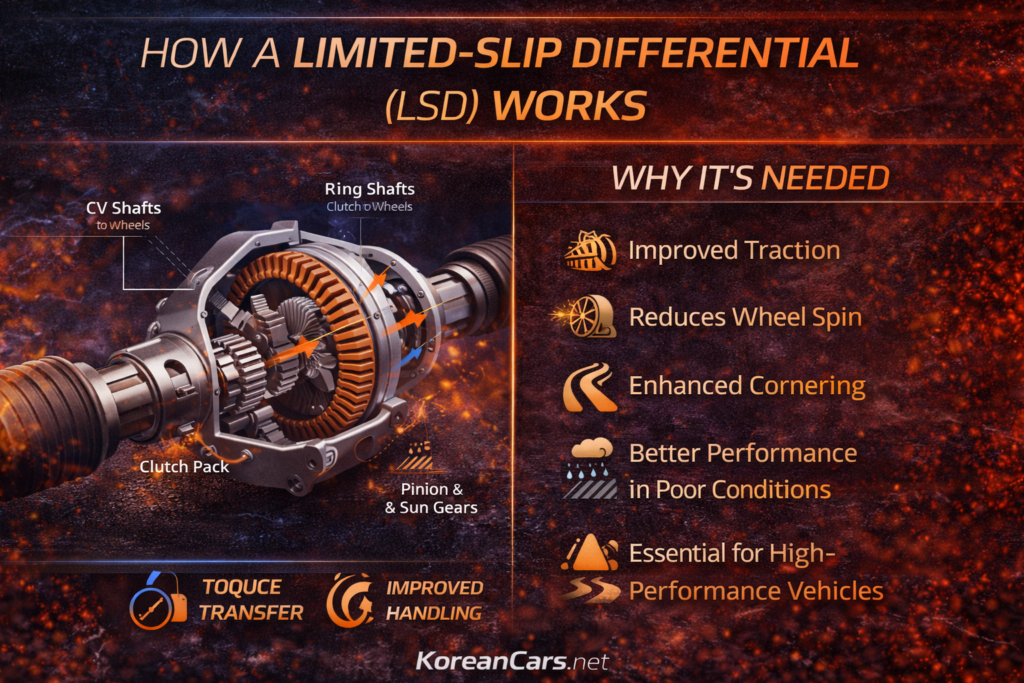
| Limited-Slip Differential (LSD) | Reduces wheel spin |
| Coilovers | Adjustable suspension tuning |
| Polyurethane Bushings | Improved stability |
| Upgraded Motor Mounts | Reduced drivetrain movement |
| Performance Alignment | Optimized traction |
| Wider Wheels | Larger contact patch |
Ideal Korean Cars for Lowering
Lowering is particularly beneficial for the following KDM platforms:
- Hyundai Tiburon
- Hyundai Elantra N
- Hyundai Veloster N
- Hyundai Genesis Coupe
- Kia Forte GT
- Kia Stinger GT
- Genesis G70
These vehicles respond well to suspension upgrades when properly tuned.
Final Verdict: Does Lowering Improve Straight-Line Performance?
Short Answer:
Not directly—but it can improve traction and acceleration under the right conditions.
Performance Summary
| Category | Impact |
|---|---|
| Horsepower | ❌ No Change |
| Traction | ✅ Improved Indirectly |
| Wheel Spin | ✅ Reduced |
| Stability | ✅ Improved |
| Straight-Line Speed | ⚖️ Slight Improvement Possible |
| Driver Confidence | ✅ Increased |
Lowering your car does not magically make it faster, but it can enhance how effectively power is delivered to the road—especially in front-wheel-drive vehicles.
Conclusion
The debate over whether lowering improves straight-line performance continues to divide enthusiasts and engineers. While it does not increase engine output or tire load directly, lowering can enhance traction, stability, and power delivery when done correctly.
In the world of automotive tuning, perception and physics often intersect—and sometimes, both are right.