0
0
 0
0
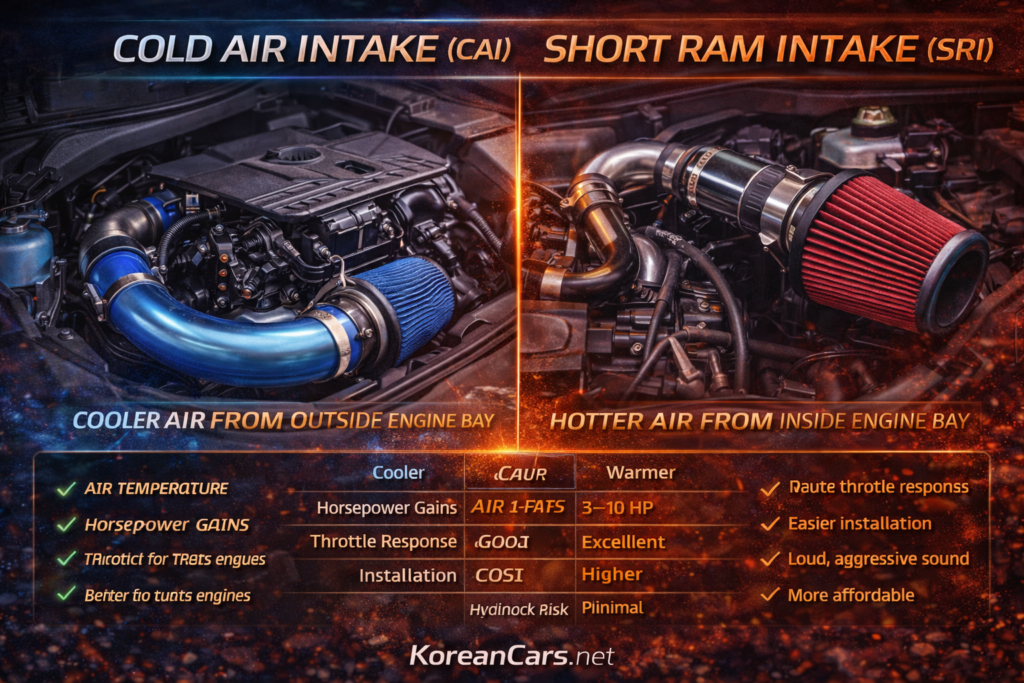
Upgrading your vehicle’s intake system is one of the most popular and cost-effective modifications for improving performance, sound, and engine efficiency. Among the most common options are the Cold Air Intake (CAI) and the Short Ram Intake (SRI). While both enhance airflow compared to factory systems, each offers distinct advantages and drawbacks.
Whether you drive a Hyundai Elantra N, Kia Stinger GT, Genesis Coupe, or Genesis G70, choosing the right intake system can significantly impact your car’s performance and driving experience. This guide breaks down the differences to help you make an informed decision.
What Is an Intake System?
An intake system delivers air to your engine’s combustion chamber. The more efficiently your engine can draw in oxygen-rich air, the more power it can produce. Performance intakes improve airflow, reduce restrictions, and enhance throttle response.
Why Upgrade Your Intake?
- Increase horsepower and torque
- Improve throttle response
- Enhance engine sound
- Boost turbocharger efficiency
- Improve fuel efficiency under optimal conditions
- Elevate overall driving enjoyment
What Is a Cold Air Intake (CAI)?
A Cold Air Intake is designed to draw cooler air from outside the engine bay—typically from behind the bumper or within the fender. Cooler air contains more oxygen, resulting in more efficient combustion and improved performance.
Key Characteristics
- Longer piping system
- Positioned away from engine heat
- Designed for maximum efficiency
Benefits of a Cold Air Intake
✔ Increased horsepower and torque
✔ Cooler, denser air improves combustion
✔ Better fuel efficiency
✔ Enhanced high-speed performance
✔ Ideal for turbocharged engines
✔ More consistent performance under load
Drawbacks of a Cold Air Intake
✖ Higher cost
✖ More complex installation
✖ Potential risk of water ingestion (hydrolock) in deep water
✖ Reduced performance gains in stop-and-go traffic
Estimated Power Gains
- 5–15 horsepower, depending on the vehicle and supporting modifications.
What Is a Short Ram Intake (SRI)?
A Short Ram Intake features a shorter intake pipe that draws air directly from the engine bay. While it ingests warmer air, the shorter design allows for quicker airflow and improved throttle response.
Key Characteristics
- Shorter piping
- Located near the engine
- Easier to install and maintain
Benefits of a Short Ram Intake
✔ Improved throttle response
✔ Louder and more aggressive induction sound
✔ Easier and quicker installation
✔ More affordable than CAIs
✔ Lower risk of hydrolock
✔ Ideal for urban and daily driving
Drawbacks of a Short Ram Intake
✖ Draws warmer air from the engine bay
✖ Slightly lower horsepower gains compared to CAIs
✖ Heat soak can reduce efficiency in hot climates
Estimated Power Gains
- 3–10 horsepower, depending on the vehicle and conditions.
Cold Air Intake vs. Short Ram Intake: Side-by-Side Comparison
| Feature | Cold Air Intake (CAI) | Short Ram Intake (SRI) |
|---|---|---|
| Air Temperature | Cooler | Warmer |
| Horsepower Gains | Higher | Moderate |
| Throttle Response | Good | Excellent |
| Installation Difficulty | Moderate | Easy |
| Cost | Higher | Lower |
| Engine Sound | Deep and refined | Loud and aggressive |
| Fuel Efficiency | Better | Slightly improved |
| Heat Soak Resistance | Strong | Weaker |
| Hydrolock Risk | Possible | Minimal |
| Best Use Case | Performance driving | Daily driving |
Performance in Different Driving Conditions
City Driving
- Winner: Short Ram Intake
- Offers quicker throttle response and easier installation, making it ideal for stop-and-go traffic.
Highway Driving
- Winner: Cold Air Intake
- Provides improved efficiency and sustained performance at higher speeds.
Track Performance
- Winner: Cold Air Intake
- Cooler, denser air contributes to better power output during demanding conditions.
Hot Climates
- Winner: Cold Air Intake
- Less susceptible to heat soak compared to SRIs.
Rainy Conditions
- Winner: Short Ram Intake
- Reduced risk of water ingestion makes it more practical in wet environments.
Best Intake Options for Korean Cars
Cold Air Intakes
- SXTH Element Engineering – Hyundai N models
- AEM – Reliable and high-performing
- Injen – Popular among KDM enthusiasts
- K&N – Industry-leading quality
- Takeda – Excellent for Genesis and Kia vehicles
Short Ram Intakes
- Injen – Performance-focused designs
- HPS Performance – Durable and efficient
- K&N Typhoon Series – Proven reliability
- AEM – Trusted by enthusiasts worldwide
Recommended Applications
| Vehicle | Recommended Intake Type |
|---|---|
| Hyundai Elantra N | Cold Air Intake |
| Hyundai Veloster N | Cold Air Intake |
| Hyundai Kona N | Short Ram Intake |
| Kia Stinger GT | Cold Air Intake |
| Genesis G70 | Cold Air Intake |
| Hyundai Genesis Coupe | Cold Air Intake |
| Kia Forte GT | Short Ram Intake |
| Hyundai Sonata N Line | Cold Air Intake |
Cost Comparison
| Intake Type | Average Cost |
|---|---|
| Short Ram Intake | $150–$350 |
| Cold Air Intake | $250–$500 |
Prices vary based on brand, materials, and vehicle compatibility.
Do You Need an ECU Tune?
Most intake systems do not require tuning, but an ECU recalibration can maximize performance gains.
| Modification | Tune Required? |
|---|---|
| Intake Only | No |
| Intake + Exhaust | Recommended |
| Intake + Downpipe + Turbo Upgrade | Yes |
Pros and Cons Summary
Cold Air Intake
Pros:
- Greater horsepower potential
- Cooler, denser air
- Improved efficiency
- Ideal for performance builds
Cons:
- More expensive
- Complex installation
- Risk of hydrolock in extreme conditions
Short Ram Intake
Pros:
- Affordable and easy to install
- Improved throttle response
- Aggressive sound
- Safer in wet conditions
Cons:
- Heat soak reduces efficiency
- Slightly lower power gains
Final Verdict: Which Intake Is Best?
The choice between a cold air intake and a short ram intake depends on your goals and driving conditions.
Choose a Cold Air Intake If You Want:
- Maximum performance and horsepower
- Cooler and more efficient airflow
- Better results on highways and track days
- Optimal performance for turbocharged engines
Choose a Short Ram Intake If You Want:
- Faster throttle response
- A louder and more aggressive sound
- Easier installation and lower cost
- Reliable performance in urban environments
Conclusion
Both cold air intakes and short ram intakes offer meaningful performance improvements over stock systems. A Cold Air Intake is ideal for enthusiasts seeking maximum efficiency and power, while a Short Ram Intake provides affordability, simplicity, and enhanced responsiveness.
For Korean performance vehicles—particularly those from Hyundai’s N division and Genesis’ turbocharged lineup—the right intake upgrade can unlock new levels of driving excitement.
Whether you prioritize power, sound, or practicality, upgrading your intake system is a smart first step into the world of automotive performance.