0
0
 0
0
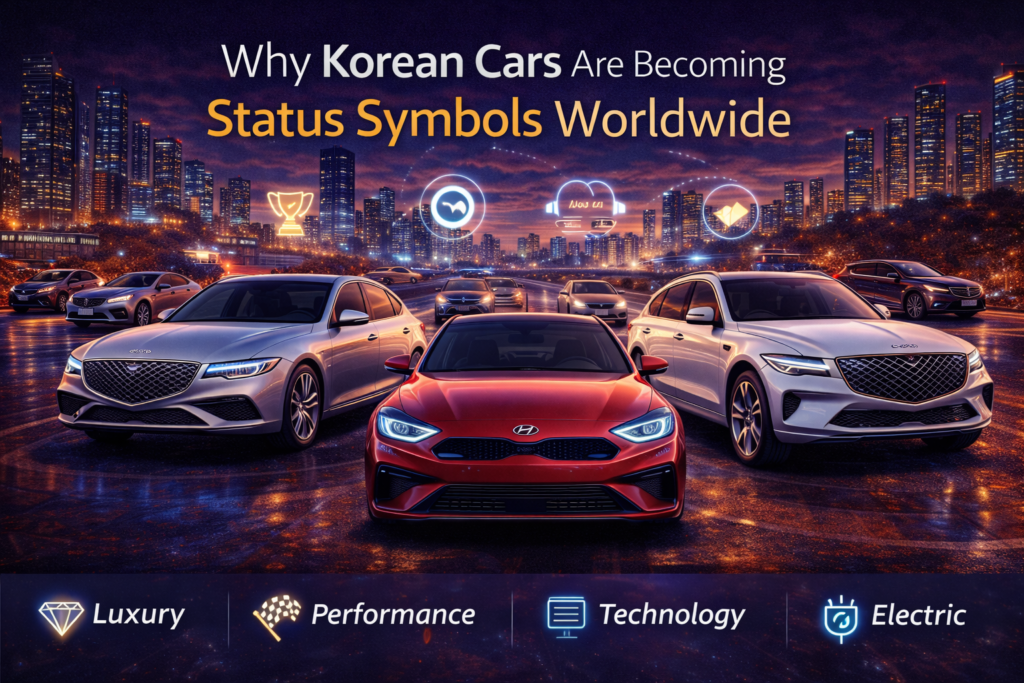
For years, Korean cars were seen as practical, affordable, and reliable—but rarely aspirational. That perception is rapidly changing. Today, vehicles from Hyundai Motor Group, Kia, and Genesis are not just competitive—they’re becoming status symbols.
From sleek design to cutting-edge technology and high-performance engineering, Korean cars are redefining what it means to own a desirable vehicle. And in many cases, they’re doing it in ways that challenge traditional luxury brands.
From Value to Prestige


Korean automakers built their reputation on value—but they didn’t stop there.
Over the past decade, they have:
- Elevated design quality to premium levels
- Introduced advanced technology ahead of competitors
- Expanded into luxury and performance segments
- Built strong global brand identities
Cars like the Genesis G90 and Genesis GV80 now compete directly with flagship models from Europe.
Design That Commands Attention


One of the biggest drivers of this shift is design.
With global talents like Luc Donckerwolke and Peter Schreyer, Korean cars have developed a distinctive visual identity.
Key Design Traits:
- Minimalist yet bold styling
- Signature lighting elements
- Clean, modern lines
- Premium proportions
Unlike some legacy brands, Korean automakers are not constrained by tradition—they’re free to innovate.
Technology as the New Luxury


Modern status is no longer defined solely by badges—it’s defined by experience.
Korean cars are leading in:
- Advanced infotainment systems
- Over-the-air (OTA) updates
- Driver assistance technologies
- Digital personalization features
Vehicles like the Genesis GV60 showcase how technology can elevate the sense of luxury beyond traditional materials.
Performance That Demands Respect


Performance has also played a crucial role in reshaping perception.
Key Models:
- Hyundai Elantra N
- Kia EV6 GT
- Hyundai Ioniq 5 N
- Kia Stinger GT
With the influence of Albert Biermann, Korean performance vehicles now deliver driving experiences that rival established sports brands.
The Electric Advantage


As the world transitions to electric vehicles, Korean automakers are gaining a significant edge.
Why This Matters:
- Early investment in EV platforms (E-GMP)
- Ultra-fast charging capabilities
- Strong design differentiation in EV space
- Competitive pricing for premium features
Owning a Korean EV increasingly signals forward-thinking and modern taste.
Value as a Hidden Luxury
Ironically, one of the biggest reasons Korean cars are becoming status symbols is something they’ve always had: value.
Buyers are realizing they can get:
- More features
- Better warranties
- Comparable performance
- Premium design
…for less money than traditional luxury brands.
In today’s world, smart spending is often seen as a status marker in itself.
Cultural Influence and Global Perception
Korea’s growing global cultural influence is also playing a role.
From K-pop to film and technology, Korea is shaping global trends—and its automotive industry is benefiting from that momentum.
Korean cars now represent:
- Innovation
- Modern design
- Technological leadership
- A fresh alternative to legacy brands
Challenging the Old Guard


Traditional luxury brands still carry prestige—but the gap is closing.
Korean automakers are:
- Matching or exceeding feature sets
- Offering competitive performance
- Delivering standout design
- Undercutting on price
For many buyers, the question is no longer “Why buy Korean?”
It’s becoming “Why pay more for less?”
The Psychology of Modern Status
Status today is evolving.
It’s no longer just about:
- Brand heritage
- Price tags
It’s about:
- Innovation
- Design taste
- Technological awareness
- Individuality
Korean cars align perfectly with this shift.
Conclusion
The rise of Korean cars as global status symbols is not accidental—it’s the result of strategic innovation, bold design, and a deep understanding of modern consumers.
From the luxury of Genesis to the performance of Hyundai N and the electrification leadership of Kia, Korean automakers are redefining what it means to drive a desirable car.
In a world where status is increasingly tied to innovation and identity, Korean cars are not just participating in the conversation—they’re helping lead it.