0
0
 0
0
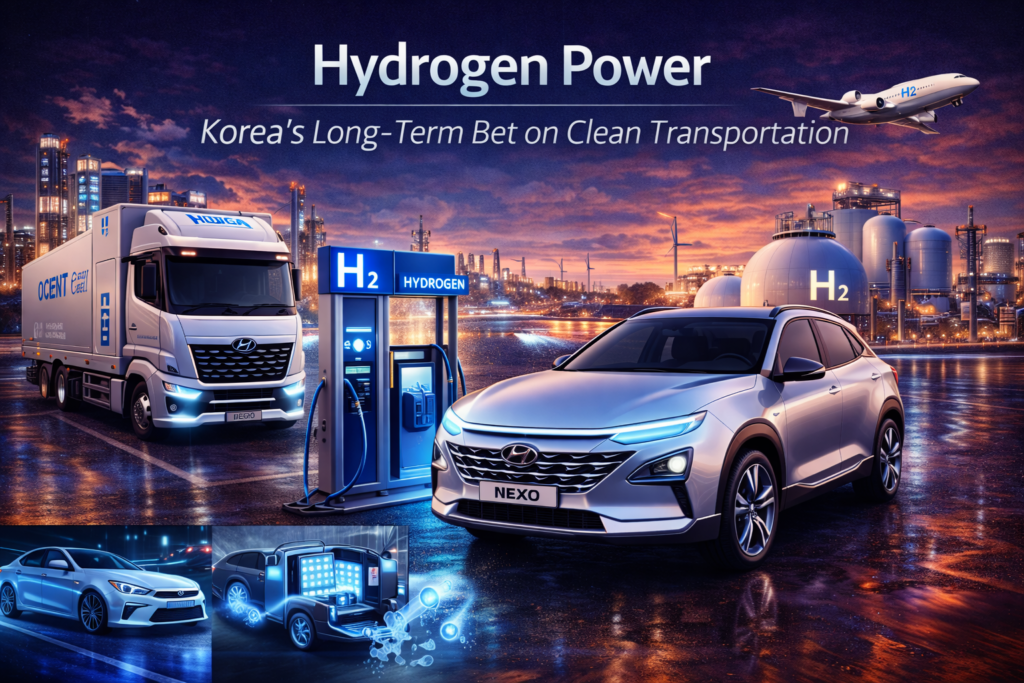
As the global automotive industry races toward electrification, most attention has focused on battery electric vehicles (BEVs). Yet behind the scenes, Korea has been quietly—and strategically—investing in another technology: hydrogen.
While many countries treat hydrogen as a secondary option, Korea views it as a long-term pillar of clean mobility. Led by companies like Hyundai Motor Group, the nation is building an ecosystem where hydrogen could power everything from passenger cars to trucks, buses, and even aircraft.
This isn’t just an alternative—it’s a parallel future.
What Is Hydrogen Power?


Hydrogen vehicles use fuel cells to generate electricity by combining hydrogen with oxygen. The only byproduct? Water vapor.
Key Advantages:
- Zero emissions (only water)
- Fast refueling (similar to gasoline)
- Long driving range
- Consistent performance in cold weather
Unlike traditional EVs, hydrogen vehicles don’t rely solely on batteries—they generate electricity on demand.
Hyundai’s Leadership in Hydrogen
Korea’s hydrogen strategy is closely tied to the vision of Hyundai Motor Group, one of the few automakers fully committed to the technology.


Key Hydrogen Vehicles:
- Hyundai NEXO – A production hydrogen SUV
- XCIENT Fuel Cell Truck – Heavy-duty hydrogen-powered transport
Hyundai isn’t just experimenting—it’s actively deploying hydrogen solutions in real-world applications.
Why Korea Is Betting on Hydrogen
1. Energy Diversification
Relying solely on battery EVs can create supply chain risks (lithium, cobalt). Hydrogen offers an alternative.
2. Infrastructure Vision
Korea is investing in a nationwide hydrogen refueling network, aiming to make hydrogen as accessible as gasoline.
3. Industrial Synergy
Hydrogen aligns with Korea’s strengths in:
- Energy
- Manufacturing
- Heavy industry
4. Long-Term Sustainability
Hydrogen can be produced using renewable energy, creating a fully sustainable energy cycle.
Hydrogen vs. Battery EVs


| Category | Hydrogen | Battery EV |
|---|---|---|
| Refueling Time | ~5 minutes | 20–60+ minutes |
| Range | Long | Moderate to long |
| Infrastructure | Limited (growing) | Expanding rapidly |
| Efficiency | Lower overall | Higher |
| Best Use Case | Long-distance, heavy-duty | Urban, daily driving |
Key Insight:
- EVs dominate short-range mobility
- Hydrogen may dominate long-range and commercial transport
Korea’s strategy isn’t “either/or”—it’s both.
Beyond Cars: Hydrogen’s Bigger Role


Hydrogen’s true potential extends far beyond passenger vehicles.
Key Applications:
- Heavy-duty trucks and logistics
- Public transportation (buses, trains)
- Maritime shipping
- Aviation (future hydrogen aircraft)
- Power generation and industry
This makes hydrogen a multi-industry solution, not just an automotive technology.
The Challenges Ahead
Despite its promise, hydrogen faces significant obstacles:
Infrastructure Costs
Building refueling stations is expensive and complex.
Energy Efficiency
Hydrogen production and conversion result in energy losses.
Public Awareness
Many consumers are unfamiliar with hydrogen technology.
Production Methods
Most hydrogen today is still derived from fossil fuels (gray hydrogen), though green hydrogen is growing.
Korea’s Hydrogen Ecosystem Vision
Korea isn’t just building cars—it’s building an entire hydrogen economy.
Key Elements:
- Hydrogen production (green hydrogen initiatives)
- Storage and transportation systems
- Nationwide refueling infrastructure
- Integration with renewable energy sources
This holistic approach is what sets Korea apart from many other countries.
The Future: Hydrogen and Electric Coexistence
Rather than replacing EVs, hydrogen will likely complement them.
Expected Future Landscape:
- EVs for daily commuting
- Hydrogen for long-distance and commercial use
- Hybrid systems combining both technologies
- Integration with smart energy grids
In this vision, mobility becomes more flexible, efficient, and sustainable.
Conclusion
Hydrogen power represents Korea’s long-term bet on clean transportation—a vision that extends far beyond the current EV boom.
While battery electric vehicles dominate today’s headlines, hydrogen offers solutions to challenges EVs cannot fully address, particularly in heavy transport and long-range mobility.
Through strategic investment, technological leadership, and a commitment to building a complete ecosystem, Korea is positioning itself as a global leader in hydrogen innovation.
The road to a clean future may not be powered by a single solution—but if Korea’s vision holds true, hydrogen will play a critical role in shaping it.