0
0
 0
0
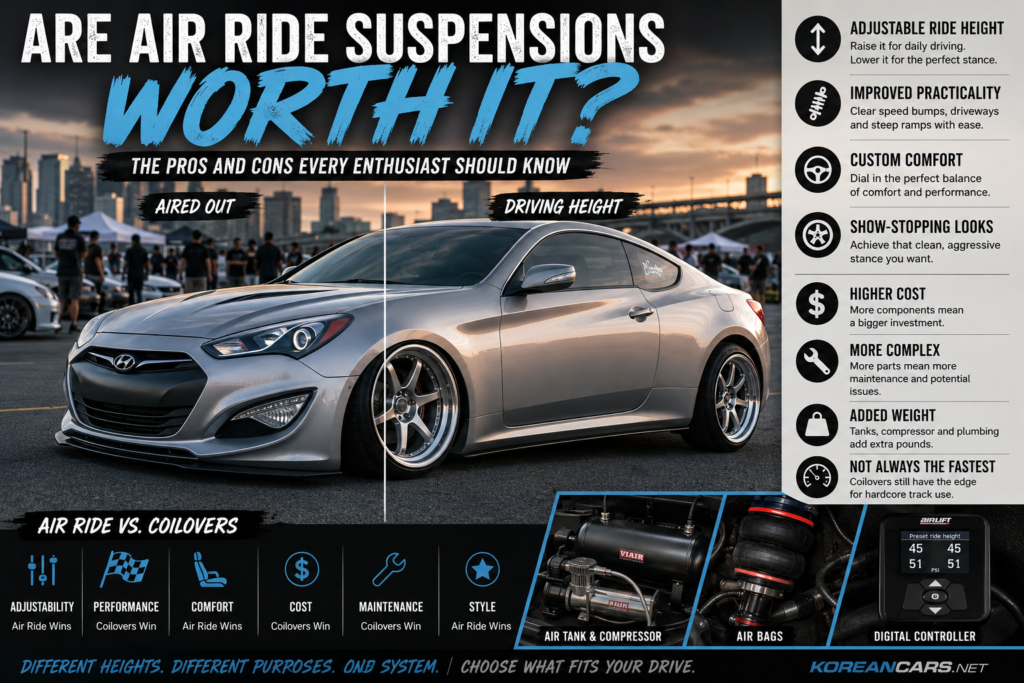
Few modifications transform a car’s appearance quite like air suspension. Whether it’s a slammed Hyundai Genesis Coupe at a car meet or a Kia Stinger sitting perfectly flush over aftermarket wheels, air ride has become increasingly popular among enthusiasts looking for the ultimate combination of style and adjustability.
But is it actually worth the investment?
The answer depends on how you use your car. For some enthusiasts, air suspension is the perfect upgrade. For others, a quality set of coilovers may be the better choice.
Let’s look at the advantages and disadvantages.
What Is Air Suspension?
Unlike traditional coil springs, an air suspension system replaces the springs with inflatable air bags that support the weight of the vehicle.
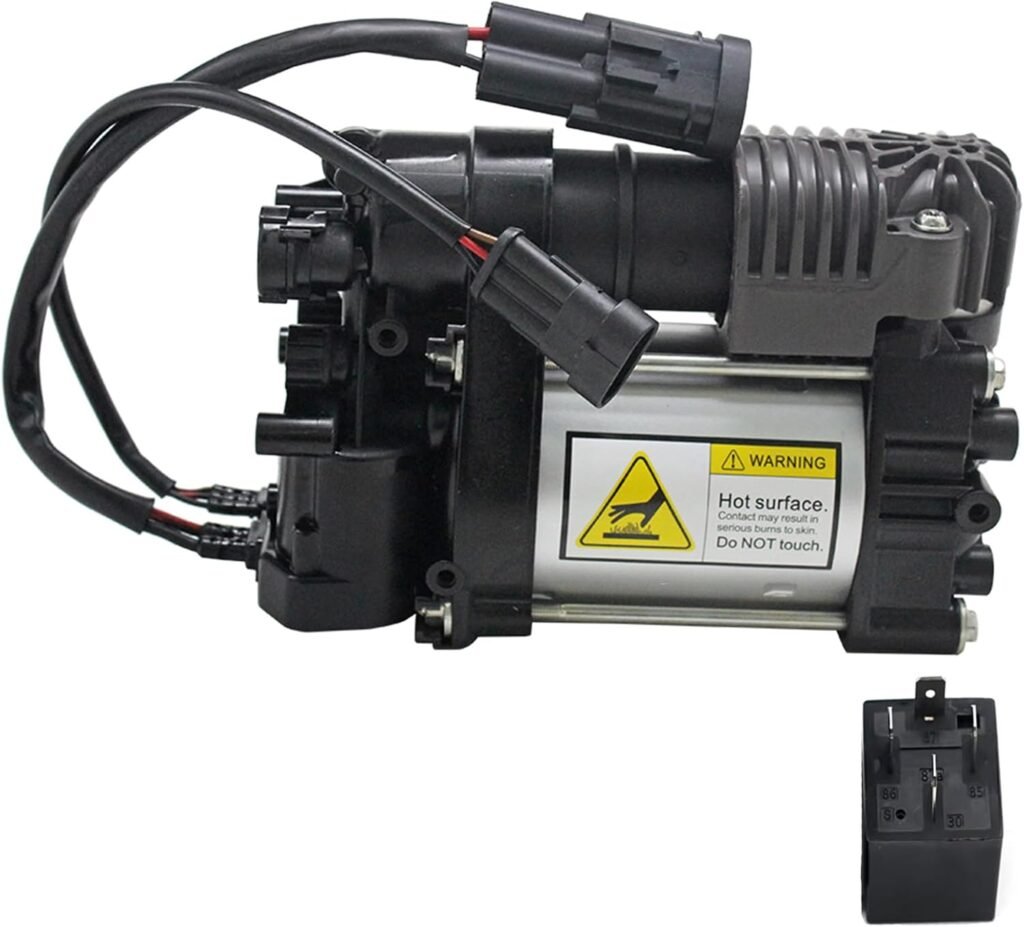
An onboard air compressor fills or releases air from the bags, allowing the driver to raise or lower the car at the push of a button.
Modern systems can even remember ride heights and automatically adjust for changing loads.
The Pros
Incredible Ride Height Flexibility
This is the biggest reason people choose air suspension.
You can:
- Slam the car for shows.
- Raise it for steep driveways.
- Increase clearance over speed bumps.
- Adjust ride height for winter driving.
- Return to a comfortable cruising height in seconds.
Instead of living with one ride height every day, you have several available whenever you need them.
Show-Stopping Appearance
Nothing attracts attention at a car meet like a properly aired-out vehicle.
Many Korean performance cars look dramatically different when parked on the ground.
Popular examples include:
- Hyundai Tiburon
- Genesis Coupe
- Kia Stinger
- Hyundai Veloster
- Kia K5
- Hyundai Elantra N
Combined with the right wheels and fitment, air suspension creates an aggressive stance that’s difficult to replicate with traditional springs.
Better Daily Practicality
Ironically, although many people think air ride is only for show cars, it can actually make a lowered daily driver more practical.
Instead of scraping:
- Driveways
- Parking garages
- Speed bumps
- Ferry ramps
- Steep intersections
…you simply raise the vehicle temporarily.
Adjustable Ride Comfort
Many modern systems allow adjustments to ride pressure and height that can noticeably change how the car feels.
While they won’t magically outperform every suspension setup, they can offer a comfortable balance between daily driving and aggressive styling.
Load Leveling
If you regularly carry passengers or cargo, air suspension can compensate for additional weight by maintaining ride height automatically.
This feature is especially useful for wagons, SUVs, and vehicles that occasionally tow.
The Cons
High Cost
Quality air suspension is not cheap.
A complete system often includes:
- Air bags
- Struts
- Compressor
- Air tank
- Air lines
- Manifold
- Electronic controller
- Wiring
- Installation
A professionally installed setup can cost several thousand dollars before wheels or alignment are even considered.
More Components Mean More Complexity
Compared to coilovers, air suspension introduces additional parts that require maintenance.
Potential issues include:
- Air leaks
- Worn fittings
- Compressor wear
- Electrical problems
- Moisture in the air system
Modern systems are generally reliable, but they are undeniably more complex.
Added Weight
Compressors, tanks, brackets, and plumbing all add weight.
While this isn’t a concern for many street cars, dedicated track enthusiasts often prefer lighter suspension solutions.
Performance Trade-Offs
Today’s premium air suspension systems have improved dramatically, and many are capable of excellent handling.
However, if your primary goal is setting the fastest lap times, a high-quality track-focused coilover setup is still generally the preferred option.
Many competitive motorsport classes also restrict or prohibit air suspension.
Installation Takes Time
Installing air suspension involves considerably more work than replacing springs.
Proper installation requires careful routing of:
- Air lines
- Electrical wiring
- Compressor mounting
- Tank mounting
- Moisture management
Taking shortcuts during installation can lead to future reliability problems.
Air Ride vs. Coilovers
| Feature | Air Ride | Coilovers |
|---|---|---|
| Ride Height Adjustment | Excellent | Manual adjustment |
| Show Car Appearance | Excellent | Very good |
| Track Performance | Good to Very Good | Excellent |
| Ride Comfort | Very Good | Good to Excellent |
| Complexity | High | Moderate |
| Maintenance | Moderate | Low |
| Cost | High | Moderate |
| Practicality | Excellent | Moderate |
Who Should Buy Air Suspension?
Air suspension makes the most sense if you:
- Attend car meets regularly.
- Want an aggressive stance without sacrificing drivability.
- Daily drive a lowered vehicle.
- Value appearance as much as performance.
- Enjoy customizing your vehicle.
Who Should Stick With Coilovers?
Coilovers may be the better option if you:
- Primarily participate in track days or autocross.
- Want the lightest possible setup.
- Prefer mechanical simplicity.
- Have a tighter modification budget.
- Rarely need adjustable ride height.
Final Verdict
Air suspension has come a long way from the unreliable systems of decades past. Modern kits are more dependable, more responsive, and better engineered than ever before.
For many enthusiasts, especially those building show cars or stylish daily drivers, air ride offers a combination of practicality and visual impact that’s hard to beat. The ability to cruise comfortably, clear obstacles with ease, and then lower the car for the perfect stance at a meet is a compelling package.
On the other hand, if outright performance, simplicity, and value are your priorities, a quality set of coilovers remains an excellent choice.
Ultimately, the best suspension is the one that matches how you actually use your car. Whether you prefer carving corners, turning heads at a meet, or enjoying a comfortable daily commute, choosing the right setup will make every drive more enjoyable.