0
0
 0
0
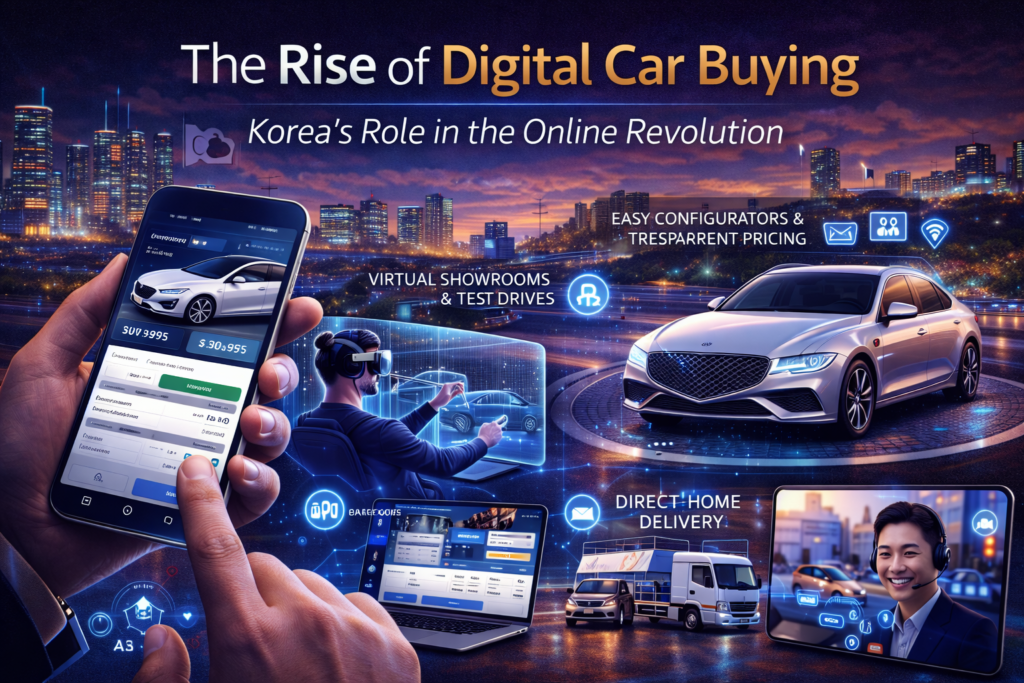
The way people buy cars is undergoing a fundamental transformation. What was once a dealership-driven, negotiation-heavy experience is rapidly shifting toward a digital-first journey—one that prioritizes convenience, transparency, and personalization.
At the center of this evolution is Korea. With its advanced digital infrastructure, tech-savvy population, and forward-thinking automakers, the country is playing a pivotal role in redefining how vehicles are bought and sold in the modern era.
From Showrooms to Screens


Traditionally, buying a car meant:
- Visiting multiple dealerships
- Negotiating prices in person
- Limited transparency on inventory and pricing
Today, the process is shifting online:
- Browsing and configuring vehicles from home
- Transparent pricing and financing tools
- Digital contracts and delivery scheduling
The dealership is no longer the starting point—it’s often the final step, if it exists at all.
Korea’s Digital Advantage
Korea is uniquely positioned to lead this shift due to its technological ecosystem.
Key Strengths:
- Nationwide high-speed internet and 5G connectivity
- Strong adoption of mobile-first services
- Integrated digital payment systems
- Consumer comfort with e-commerce platforms
Companies like Hyundai Motor Group and Kia are leveraging this environment to build seamless digital purchasing experiences.
The Online Car Buying Experience


Modern digital car buying platforms offer a full end-to-end journey:
1. Vehicle Discovery
- Interactive websites and apps
- AI-driven recommendations
- Detailed specs, reviews, and comparisons
2. Customization
- 3D configurators for colors, trims, and features
- Real-time pricing updates
3. Financing and Trade-Ins
- Instant loan approvals
- Trade-in value estimators
- Transparent monthly cost breakdowns
4. Purchase and Delivery
- Digital contracts and payments
- Home delivery or pickup scheduling
This transforms the process into something closer to buying a smartphone—simple, fast, and user-controlled.
Virtual Showrooms and Immersive Tech


Korean automakers are pushing the boundaries with immersive technologies:
Innovations:
- Virtual reality (VR) showrooms
- Augmented reality (AR) vehicle previews
- Metaverse-based dealership experiences
- Live video consultations with product specialists
These tools allow customers to explore vehicles in detail—without ever stepping into a physical showroom.
Direct-to-Consumer Models
The digital revolution is also reshaping the business model.
Instead of relying solely on traditional dealerships, automakers are experimenting with direct-to-consumer (DTC) approaches.
Benefits:
- Greater pricing transparency
- Consistent customer experience
- Reduced overhead costs
- Stronger brand-customer relationships
Korean automakers are gradually integrating these models while balancing existing dealer networks.
Data and Personalization
At the heart of digital car buying is data.
How It’s Used:
- Personalized vehicle recommendations
- Targeted promotions and offers
- Predictive maintenance insights
- Tailored ownership experiences
In Korea, where digital ecosystems are highly integrated, this personalization is becoming increasingly sophisticated.
Challenges in the Digital Shift
Despite its advantages, online car buying faces several hurdles:
Trust and Transparency
Customers still want assurance when making high-value purchases.
Test Drive Limitations
Physical driving experience remains important.
Regulatory Barriers
Dealer laws and regional regulations can limit direct sales.
Customer Preferences
Some buyers still prefer in-person interaction.
Korean automakers are addressing these challenges by blending digital convenience with optional physical touchpoints.
Korea’s Influence on the Global Market
Korea’s leadership in digital car buying is influencing global trends:
- Faster adoption of online sales platforms
- Increased use of immersive technologies
- Greater emphasis on user experience design
- Integration of mobility services into purchasing platforms
As other markets follow, Korea’s innovations are setting the standard.
The Future of Car Buying
Looking ahead, the digital car buying experience will likely evolve into:
- Fully online transactions with minimal human interaction
- AI-driven purchasing assistants
- Subscription-based vehicle ownership models
- Integration with smart home and mobility ecosystems
- Seamless upgrades through software and OTA updates
Buying a car will become less about ownership—and more about access and experience.
Conclusion
The rise of digital car buying marks one of the most significant shifts in the automotive industry. And at the forefront of this transformation is Korea.
By combining advanced technology, user-centric design, and innovative business models, Korean automakers are redefining what it means to buy a car in the modern age.
The dealership isn’t disappearing—but it’s evolving.
And in this new era, the car-buying journey begins not on a lot—but on a screen.